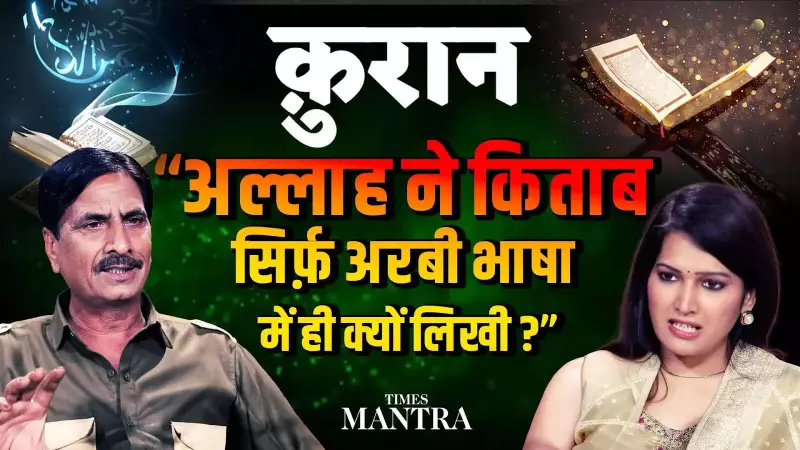
In a discussion that has ignited conversations across social and religious platforms, former Muslim thinker Saleem Wastik has publicly presented his critical perspective on specific Quranic ideas. Central to his argument is a challenge to the belief that the holy text was revealed exclusively in the Arabic language, raising profound questions about universality and access.
The Core of the Controversy: Language and Universal Message
Wastik's primary contention revolves around the linguistic nature of the Quran. He questions how a message purportedly intended for all of humanity can be confined to a single language. This, he argues, creates significant barriers to accessibility and inclusiveness for millions of non-Arab followers worldwide. By focusing on the language of revelation, Wastik touches upon deeper issues of interpretation and the transmission of divine guidance across cultures and epochs.
Broader Questions of Belief and Interpretation
Beyond the language debate, Saleem Wastik's views encompass a wider critique of certain Quranic concepts. He engages with fundamental questions of belief, the process of interpreting sacred texts, and the application of religious tenets in the contemporary world. His approach, which he frames through a lens of critical thinking and reason, seeks to examine long-held beliefs from a modern standpoint.

The presentation of these ideas on December 30, 2025, has not gone unnoticed. The discourse has rapidly spread, generating heated discussions in both online forums and traditional religious circles. As expected, reactions have been sharply divided, with some applauding his courage to question and others offering strong criticism of his departures from orthodox Islamic theology.
A Reflection of Modern Religious Discourse
This episode is not an isolated one. It mirrors a larger, ongoing global conversation about the intersection of faith, reason, and freedom of speech. In an increasingly interconnected world, questions about the interpretation of ancient religious texts, their relevance, and their accessibility to diverse populations are coming to the fore more frequently.
The debate sparked by Saleem Wastik underscores a persistent tension between traditional religious authority and individual inquiry. It highlights how believers and former believers are negotiating their paths in a landscape where information is abundant and diverse viewpoints are constantly in circulation. Whether one agrees with his conclusions or not, the discussion he has initiated adds a significant voice to the complex dialogue on religion in the 21st century.