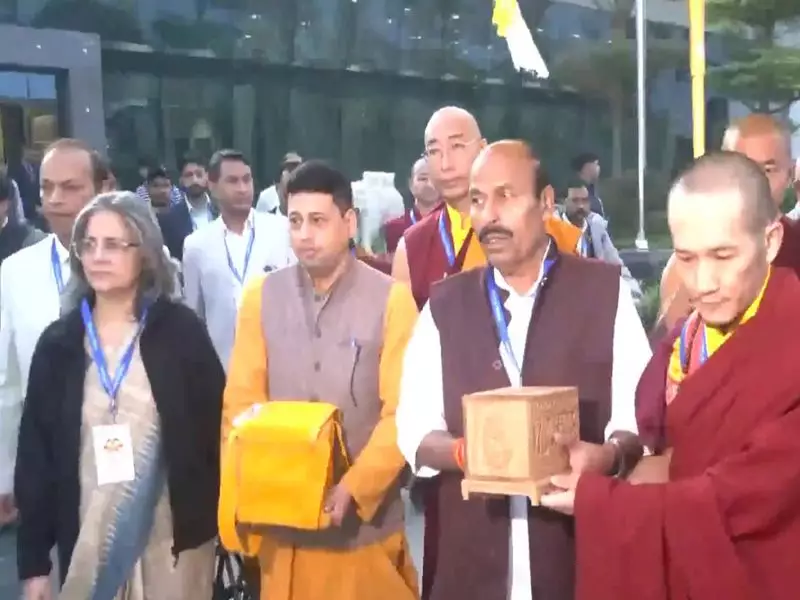
In a momentous event that bridges ancient spiritual traditions with modern diplomacy, four sacred relics of Lord Buddha have embarked on a historic journey from India to Bhutan. This extraordinary movement of spiritual artifacts represents a significant chapter in the cultural and religious exchange between the two neighboring nations.
The Sacred Journey Begins
The four precious relics, originally discovered at Piprahwa in Uttar Pradesh's Siddharthnagar district—identified as ancient Kapilavastu—departed from Delhi's Indira Gandhi International Airport on Tuesday. The relics are traveling aboard a special Indian Air Force aircraft, underscoring the importance and reverence attached to this spiritual mission.
This sacred expedition has been organized at the special request of the Royal Government of Bhutan, demonstrating the deep spiritual connection between the two nations. The relics will remain in Bhutan for an 11-day exposition, providing devotees and spiritual seekers with a rare opportunity to pay their respects to these ancient artifacts associated directly with Lord Buddha.

Historical Significance and Spiritual Importance
The relics hold immense historical and spiritual significance, dating back to the lifetime of Lord Buddha himself. Discovered at the archaeological site of Piprahwa, which scholars believe corresponds to the ancient city of Kapilavastu where Buddha spent his early years, these artifacts represent a tangible connection to the enlightened one.
The exposition in Bhutan marks a continuation of India's tradition of sharing Buddhist heritage with neighboring countries. This practice not only strengthens cultural bonds but also promotes the shared values of peace, compassion, and non-violence that Buddhism represents. The movement of such sacred relics across international borders is always conducted with the utmost care and reverence, following ancient protocols and modern security measures.
Strengthening Bilateral Relations Through Spiritual Diplomacy
This spiritual exchange occurs at a time when India and Bhutan continue to deepen their multifaceted relationship. The sharing of sacred Buddhist relics represents a unique form of diplomacy that transcends conventional political and economic discussions, touching the very heart of cultural and spiritual connections between the two nations.
The 11-day exposition is expected to draw thousands of devotees from across Bhutan and possibly neighboring regions. For many Buddhists, the opportunity to be in the presence of relics associated directly with Lord Buddha represents a once-in-a-lifetime spiritual experience that can deepen their practice and strengthen their faith.
This event also highlights India's role as the custodian of significant Buddhist heritage sites and artifacts. As the birthplace of Buddhism, India continues to serve as a spiritual beacon for Buddhist communities worldwide, sharing sacred artifacts and promoting the Buddha's teachings of peace and compassion across international boundaries.
The journey of the Kapilavastu relics to Bhutan represents more than just the physical movement of ancient artifacts—it symbolizes the living connection between nations through shared spiritual traditions and the enduring relevance of Buddha's teachings in contemporary times.