The Enduring Influence of Rumi: A 13th-Century Mystic's Universal Appeal
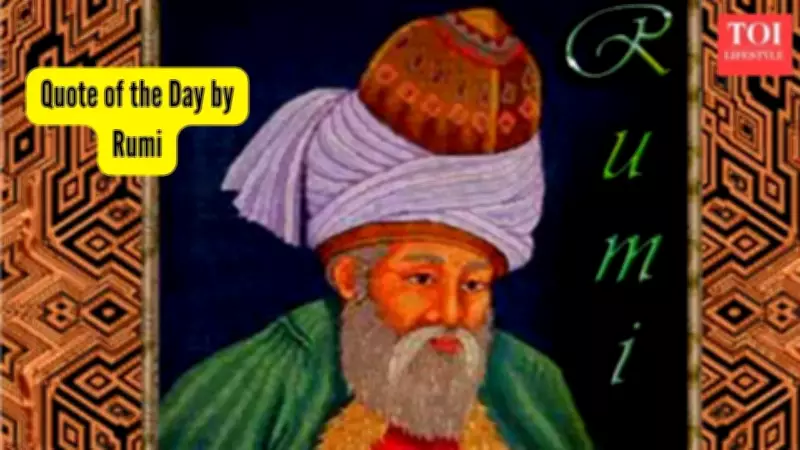
Jalāl ad-Dīn Muhammad Rūmī, widely known as Rumi, was a Persian poet, Islamic scholar, and Sufi mystic who lived during the 13th century. His profound literary and spiritual contributions have resonated across diverse cultures and historical periods, making him a timeless figure in global heritage.
Early Life and Historical Context
Rumi was born in 1207 in Balkh, a region located in present-day Afghanistan. His formative years unfolded against a backdrop of significant political upheaval, marked by the Mongol invasions that reshaped Central Asia and the Middle East. To escape this turmoil, his family embarked on a westward migration, eventually settling in Konya, then part of the Seljuk Empire and now in Turkey. It was in Konya that Rumi would spend the majority of his life, composing the poetic works that would cement his status as one of history's most celebrated poets.
Scholarly Background and Spiritual Transformation
Hailing from a deeply religious and scholarly family, Rumi's father, Baha al-Din Walad, was a renowned preacher and theologian. Under his guidance, Rumi acquired extensive knowledge in Islamic law, theology, and philosophy. Following his father's death, Rumi assumed roles as a religious teacher and legal scholar, earning respect as a learned cleric who addressed complex religious inquiries. However, a pivotal transformation occurred upon his encounter with the wandering mystic Shams Tabrizi.

This meeting is often regarded as one of history's most significant spiritual friendships. Shams challenged Rumi to transcend conventional religious understanding, urging him toward a direct, experiential love of the divine. This profound interaction catalyzed Rumi's evolution from a scholarly figure into a passionate mystic and poet. The disappearance of Shams deeply affected Rumi, inspiring much of his poetry, which frequently expressed longing and addressed Shams as a symbol of divine presence.
Poetic Themes and Universal Message
Rumi's poetry is rooted in Sufism, the mystical dimension of Islam that emphasizes love, devotion, and direct communion with God. What distinguishes his work is its universal accessibility; his verses speak to individuals of all faiths and backgrounds, not solely Muslims. Central themes include:
- Love as a Transcendent Force: Rumi portrays love as a power that surpasses physical limitations, viewing the ego as an obstacle to spiritual growth.
- Divine Connection: He asserts that the human soul is inherently linked to the divine, advocating that love leads to truth and suffering can foster transformation.
- Spiritual Metaphors: Utilizing imagery of lovers, wine, music, and dance, Rumi conveys spiritual ecstasy and unity, making his poetry both relatable and emotionally resonant.
This approach is exemplified in the Mevlevi dervishes' spinning dance, a practice associated with Rumi that symbolizes the inward spiritual journey while maintaining cosmic connection.
Lasting Impact and Contemporary Relevance
Rumi's influence extends far beyond literature into philosophy, spirituality, and even psychology. In Persian-speaking cultures, he is revered alongside poets like Hafez and Saadi. His works have gained immense popularity in the West through translations, establishing him as one of the world's most widely read poets. Key aspects of his legacy include:
- Literary Inspiration: Countless poets, writers, and thinkers have drawn inspiration from his ability to articulate complex spiritual concepts in simple, poetic language.
- Spiritual Traditions: His teachings led to the formation of the Mevlevi Order, a Sufi tradition known for practices like the whirling ceremony, ensuring his legacy endures in living spiritual customs.
- Modern Applications: Rumi's insights into the self, ego, and transformative power of love align with contemporary discussions on personal growth and emotional healing, offering guidance for navigating life's challenges.
His emphasis on compassion, unity, and interconnectedness remains particularly relevant in today's global context, addressing universal human experiences.

Philosophical Insights and Inner Power
One of Rumi's most profound quotes encapsulates his philosophy: “Everything in the universe is within you. Ask all from yourself.” This statement underscores the immense potential inherent in every individual. Rumi believed that humans possess extraordinary inner strength, often overlooked or unharnessed. His teachings encourage looking inward to discover peace, love, and fulfillment, rather than seeking external validation. By awakening this internal energy, individuals can transform their desires into powerful, positive forces, reflecting the universe's essence within their own souls.
In summary, Rumi's work transcends its 13th-century origins, continuing to inspire modern readers with its visionary blend of the earthly and divine, the personal and universal. His legacy as a poet and mystic endures, offering timeless wisdom for spiritual and personal exploration.