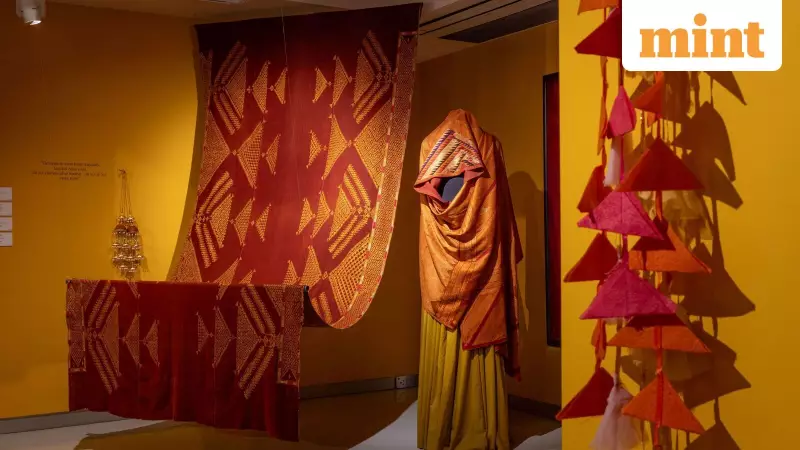
A captivating exhibition in New Delhi is currently showcasing the rich, embroidered heritage of Punjab, presenting textiles that are woven with stories of care, ritual, and daily life. Titled Sut te Saah: Stories Woven in Phulkari, the show is presented by gallerist Bhavna Kakar and curated by Shreya Sharma at Latitude 28 gallery in Defence Colony.
A Tapestry of History and Transition
The exhibition features a remarkable collection of over 40 rare phulkaris and baghs originating from the undivided Punjab of the pre-Partition era. These pieces hail from the distinct regions of Majha, Doaba, and Malwa. The showcase, which draws from the collections of Amit Hansraj and Brig. Surinder and Shyama Kakar, will be open for viewing until 26 January.
Among the standout works is a vibrant ochre chope from the late 19th-early 20th century, which comes from the Mandi Bahauddin district. Traditionally, a chope was a gift from a maternal grandmother to a bride, marking her transition into a new life. The exhibition also highlights rare Vari da baghs, textiles typically initiated by a bride's mother-in-law or grandmother-in-law at the birth of a son and completed over many years. Noteworthy pieces include the Chattis Dabba bagh from Malwa, known for its grid pattern and bright colours, and the Darshan Dwara, adorned with architectural motifs and created for presentation at Gurudwaras.

Stitching Women's Worlds into Fabric
The exhibition is thoughtfully divided into three segments that mirror pivotal moments in domestic life. Sankraman reflects on birth and marriage, Vishvaas ate Katha delves into faith, folklore, and oral histories stitched into cloth, and Rihaish explores the domestic spaces where phulkari shaped women's everyday realities across generations. Together, these sections create a non-linear journey from the material to the emotional and historical.
Gallerist Bhavna Kakar explains that phulkari's history stretches back to the early 18th century, where these textiles represented a woman's material and emotional wealth, akin to inherited gold. "They were worn draped over the head on significant occasions, but their use extended well beyond the body," Kakar shares. "Phulkaris functioned as odhinis (head cloths), charpoy covers for honoured guests, festive hangings within the home, and as offerings to temples and gurdwaras." These works paint a portrait of a more syncretic time in undivided Punjab, where women across religions embroidered and incorporated phulkaris into daily and ceremonial life.
An Intimate and Archival Ode
Hosted at Latitude 28's new Defence Colony space, which opened in October 2025, Sut te Saah promotes a porous and intimate form of exhibition-making. The phulkaris are not displayed as static artefacts but as unique entities—vessels of time and touch. The spatial design encourages viewers to pause and engage with the works on a bodily scale, reminiscent of how they were originally encountered in home interiors.
On a deeply personal level, the exhibition serves as an ode to Kakar's mother, Shyama Kakar, who passed away in 2024. She was not merely an owner but a custodian of these textiles, which travelled through her family as vessels of care and continuity. Parallel to these personal narratives is the broader, often overlooked story of women's domestic, emotional, and creative labour. "The women who embroidered these phulkaris rarely appear in historical records, yet their interior worlds are embedded in every stitch," Kakar notes.
The materiality of phulkari is central to its character. The base was often hand-spun khaddar, prized for its durability and texture, while the embroidery used pat da dhaga—untwisted silk floss—that caught the light. This combination of humble fabric and lustrous thread defines phulkari's visual language. The motifs, never formally documented, were passed down through memory and practice. They drew from everyday life and imagination, with names like belan (rolling pin), kakri (cucumber), chandrama (moon), and lehriya.

Ultimately, Sut te Saah reveals that these textiles are far more than repositories of colour and design. They are carriers of music, oral histories, and cultural heritage, offering a profound, intimate entry point into understanding the silent yet eloquent legacy of generations of women.