Punjabi Princesses' Defiance: London Exhibition Illuminates Sophia Duleep Singh's Activism
A new exhibition at Kensington Palace in London is set to unveil the remarkable story of Princess Sophia Duleep Singh, a figure who defied the British Empire from within its highest echelons. Titled 'Princesses of the Punjab', the showcase, opening this week, delves into the lives of Maharaja Duleep Singh's daughters, with a particular focus on Sophia's bold political choices and her role in the suffragette movement.
The Legacy of Displacement and Resistance
Sophia Duleep Singh was the daughter of Maharaja Duleep Singh, the last ruler of the Sikh empire, and a goddaughter of Queen Victoria. Despite her privileged position in British society, she chose to align herself with movements that challenged imperial authority. The exhibition features a banner from 1908 bearing the words "No Vote, No Tax", associated with the Women's Tax Resistance League. This artifact symbolizes Sophia's refusal to pay taxes to a government that denied women the vote, repurposing the emblem of Britannia for protest.
Her activism was deeply personal, rooted in the complex legacy of her family's absorption into imperial Britain. In 1849, following the annexation of Punjab, the young Duleep Singh was separated from his mother, Maharani Jind Kaur, and taken to Britain under the East India Company's supervision. Converted to Christianity and raised as a ward of the Crown, his identity was reshaped, with the removal of the Koh-i-Noor diamond serving as a potent symbol of this conquest.

Insider-Outsider Dynamics in British Society
The Duleep Singh children grew up at Elveden Hall in Suffolk, immersed in British aristocratic life yet marked by a history of displacement. A small rocking horse from their childhood evokes this paradox—comfort and continuity juxtaposed with the unsettling reality of heirs to a lost kingdom raised far from their inheritance. The exhibition highlights how the sisters navigated this insider-outsider status, with responses ranging from public defiance to private autonomy.
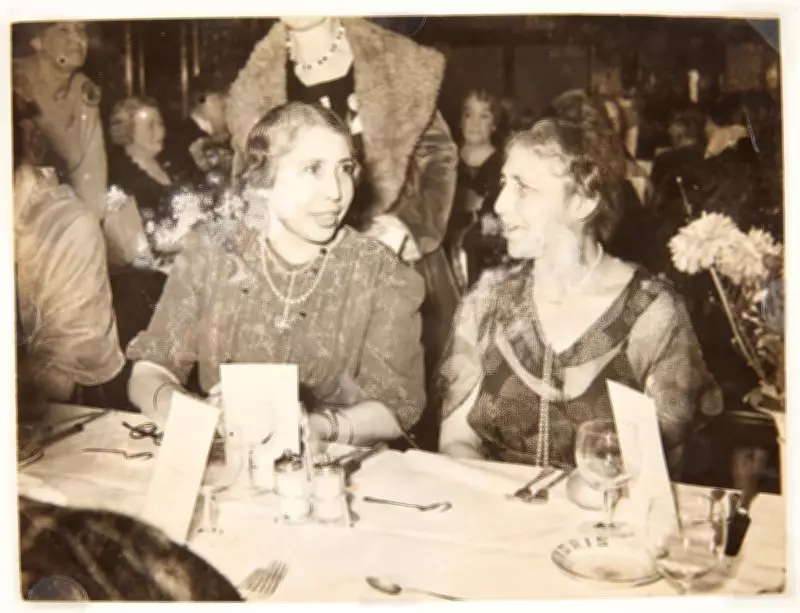
Sophia's political engagement is captured in a bound volume of The Suffragette, showing her selling copies on the street—an active participant rather than a distant patron. A photograph from a 1930 suffrage dinner, featuring Sophia and her sister Catherine, underscores their sustained involvement in the women's rights movement. In contrast, Catherine's rebellion was more private, as seen in an intimate postcard from Germany with her companion Lina Schafer, reflecting a life lived beyond conventional expectations.
Artifacts of Adaptation and Identity
Other objects in the exhibition speak to the family's adaptation over time. A skirt resembling a traditional Indian lehenga, worn by Princess Bamba and later altered, symbolizes the modification of cultural identity. Meanwhile, a pair of off-white leather gloves from Sophia's debutante presentation in 1895 represents her earlier assimilation into British society, starkly contrasted with her later suffragette activism.
For Indian audiences, this story resonates deeply, linking the annexation of Punjab to broader colonial dynamics of dismantling indigenous authority and reconfiguring identity. The Duleep Singh sisters' engagement with rights and freedom connects the experience of empire in Britain to the arc of resistance in India.
Enduring Impact and Historical Continuity
The exhibition, running until November, celebrates Sophia's 150th birthday and emphasizes the layered nature of identity in the aftermath of empire. It reveals how lives were shaped between worlds, with objects like banners, newspapers, and garments serving as markers of resilience. The image of Sophia selling The Suffragette outside Hampton Court Palace lingers as a powerful symbol of asserting sovereignty over one's voice, a quiet act of defiance that continues to echo through history.
Maharaja Duleep Singh's family included several children: daughters Bamba, Catherine, Sophia, and others, along with sons Victor, Frederick, and Albert. Their stories, as showcased in London, highlight the unexpected paths that follow loss and the enduring spirit of resistance across generations.