Punjabi Language Faces Ongoing Struggle for Recognition Across Divided Punjab
In a poignant irony, the Punjabi language continues to battle for its rightful place as a mother tongue on both sides of the divided Punjab region. Whether in Charhda (eastern) Punjab in India or Lehnda (western) Punjab in Pakistan, activists and speakers are fighting against systemic marginalization of their native tongue.
The Situation in Indian Punjab
In the Indian state of Punjab, where Punjabi is constitutionally recognized as the first official language, persistent complaints emerge about the language being sidelined in official domains. Despite government directives mandating that departments work in Gurmukhi script, implementation remains inconsistent. Frustrated activists have even resorted to dramatic protests, including blackening signboards where Punjabi appears subordinate to other languages.
The Pakistani Punjab Paradox
Across the border in Pakistan's Punjab province—ironically named after the language itself—Punjabi speakers face even greater challenges. Despite being the mother tongue of over 11 crore Pakistanis (approximately 44.7% of the population), Punjabi ranks below Urdu, Pashto, Sindhi, and Balochi in official status. Urdu remains the national language despite having far fewer native speakers.

The current educational status reveals the depth of neglect: Punjabi is taught only as an elective subject from Class 6 through postgraduate levels. Activists demand comprehensive reform, calling for Punjabi to be taught as a compulsory subject from nursery through postgraduation, with the language becoming the medium of instruction.
Historical Context and Recent Developments
The struggle for Punjabi's official status in Pakistan dates back to the 1950s, gaining momentum in 1965 with the formation of Majlis Shah Hussain. Though this organization was short-lived, it planted seeds for future activism. During the 1970s, proponents of Punjabi were often regarded as anti-state, leading students and young activists to form independent theater groups to promote the language.
A significant development occurred on October 29, 2024, when the Punjab Provincial Assembly in Pakistan adopted a resolution to make Punjabi a compulsory subject at all educational levels. The motion, moved by PML-N MPA Amjad Ali Javed from Toba Tek Singh and adopted by Speaker Malik Ahmad Khan, represented what activists called "a first step" in a long campaign.
However, progress has stalled since then. The bill granting Punjabi official status remains pending, and implementation of the educational resolution has been minimal. Ahmad Raza, president of Punjabi Parchar, emphasized to TOI that while the resolution was important, "a lot more needs to be done. We want a common curriculum acceptable across all of Punjab."
Constitutional Framework and Regional Disparities
Raza highlighted the constitutional context: The 1973 Constitution empowered provinces to promote their languages and cultures, with the 18th Amendment of April 2010 strengthening these rights. "Sindh, Balochistan and Khyber Pakhtunkhwa used these provisions to promote their languages, but Punjab showed no interest, leaving Punjabi without official status," he noted.
This regional disparity is stark. While other Pakistani provinces have actively promoted their regional languages, Punjab has lagged behind in championing its own linguistic heritage. The script difference adds another layer—Punjabi in Pakistan is written in Shahmukhi script, while in India it uses Gurmukhi.
Symbolic Actions and International Recognition
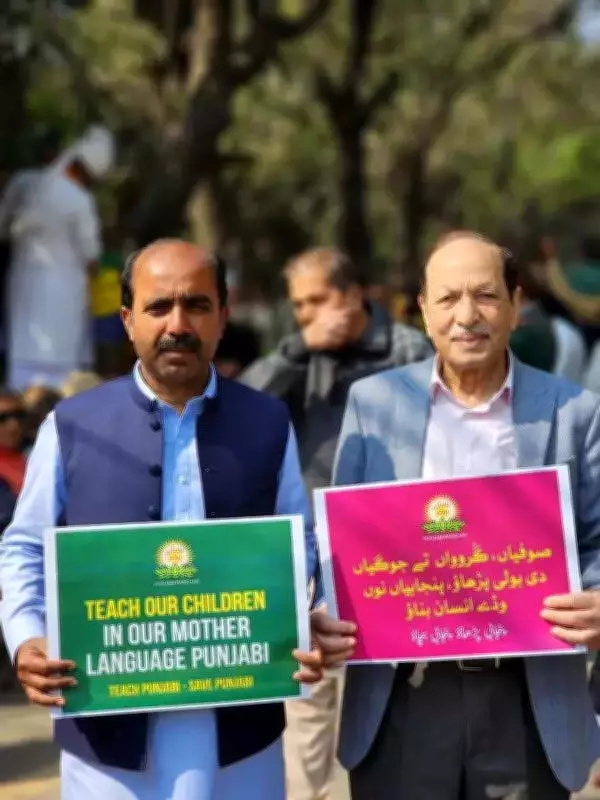
The timing of these struggles coincides with International Mother Language Day, observed on February 21st on both sides of Punjab. Symbolic gestures, such as Punjabi Parchar president Ahmad Raza and acclaimed poet Baba Najmi wearing scarves with Gurmukhi alphabets, highlight the cultural significance of the language beyond political boundaries.
As the debate continues, the core issue remains: Punjabi is not merely a question of language, but of cultural identity and heritage. Activists argue that the right to propagate one's mother tongue is fundamental, and the current situation represents a deeper struggle where this right is being constrained by prevailing political and educational frameworks.