Pune Lit Fest 2025 Fosters a Thriving Community of Readers and Artists
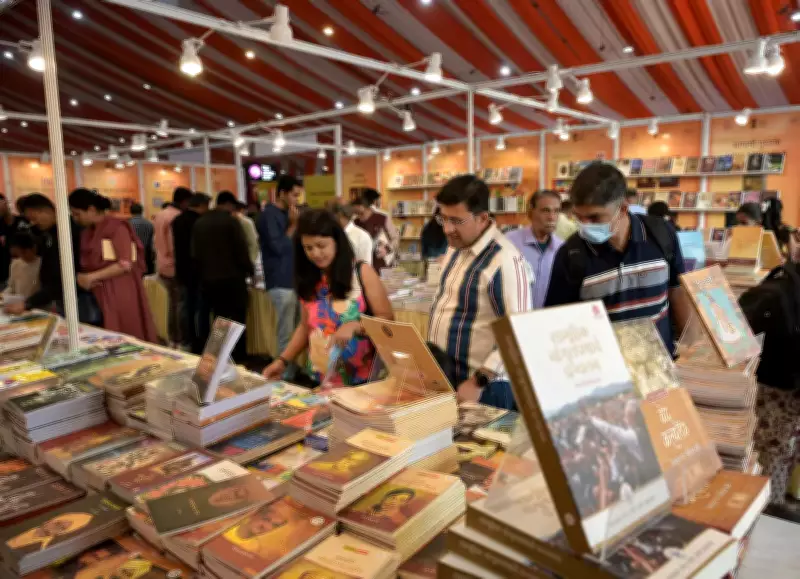
The Pune Lit Fest 2025 has been unfolding throughout the week, growing steadily as enthusiastic readers return day after day to explore what they missed earlier. People of all ages mingled around the venue, moving between vibrant stalls, listening intently to engaging sessions, and pausing wherever something unexpected captured their attention.
The pace remained easy and unhurried, which appears to be a significant part of the event's widespread appeal. Across the festival grounds, conversations formed naturally and organically. Readers compared their literary finds, pointed strangers toward their favorite stalls, and lingered thoughtfully at displays that held them a little longer.
Marathi, English, and Hindi shifted calmly through the space, giving the entire festival a quiet, multilingual hum that celebrated India's rich linguistic diversity.

Readers Embrace the Tangible Joy of Physical Books
Illustrator Preity Galani attended the festival specifically searching for something she could not discover through online algorithms. "I want books that will not show up on BookTok or in my personalized recommendations," she explained. She emphasized that the opportunity to physically flip through a book before making a selection mattered deeply to her. "You sometimes discover a book only because it is literally in your hand. That is the kind of serendipitous discovery I genuinely miss in the online shopping experience."
Designer and animator Shreya Sudhindra viewed the week-long festival as a vital space where the act of reading becomes visible and communal once again. "Events like this powerfully remind people that reading is fundamentally a shared activity," she observed. "You see others browsing, discussing, and getting genuinely excited about books. It makes the entire reading habit feel vibrant and alive." She was particularly exploring new queer magic-realism titles, describing them as "refreshing because they let you feel emotions and see perspectives you do not often encounter in mainstream writing."
For attendee Hema Jethwani, the primary attraction was the palpable human presence behind the writing. "You can intuitively tell when a book has been crafted by a real person," she noted. "That authentic emotional tone is very clear on the physical page. It is precisely why physical books still feel profoundly different and more connected."
Design student Teresa Pongen connected deeply with the physicality of the book format itself. "Books inherently hold memory," she reflected. "The old notes in the margins, the worn pages, the very feel of it in your hands. You remember where you were and how you felt when you last read it. That is a digital experience cannot replicate."
Throughout the entire week, the Lit Fest maintained a steady, welcoming atmosphere, giving readers the essential space to slow down, browse thoughtfully, and reconnect with literature in a way that felt personal and meaningful once again.
Highlights from the Lit Fest Sessions
Girija Oak on Virality, Visibility, and Authentic Female Representation
Girija Oak's session at the Pune Lit Fest unfolded with an easy, conversational warmth as she revisited the now-famous moment that unexpectedly transformed her into the internet's celebrated "national crush." Her narration of this completely ordinary, almost throwaway anecdote that somehow caught fire online had the audience laughing warmly.
Reflecting on the sheer randomness of viral fame, she stated, "What you choose to do is entirely up to you, but what people decide to pick up and like is absolutely not up to you." This insight set the tone for a conversation that was consistently thoughtful, genuinely funny, and disarmingly grounded.

What truly captivated the room was her nuanced take on how women continue to be written in mainstream Indian cinema. Without sermonizing, she pointed out how female characters still tend to be fully realized only in explicitly women-centric films, posing a simple yet powerful question: "There are complex, real women in all our lives, so why don't they show up more authentically on our screens?" It was an honest inquiry into the persistent gap between real life and the way commercial stories are constructed.
Oak also spoke about on-screen representation with striking clarity, wondering aloud why the families portrayed in mainstream media rarely resemble the diverse families we actually see around us in India. She balanced her critique with relatable humour, slipping into personal anecdotes from her theatre and film career that revealed her deep commitment to craft, personal dignity, and the artistic work itself.
By the session's conclusion, the crowd was responding not merely to a viral social media star but to a dedicated artist—someone who knows precisely why she does what she does. And if more people discover her body of work, including her independently released series The Perfect Family, because of that random online moment, she expressed being more than happy to ride the wave with grace and perspective.
Sachin and Shriya Pilgaonkar Share a Heartwarming Dialogue on Legacy and Craft
Sachin and Shriya Pilgaonkar's joint session felt like listening to two accomplished artists who share a deep personal history, mutual affection, and an instinctive understanding of each other's creative world. Shriya spoke openly about navigating an acting career shaped in part by her father's esteemed legacy, while still diligently working to carve her own distinct space.
The moment that warmed the entire room occurred when Sachin turned to her and said with evident pride, "I am very proud of you." They revisited her entry into the industry, with Sachin recalling how surprised and delighted he was when she chose acting over her promising path as a competitive swimmer.
Shriya then reflected on finding her footing in the streaming era, which has afforded her roles that allowed her to make a memorable impact even within a single episode, such as her recent appearance in Mandala Murders. She also spoke about proactively shielding her parents from the harsher, more critical parts of social media, describing it as a space where "everyone seems to keep judging everyone else constantly."
Both father and daughter agreed emphatically that the only true constant in a creative life is the work itself. Shriya summed it up succinctly: "You have to be emotionally very strong and brutally honest with yourself." Sachin added his own philosophical perspective, stating, "Change is the only constant in the universe. If you accept change, only then will you be able to move forward meaningfully."
The session flowed with natural warmth, gentle humour, and profound mutual respect, offering a rare, intimate look at two artists who share not only a craft and a familial bond but also a steadfast belief that the work, not the transient noise surrounding it, is what genuinely endures.
Booker Prize Winner Banu Mushtaq Explores Women's Inner Worlds
Booker Prize winner Banu Mushtaq's session focused intently on the layered, often invisible emotional journeys of women, drawing richly from her acclaimed short story collection The Heart Lamp. She spoke eloquently about the universal experiences that connect women across differences of religion, class, and geography, weaving in resonant themes of identity, quiet resilience, and the daily negotiations that shape lived reality.
Mushtaq reflected thoughtfully on her own unique path as both a practicing lawyer and a celebrated writer, and how deeply personal moments—including early marriage and motherhood—informed her nuanced understanding of women's complex inner worlds. Her session resonated powerfully for its combination of simplicity and depth, offering a gentle yet incisive look at how women continually navigate the intersecting forces of personal freedom, social expectation, and evolving selfhood.