When Cricket's Cathedral Became a Papal Parish
Every Sunday, thousands of devoted fans gather at Mumbai's Oval Maidan. They worship the gods of cricket on this hallowed ground. No other faith commands such loyalty here. Yet, in December 1964, something extraordinary happened. For a brief period, this sporting parish found itself outnumbered. One of India's smallest religious communities took center stage.
A Pilgrim Pope's Historic Asian Journey
In a spectacle never repeated, tens of thousands of Christians flooded the Oval. They came for the 38th Eucharistic Congress. This quadrennial Christian gathering achieved cult status thanks to its star guest: Pope Paul VI. His visit marked a monumental first. It was the initial time a pope had ever set foot in Asia. Pope Paul VI also became the first modern pontiff to travel outside Italy. He chose India as his second destination after the Holy Land.
The historic event unfolded from December 2 to 5, 1964. It attracted legions of both doubters and the devout from across the globe. An estimated multitude of 100,000 people dominated the maidan. While Christians formed the majority, people of other faiths also gathered. They all craned their necks to see the white, cubist altar rising above the crowds. Everyone wanted a glimpse of the 'Pilgrim Pope'.

Reliving History Through Soul Strolls
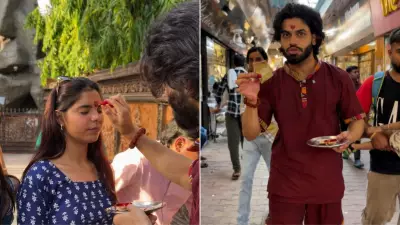
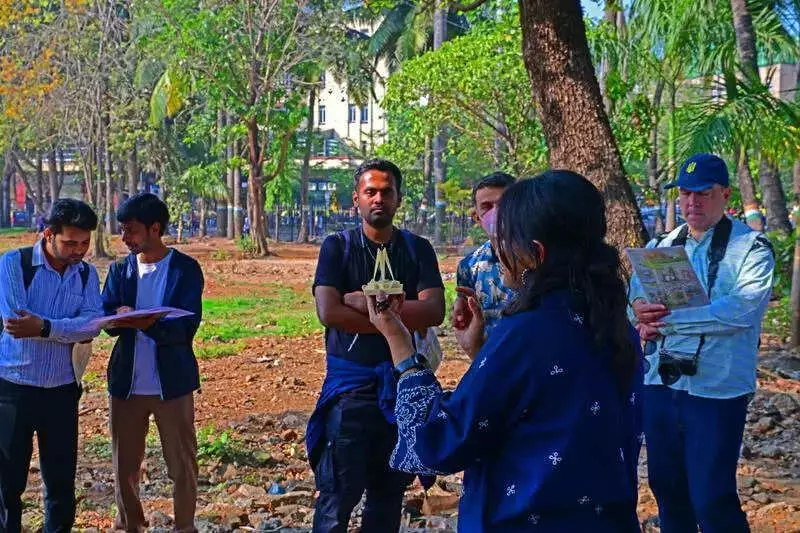
Last Sunday, a much smaller congregation assembled around that iconic altar. This time, the altar sat squarely in the palm of a hand. Those circling it were pilgrims of a different order. They participated in a guided heritage walk named Soul Strolls. The Archdiocesan Heritage Museum organized this event. Its director, Joynel Fernandes, led the group.
"The altar for the Eucharistic Congress was conceived as an 'open-air cathedral'," Fernandes explained. He held out the palm-sized replica. "A Hindu architect from Kolkata, Suraj P Subherwal, designed it." The replica was just one piece of memorabilia. Usher passes, commemorative medallions, and archival recordings also survived.
"We initiated Soul Strolls to take the museum beyond its walls," Fernandes stated. "We invite people to encounter art, history, culture, and faith on the streets. They explore churches, cemeteries, and community spaces. Through these immersive walks, we hope to uncover layered memories. We aim to reveal living traditions that continue to shape both the city and the archdiocese."
The Nerve Centre of a Global Gathering
Oval Maidan served as the nerve centre for the congress. Its vast space could hold the massive assembly. Its location near the Archbishop's House in Colaba proved convenient. The papal delegation, including Pope Paul VI, stayed there. The maidan hosted everything from masses to cultural shows.
Several other locations became pitstops during the tour. Cooperage and Stephen's Hall were among them. Organizers made ground plans there. They stored the inventory of sacred objects in these places.
The inventory included thousands of items donated globally. The Holy Father himself gifted more than 500 copes and stoles. A consignment from Colombia provided large and small hosts for Mass distribution. France sent 456 bottles of Mass wine. One of these gifts, named Paulina, now enjoys permanent display. It sits at the entrance to Holy Name Cathedral. This bronze bell depicts Saints Gonsalo Garcia and Francis Xavier, who served in India. Enrico Manfrini, known as the 'sculptor to the popes', designed it. Pope Paul VI donated it to Bombay.
Why Bombay Hosted This Global Event
Organizers selected Bombay as the congress site in 1958. The city's cosmopolitan character influenced their decision. Its capacity to host a major international event also mattered. This choice highlighted the Church's global reach in Asia. It underscored its presence in India, where Christians constitute fewer than 3% of the population. The community could still flourish here.
A spirit of religious inclusivity permeated the event. It was evident during the Pope's reception on the Santacruz tarmac. Then Prime Minister Lal Bahadur Shastri welcomed him. Senior leaders like Indira Gandhi also attended.
Political heft matched the people power on the streets. Men, women, and children scaled trees and walls. They all strained to catch sight of the passing pontiff. Their enthusiasm turned history into a living memory.