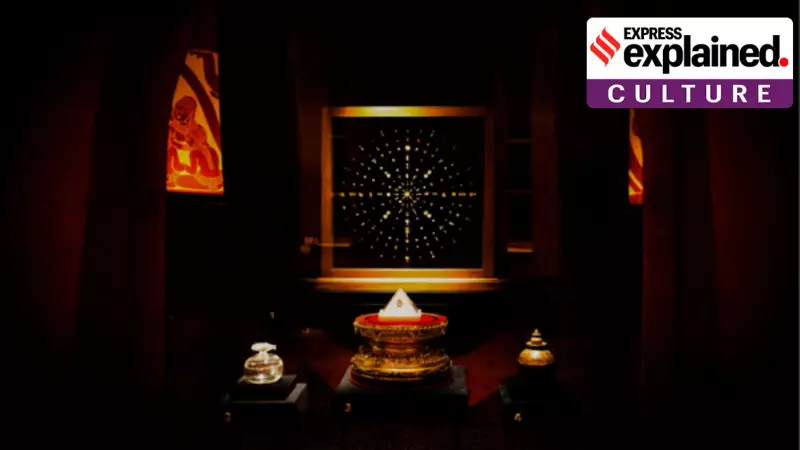
In a landmark event for India's cultural heritage, Prime Minister Narendra Modi inaugurated a grand exhibition titled 'The Light and The Lotus: Relics of the Awakened One' in New Delhi on Saturday, January 3, 2026. The exhibition presents the sacred Piprahwa Gems, a collection of ancient Buddhist relics that made a historic return to Indian soil last year after 127 years abroad.
The Historic Homecoming of Sacred Treasures
The Ministry of Culture confirmed that the relics, which include a collection of 349 precious gemstones, were originally unearthed in 1898 by William Claxton Peppé, an English estate manager. The discovery was made at a Buddhist stupa in Piprahwa, a village in Uttar Pradesh's Siddharthnagar district, near the Nepal border. For over a century, these artifacts, described by auction house Sotheby's as "among the most extraordinary archaeological discoveries of all time," remained far from their origin.
The collection is profoundly significant as the relics were "found buried together in reliquaries with the corporeal relics of the Historical Buddha". This includes sacred bones and ash, believed to be of Lord Buddha himself, which were once donated by Viceroy Elgin to Siamese King Rama V. Following their excavation under British rule, the British Crown claimed most of the find under the 1878 Indian Treasure Trove Act, sending the bulk to what is now the Indian Museum in Kolkata.

A Complex Journey of Repatriation
The path to repatriation was complex. A fifth of the original find, including duplicates, was retained by the Peppé family. These heirlooms were passed down through generations until they were put up for auction by Chris Peppé in 2013. In May 2025, Sotheby's Hong Kong listed the gems for auction with an estimated selling price exceeding $100 million.
This move triggered a swift response from the Indian government. On May 5, 2025, the Ministry of Culture sent a legal notice to Sotheby's and the Peppé family, demanding an immediate halt to the auction and the return of the relics to India. The notice argued that the items, excavated from the Piprahwa Stupa—identified as ancient Kapilavastu—are the "inalienable religious and cultural heritage of India and the global Buddhist community". It stated their sale violated Indian and international laws.
The Archaeological Survey of India also intervened, requesting Hong Kong's Consulate General to stop the auction. While the sale was halted, India's legal claim faced challenges as the relics were excavated on land privately held by the Peppé family and removed before the 1972 Antiquities Act existed. The Ministry then engaged the Financial Investigation Unit to coordinate with Hong Kong authorities.
An Unconventional Resolution and a Grand Display
The situation found a unique resolution when Indian industrialist Pirojsha Godrej purchased the entire collection of 349 gemstones for an undisclosed sum. This move ethically circumvented a direct government commercial transaction. Godrej has agreed to loan a large portion of the collection to the National Museum for five years and display the entire set for three months upon arrival.
The inaugurated exhibition, which PM Modi promoted on social media, invites all culture and Buddhism enthusiasts. It features not only the Buddha relics but also an immersive display of 88 antiquities, a repatriation gallery, and a model of the original excavation site. The event marks the triumphant conclusion of a long struggle to reclaim a priceless piece of India's spiritual and archaeological legacy, finally bringing the light of the Piprahwa Gems back to the land of the lotus.