Park Street Kolkata: More Than Just a Road, It's a Living Legacy
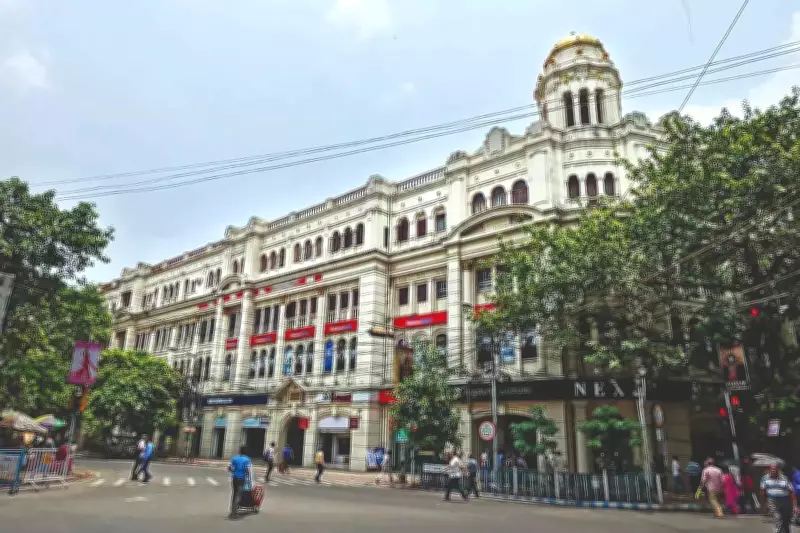
In the bustling heart of Kolkata, Park Street stands not merely as a stretch of asphalt but as an eternal companion that has witnessed the city's transformation across generations. This iconic boulevard serves as a rite of passage for countless residents, a gathering place where life's significant milestones—both small and grand—have been celebrated consistently as the urban landscape evolved around it.
The Unbreakable Bond: Park Street and Its Historic Establishments
Flurys, the legendary tearoom that opened in 1927, has become inseparable from Park Street's identity, as evidenced by archival photographs dating back to the 1930s. Rajesh Singh, national head of the brand, emphasizes the profound responsibility and cherished privilege of carrying forward this 99-year legacy. "Flurys has grown alongside Park Street as an integral thread in Kolkata's cultural fabric and collective memory," he states, highlighting how the establishment has mirrored the street's enduring spirit.
Similarly, Trincas, founded in 1927 as a Swiss confectionery before introducing live entertainment in 1959, has served as a cultural anchor for urban Kolkata. Third-generation restaurateur Anand Puri, who returned in 2019 to lead the establishment into its next chapter, inherited more than just a business. "At its core, Trincas remains what it always was—warm hospitality with familiar flavors, and always a room full of stories waiting to unfold," Puri explains, noting its special place in the city's heart, particularly within the LGBTQIA+ community.

Musical Evolution and Nightlife Revolution
The musical journey of Park Street has been nothing short of extraordinary. Mainak 'Bumpy' Nag Chowdhury, fretless bassist and vocalist for The Orient Express, recalls playing Thursday nights on Park Street during his formative years. "It shaped my growing up years," he shares, noting how the venue survived a pandemic while retaining its old charm, with Monday nights still drawing loyal crowds decades later.
Nitin Kothari, whose father opened Mocambo in 1955 with a German architect and Italian chef, describes it as "without a doubt, India's first nightclub." Featuring live music, a seven-piece orchestra, and both male and female crooners nightly, Mocambo's search for the perfect female voice led to the discovery of 17-year-old Pamela Crane, who became one of the country's most celebrated vocalists after careful training and grooming.
The 1990s witnessed the explosive rise of Park Street's pub, disco, and nightclub culture. Vijay Dewan of the Park Hotels group remembers Tantra as more than just a nightclub—"it felt like an entertainment movement." With landmark DJ nights, surprise appearances by Bollywood and Tollywood stars, and constant reinvention from Bodi Bar to the Billionaire's Club, Tantra's Midnight Hot Fashion Show remains legendary for its bold, ahead-of-its-time creativity.
Someplace Else maintained a different energy, described by Dewan as "really a community." With live bands performing for over three decades, this space quietly nurtured musicians and built fiercely loyal audiences, staying perfectly attuned to Kolkata's evolving cultural pulse.
Personal Transformations and Creative Awakenings
For models Pinky Kenworthy and Nicola Gomes, Park Street represented where youth unfolded and identity took shape. "Some places don't just witness your life, they shape it," says Pinky, recalling how coverage in Calcutta Times gave Kolkata's modeling scene crucial visibility "when print meant everything." Nights began with live music and ended at sunrise, with a tight-knit creative circle in constant attendance.
Nicola echoes this nostalgia, reflecting that "before playlists and social media, there were dance floors and friendships" during her first night at Someplace Else. Both women remember a time that felt electric and entirely their own, from denim-clad freedom to Tantra's bar-top Fashion Fridays. Pinky adds a personal note: "I met the love of my life, Chef Shaun Kenworthy, at Park Street. This place gave me memories, music, love, and a strong sense of becoming."

Architectural Heritage and Cultural Exchange
The Kothari family views Park Street as both inheritance and identity. Nitin Kothari, who has been around Park Street for 74 years since first visiting at age five, sees the boulevard as having once resembled Paris's Champs-Élysées. His son Siddharth, the third-generation custodian, views Park Street as a lesson in adaptation. "Change was inevitable, and we adapted with the times," he notes, recalling how strict dinner jackets gave way to easier elegance while classic dishes like Devilled Crab and Chicken à la Kiev endured because "we operate out of pride."
Astrid Wege, director of Goethe Institut, emphasizes how being housed at Park Mansions has strengthened their cultural mission. "As one of Kolkata's defining cultural arteries, Park Street anchors a deep emotional and artistic legacy," she explains. "Being here has made the institute more accessible, embedding it within the city's creative flow among students, artists, and residents. It has evolved into a contemporary hub while remaining a cross-generational meeting point, strengthening cultural dialogue between India and Germany."
Seasonal Celebrations and Street Performances
Christmas on Park Street transforms into an unmissable spectacle, with dazzling lights, elaborate decorations, and carnival atmosphere making the city's pulse throb throughout December. Throughout the year, buskers perform passionately on the pavements, supported by locals who have nurtured struggling artists for generations.
Raneek GILI Ganguly, a Baul practitioner and busker, shares: "Since I left home in my 20s, Park Street has never disappointed me, but instead, has always surprised me with more than I asked for. Locals have supported many struggling artists and never complained."
Enduring Legacy and Future Evolution
With stalwarts like Usha Uthup having performed at Trincas, and establishments constantly weaving their storied past with modern touches, Park Street continues to reinvent itself for new generations. The music has shifted from jazz to rock to pop, but the culture remains vibrant even at 99 years since Flurys first opened its doors.
Anand Puri summarizes this enduring spirit perfectly: "By weaving its storied past with modern touches, we have reimagined the space for the new generation." Park Street has changed with the times but never lost its soul, remaining what it always was—the grand stage for Kolkata, once exclusive like the Champs-Élysées, today belonging to everyone who walks its historic pavement.