The power of theatre to entertain, provoke thought, and mirror life's vibrant spectrum was on full display as the Panna Bharat Ram Theatre Festival 2025 drew to a successful close. The six-day cultural extravaganza, held at the Shri Ram Centre for Performing Arts (SRCPA) in Mandi House, New Delhi, concluded on Monday evening, leaving audiences enriched and organisers elated with the overwhelming response.
A Festival Celebrating Theatrical Diversity
Running from December 17 to December 22, the festival curated a bouquet of select, award-winning plays, each exploring distinct human conditions. From timeless Sanskrit classics to sharp contemporary narratives, the lineup offered a treat for dedicated theatre lovers. Notably, the enthusiasm of the audience remained undampened despite the challenging winter cold and rising pollution levels in the capital.
Hemant Bharat Ram, President of SRCPA, expressed his delight at the festival's reception. He emphasised the centre's commitment to presenting high-quality, entertaining, and thought-provoking work. "At the Panna Bharat Ram Theatre Festival, our aim was to present a bouquet of select, award-winning plays," he said. "We are happy that our efforts were appreciated by the audience, who enjoyed plays based on diverse themes. Their enthralling response shows that a thoughtful approach to selection is always welcomed."

Spotlight on the Award-Winning Performances
The festival's strength lay in its carefully chosen repertoire, which spanned a wide emotional and thematic range:
Vijay Tendulkar's 'Khamosh! Adaalat Jaari Hai' served as a hard-hitting satirical critique of patriarchy. Using the framework of a mock trial, it delved into the double standards of society and the precarious moral standing of women.
The classical realm was represented by Bhavabhuti's Sanskrit epic 'Mahavir Charitam', based on the Ramayana. It focused on the trials, tribulations, and conspiracies faced by Lord Rama, particularly those orchestrated by Malyavan.
Girish Karnad's 'Agni Aur Barkha' wove a complex tale of power, love, lust, and sacrifice—the eternal human triangle. Set against the backdrop of a fire sacrifice, the narrative explored familial discord, unrequited love, and spiritual quests.
Modern marital complexities took centre stage in Ravi Kant Mishra's 'Mera Kuchh Saamaan'. Through humour and conflict, it portrayed the disintegration of a couple's relationship, highlighting the critical need for communication and compromise.
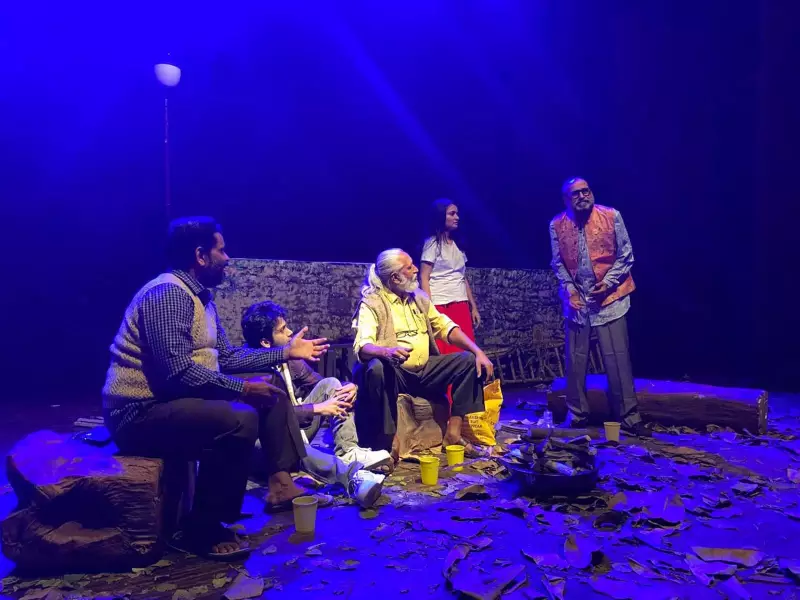
Badal Sircar's poignant 'Ek Madhur Prem Kahani Urf Pagla Ghoda' was a tale of love, loss, and redemption. Set in a cremation ground, it intertwined the stories of four men reminiscing about their lost loves, capturing the profound pain of unfulfilled relationships.
The festival concluded with Maneesh Verma's contemporary play 'Love & Lies (Stuck)'. Set during a stormy Himalayan trek, it presented a modern exploration of human relationships, betrayal, desires, and the ambiguous morality of contemporary love, all laced with raw emotion and humour.
Behind the Scenes: Passion and Precision
The success of the festival was a testament to the dedication of the artists and crew. Sikandar Kumar, Repertory Chief of SRCPA, highlighted the deliberate diversity in the selection. "We selected plays with completely different themes, whose concepts and experiences were entirely unique," he stated. He praised the powerful performances, meticulous lighting, evocative music, and detailed costumes that brought each character to life. "The applause and encouragement from the audience throughout the festival motivated us, and we will continue our efforts to bring even better productions to our audience," Kumar added.
The Panna Bharat Ram Theatre Festival 2025 has once again proven that live theatre holds an irreplaceable space in India's cultural heart. By blending classic and contemporary, and by fearlessly tackling social and personal themes, it offered a powerful reminder of the stage's enduring ability to reflect and challenge the world we live in.