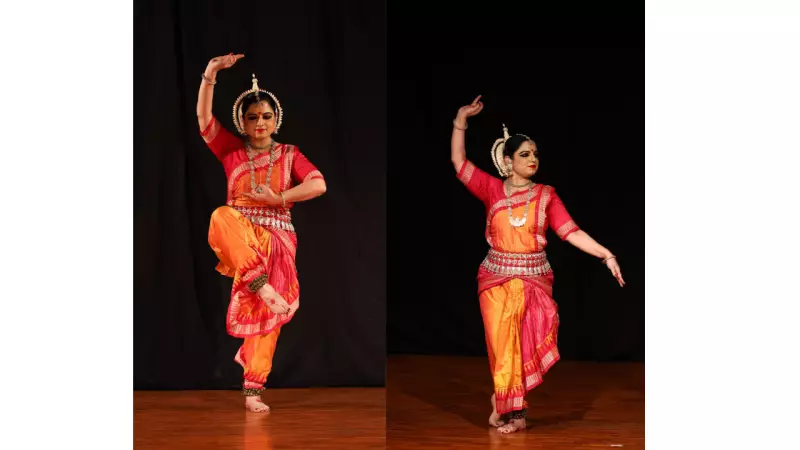
In a serene and focused presentation, Odissi dancer Karishma Ahuja recently captivated an audience with a recital that was a testament to classical purity and narrative depth. The evening unfolded with a deliberate and measured grace, allowing spectators to fully immerse themselves in the intricate language of the ancient dance form.
A Pallavi of Meditative Grace
The program commenced with a Pallavi set to Raga Ahir Bhairav and Taal Ektali. Choreographed by Ahuja herself to music composed by Srinibas Satapathy, this opening piece established a tone of deep contemplation. The performance was defined by clean, precise lines, controlled footwork, and seamless, unhurried transitions. The emphasis remained firmly on the interplay of rhythm and sculptural form, creating a restrained and introspective mood perfectly aligned with the meditative quality of the raga.
Narrative Power in Durga Stuti
The second item marked a shift from abstract rhythm to powerful storytelling. Presenting the Durga Stuti, Ahuja drew from the timeless myth of the goddess Durga's creation to vanquish the demon Mahishasura. This piece relied heavily on abhinaya (expressive acting) and evocative postures to outline the epic tale. Using the signature tribhanga stance of Odissi, the dancer depicted the deity's divine attributes and arsenal of weapons, all within the traditional vocabulary of the form.

The choreography for this piece was the work of the legendary Guru Kelucharan Mohapatra, with music by Debashis Sarkar. Set in a raga and tala malika (a garland of ragas and talas), it introduced a denser, more complex rhythmic texture. The intimate setting of the recital ensured that the audience's focus stayed on the nuanced details of expression and precise movement.
Upholding a Classical Legacy
Karishma Ahuja is a trained exponent of the Guru Kelucharan Mohapatra gharana, and her entire recital reflected this esteemed lineage's classical approach to both repertoire and technique. Her dedication to the form extends beyond the stage. Ahuja is actively involved in teaching Odissi, where she places a strong emphasis on foundational training in rhythm (laya), gesture (mudra), and expression (bhava). This dual role as performer and educator highlights her commitment to preserving and propagating the authentic practice of Odissi for future generations.
The recital stood out for its intellectual and artistic integrity, offering a profound engagement with tradition rather than superficial spectacle. It served as a reminder of the enduring power of classical dance when rooted in disciplined practice and deep understanding.