Odisha's Diamond Triangle Buddhist Sites Added to UNESCO Tentative World Heritage List
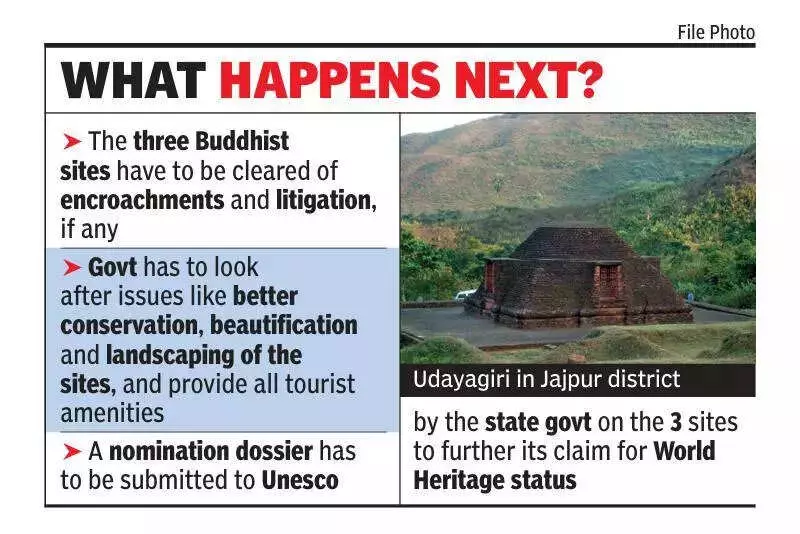
In a significant development for India's cultural heritage, UNESCO has included the 'Diamond Triangle' of Ratnagiri, Udayagiri, and Lalitgiri Buddhist sites in Odisha's Jajpur district in its tentative India list for consideration as a World Heritage Site. This move marks a crucial step toward potential global recognition for these ancient Buddhist complexes.
Historical Significance of the Diamond Triangle
The three Buddhist sites are believed to have witnessed the propagation of all three major schools of Buddhism: Hinayana, Mahayana, and Vajrayana. This unique characteristic underscores their immense historical and religious importance in the evolution of Buddhist thought and practice in the Indian subcontinent.
- Ratnagiri: Traditionally referred to as the 'hill of precious gems', it houses the largest Buddhist establishment in the Diamond Triangle, spread over 18 acres on the Assia hill range along the Kelua river.
- Udayagiri: Known as the 'hill of the rising sun', it features extensive archaeological remains.
- Lalitgiri: Called the 'red hill', it completes this sacred triad.
All three sites are replete with remarkable remains, including:

- Ancient stupas
- Sacred relics
- Monastery complexes
- Statues of Lord Buddha and other Buddhist deities
The Nomination Process and Future Steps
The Archaeological Survey of India (ASI), serving as the nodal agency for the World Heritage Convention on behalf of India, compiled comprehensive documentation and submitted the nomination to UNESCO's World Heritage Centre approximately eight months ago. The submission was made through Vishal V Sharma, India's ambassador and permanent representative to UNESCO.
D B Garnayak, ASI's superintending archaeologist for the Puri circle who worked on the nomination, explained the significance of this development. "A site's entry to the tentative list is a mandatory requirement for it to be nominated for inscription into the World Heritage List in the future," he stated. "The tentative list identifies sites that are of outstanding universal value, either culturally or naturally, and suitable for potential inscription."
Garnayak emphasized that it is now the responsibility of the Odisha state government to actively push the case of the Diamond Triangle further to secure the coveted UNESCO recognition. This involves preparing more detailed documentation, conservation plans, and management strategies that meet UNESCO's stringent criteria.
India's Growing Heritage Portfolio
Currently, India has 70 sites on UNESCO's tentative list across three categories: cultural, natural, and mixed. Other notable Odisha sites on this list include:
- Ekamra Kshetra of Bhubaneswar
- Chilika Lake in Ganjam district
Last year, the Chausathi Yogini group of temples at multiple locations across India, including two temples in Odisha (on the outskirts of Bhubaneswar and in Balangir), was also added to the tentative list. This demonstrates India's ongoing efforts to preserve and promote its rich cultural heritage on the global stage.
The inclusion of the Diamond Triangle in UNESCO's tentative list represents not just a bureaucratic milestone but a recognition of the profound spiritual and historical legacy embedded in these ancient landscapes. As the process moves forward, it promises to bring greater attention to Odisha's Buddhist heritage and potentially boost cultural tourism while ensuring better preservation of these invaluable sites for future generations.