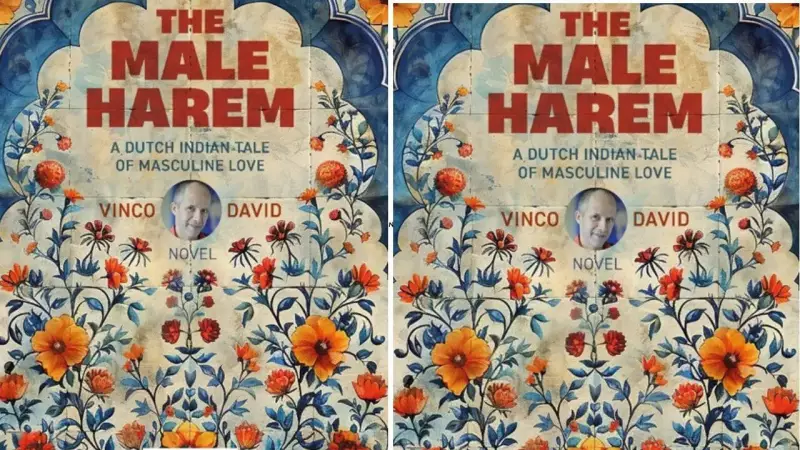
The late Dutch author Vinco David's final work, The Male Harem: A Dutch Indian Tale of Masculine Love, presents a powerful narrative that spans centuries and continents. This novel masterfully interlinks a rich historical account from early modern India with a compelling modern-day romance, delivering a poignant message about love, identity, and acceptance.
A Tale of Two Eras: From Royal Palaces to The Hague
The book unfolds through two distinct yet connected stories. The first transports readers to the opulence of a royal palace on the banks of the Yamuna River in medieval India. Here, an emperor maintains a male harem dedicated to love and pleasure, a practice historically tolerated in certain Indian regions. These men, living in luxurious captivity, navigate a perilous world filled with intense rivalry and jealousy.
The second narrative is set in the present day. It follows Amir, a young lawyer from Lucknow, who moves to the Netherlands for a posting at the International Court of Justice in The Hague. His journey of self-discovery accelerates when he meets Sjoerd, a Dutch historian specializing in South Asian art and culture. Their connection quickly deepens into a passionate romance.

The Struggle for Acceptance and a Historic Revelation
The couple's relationship faces its greatest test when Amir must confront his traditional, conservative Indian family about his Dutch partner. Facing painful rejection, Amir directs his anger at Sjoerd, lamenting in the novel that meeting him upended a life where he might have married a woman while having secret casual relationships.
The plot takes a fascinating turn through Sjoerd's historical research, which ingeniously bridges the two timelines. He uncovers documents revealing that Amir is ancestrally connected to the very emperor from the medieval male harem story. This revelation becomes a turning point for Amir. "I'm discovering a family document. After the rejection I felt...I no longer feel so alone in the family," he says, finding solace in a complex, tolerant past.
A Call for Freedom and Diversity in Modern India
By connecting centuries-old royal love to contemporary gay relationships that still face societal judgment, David crafts a compelling argument for acceptance. The narrative extends to Amir's temporary posting in Afghanistan with the US government, where he bonds with Rahim, another gay man. Rahim's heartfelt letter wishing for a world without fear underscores the universal longing for safety and freedom.
The novel draws a direct parallel to influential works like Uncle Tom's Cabin, hoping to spark social change. David, who intended this as the first of three Indian novels, argues that by denying gay and bisexual men full rights, India stifles potential. He cites historical figures like Michelangelo, Tchaikovsky, and Alan Turing—men who loved men and greatly enriched global culture and science—as examples of what can flourish in an accepting society. The book ends with a hopeful plea for more freedom and sexual diversity in India, so that future generations can live, love, and create without fear.