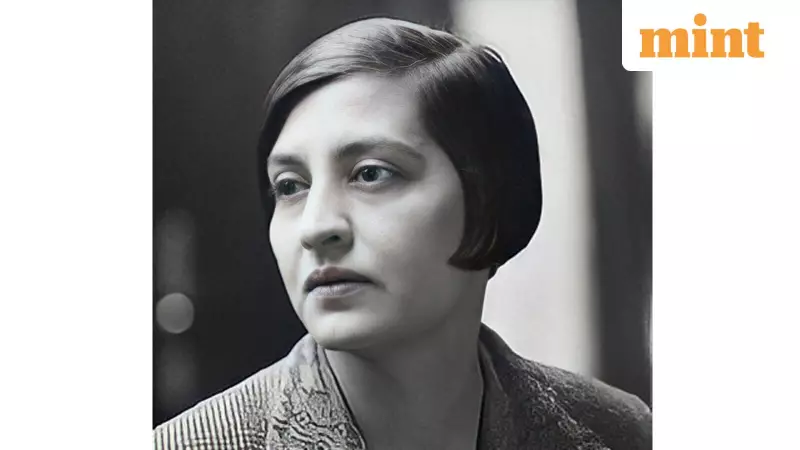
In 1935, a remarkable Turkish feminist and nationalist, Halide Edib, embarked on a significant lecture tour across India. Having fought alongside Mustafa Kemal Ataturk for Turkey's emancipation from the Ottoman Empire, her journey was hosted by the eminent Indian nationalist, Dr. M.A. Ansari, a close follower and personal physician to Mahatma Gandhi.
A Historic Visit and Its Literary Rebirth
Edib spent several weeks at Ansari's residence in Delhi, meeting the elite of society and students at Jamia Millia Islamia before traveling to over half a dozen Indian cities. She later penned a memoir of her experiences, including vivid impressions of her days with Gandhi, which was published in a tribute volume after his assassination in 1948.
Drawing extensively from this historical material, Australian author Inez Baranay's latest novel, Soul Climate, creatively reconstructs Edib's Indian sojourn. Published by Speaking Tiger, the 272-page book is a work of deep research and imagination that boldly intersects biography, memoir, and fiction to critique the persistent communal politics from the 1930s to the present day.

The Fictional Tapestry: Three Cousins in a Turbulent Era
While anchored in factual research from online and archival sources, the novel's heart lies in the imaginative lives of three young Muslim cousins—Zoya, Aisha, and Nuran. Set in colonial India, more than a decade before Independence, these educated and refined women grapple with pressing personal and political questions.
They are deeply influenced by their "Aunty Toy," who was jailed for her active role in Gandhi's pacifist movement. Their paths, however, diverge sharply. Aisha and Nuran charm Parisian salons with their saris and wit, while Zoya, introverted and troubled, finds solace at Ramana Maharishi's ashram in south India.
Zoya's meditative calm leads her on a spiritual path, contrasting with Aisha's ambition to become a firebrand lawyer and Nuran's dream of marrying her beloved, Sajjad. Baranay deftly weaves their destinies with the narrative of Edib's visit, creating a rich exploration of identity and nationalism.
Connecting Eras: From Ataturk to Gandhi to Today
The novel presents a compelling contrast between the modernizing, secular vision of Ataturk, the father of modern Turkey, and the spiritual, pacifist nationalism of Gandhi, India's great patriarch. Baranay, who spent years researching in India, delves into Edib's writings to paint a composite portrait of a turbulent era.
What gives Soul Climate its urgent contemporary resonance is the author's frequent return to the present day. She connects current political and social troubles in India directly to the lingering legacies of caste and orthodox religiosity from pre-Independence times.
The title itself is borrowed from Edib's own description of her profound feeling for India. While the blend of genres is not always seamless—with occasional metafictional indulgence and knotty syntax—the novel succeeds in opening a fascinating window into a pivotal historical moment.
It captures a period where old and new cultures melded, shaping India's uniquely cosmopolitan character, all through the intertwined journeys of a celebrated Turkish visitor and three fictional Indian women seeking their place in a changing world.