Nagpur Immersed in Divine Atmosphere for Mahashivratri Celebrations
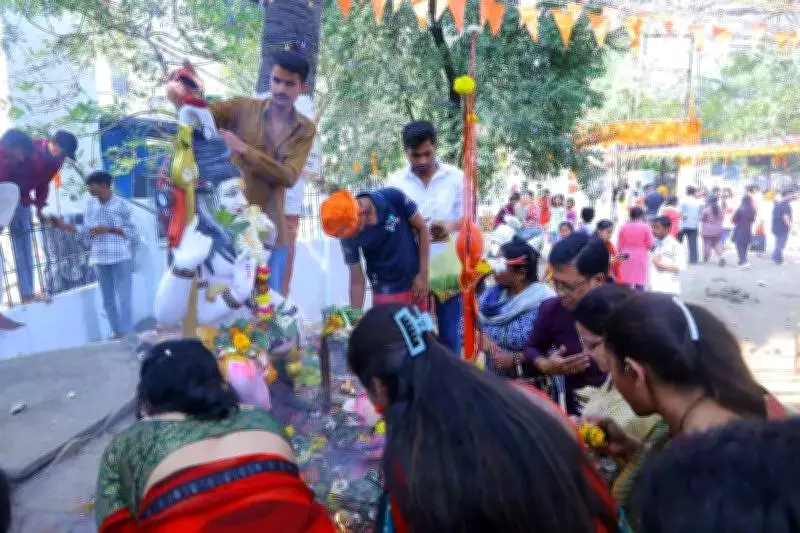
The city of Nagpur experienced a remarkable outpouring of faith and devotion on Sunday as Mahashivratri was celebrated with deep religious fervor. From the early hours of Brahma Muhurta until midnight, the sacred chants of "Har Har Mahadev" echoed throughout numerous temples, with thousands of worshippers gathering to offer prayers to Lord Shiva.
Major Temples Witness Long Queues and Special Rituals
Prominent Shiva temples across Nagpur saw extensive queues of devotees carrying traditional offerings including bel leaves, milk, flowers, and sacred water for abhishek ceremonies. Elaborate rituals such as Rudrabhishek, Laghurudrabhishek, havan, and maha-aarti were performed amidst continuous Vedic chanting. Many worshippers observed day-long fasts and participated in night-long jagrans, seeking divine blessings for relief from life's challenges and sorrows.
At the ancient Bhuteshwar Shiv Temple, considered one of the city's oldest and most revered shrines, bhajans and kirtans continued throughout the entire day. Devotees formed long lines until late at night for darshan, with temple authorities implementing special arrangements to manage the substantial crowds effectively.

Elaborate Programs Across Multiple Temple Locations
Similarly, comprehensive programs were organized at the Kalyaneshwar Temple and the historic Shiva temple at Mankapur. "Mahashivratri is not merely a festival for me; it represents a night of self-discipline and profound reflection," explained 22-year-old Karan Dixit, a college student at Kalnyaneswar Temple in Mahal. "I observe a strict fast, continuously chant 'Om Namah Shivaya,' and remain awake for the jagran. As a young individual, this constitutes my personal sadhana—controlling distractions and focusing on inner strength inspired by Lord Shiva."
In Nandanvan, devotees assembled at the Shri Lakshminarayan Devasthan, renowned for its impressive 51-foot statue, where couples performed Laghurudrabhishek rituals. At the South East Central Railway Colony's Bellishop Temple, a mass Rudrabhishek was conducted during the early morning hours, followed by havan and aarti ceremonies before the temple premises opened for public darshan.
Community Support and Spiritual Ambiance
The Ardhanarishwar Temple at Mokshadham Ghat also experienced significant attendance, with devotees engaging in special prayers within a serene riverside setting. Various social and religious organizations provided essential support by arranging drinking water, prasad distribution, and food services for devotees attending jagran programs. Volunteers were strategically deployed to streamline crowd movement and ensure the smooth execution of all rituals.
Throughout multiple areas of the city, devotional songs filled the atmosphere, while in some locations, young people were observed dancing to bhajans played through DJ systems, creating a unique blend of celebration and spirituality. Illuminated temple premises, the aromatic fragrance of incense, and the rhythmic chanting of sacred mantras collectively established a profoundly divine ambiance across Nagpur.
Significance of Mahashivratri in Hindu Tradition
Mahashivratri, recognized as one of the holiest festivals within the Hindu calendar, symbolizes unwavering devotion to Lord Shiva and represents the triumph of faith over adversity. In Nagpur, this festival once again transformed into a collective expression of belief, unity, and cultural tradition, as devotees gathered in substantial numbers at temples and remained immersed in prayer until midnight, reinforcing the city's spiritual heritage.