Nagpur's Railway Museum Emerges Stronger After Devastating Fire
Some destinations reveal their true essence only through repeated visits, and Nagpur's Narrow Gauge Railway Museum at Motibagh stands as a perfect example of this phenomenon. This remarkable space demands more than a single encounter, with each return visit peeling back another layer of its quiet historical grandeur and revealing fresh fragments of India's railway legacy that provoke deep reflection.
A Living Chronicle of Railway Heritage
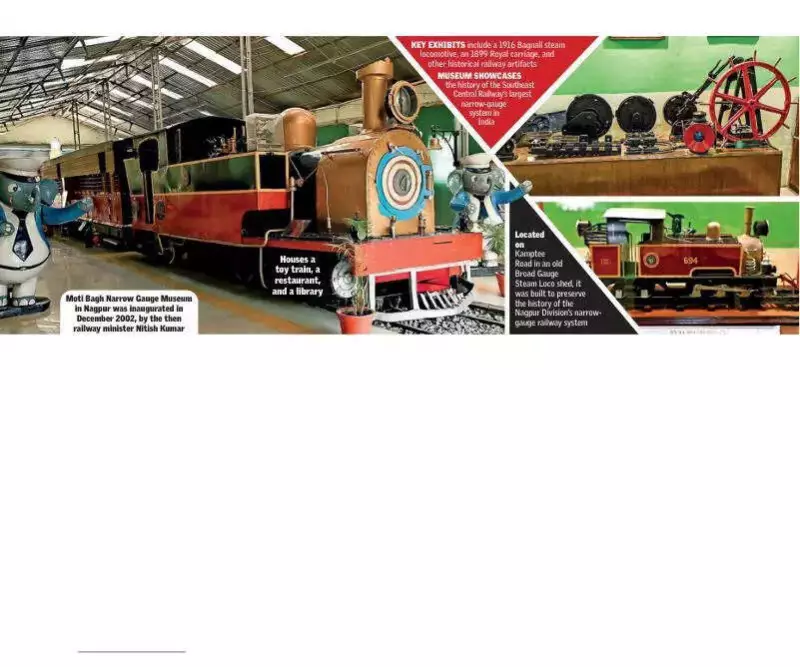
At Kadbi Chowk, nestled within preserved relics of iron, steam, and human endeavor, India's railway narrative unfolds with exceptional intimacy. Spread across a historic steam locomotive shed on Kamptee Road, this museum serves as a living chronicle documenting over 125 years of railway heritage in Central India. Carefully conserved tools, signaling equipment, and locomotives stand as enduring witnesses to an era when engineering ambition and human ingenuity fundamentally shaped the region's destiny.
The exhibits trace a fascinating evolution from coal-fired engines to the gradual emergence of diesel power, narrating the changing relationship between humanity and machinery in a journey that consistently leaves visitors in quiet awe. The interior galleries overflow with visual memories, featuring black-and-white photographs that capture steam engines chugging along SECR routes, hauling modest three-coach trains across bridges, alongside images of gangmen at work, tracks being laid by hand, and lanterns that once illuminated isolated stations.

From Ashes to Remarkable Revival
The museum's recent resurgence makes its appeal particularly compelling. In March 2024, a devastating fire—suspected to have been caused by a short circuit—gutted four crucial sections including the office, a mini-theater, archival galleries, and a storeroom housing priceless railway documents, miniature engines, stamp collections, and electronic equipment. The estimated loss reached ₹75 lakh, forcing the museum to close its doors for several months.
Yet, from these ashes emerged a remarkable revival story. Core heritage assets miraculously escaped major damage, including the iconic 1916 Bagnall steam locomotive, the exquisitely crafted 1899 wooden royal carriage, and a 1964 diesel engine. Over the past year, South East Central Railway (SECR) undertook a meticulous restoration drive, refurbishing heritage rolling stock, redesigning lawns and gardens, and restarting the much-loved narrow-gauge toy train ride that has delighted generations.
Record Visitors and Global Recognition
The restoration results speak for themselves. Family groups, school excursions, and weekend visitors now frequent the complex in numbers that significantly exceed pre-fire levels. This renewed charm has even attracted international attention, with overseas tourists adding to the diverse visitor profile. Nancy and Matt, visitors from California exploring the museum recently, shared their perspective: "We are on a pan-India tour to see historic sites, and this is one of them. The collection is terrific," Nancy remarked, highlighting the museum's growing global appeal.
Blending Heritage with Modern Leisure
What distinguishes the revived Motibagh Rail Museum is its seamless integration of heritage preservation with contemporary leisure experiences. Indoors, visitors can explore a diverse collection of rare artifacts including steam and diesel engines, coaches, freight wagons, station models, rare documents, historical photographs, a machine gallery, and a working model steam locomotive. Outdoors, beautifully landscaped gardens, open lawns, children's play zones, and heritage rolling stock create inviting spaces for visitors to linger and absorb their surroundings.
The beloved toy train ride through the complex remains a perennial favorite, particularly captivating younger visitors. Modern amenities have further broadened the museum's appeal, with a newly added food court featuring an ice cream parlour, food kiosks, and beverage counters. A gaming zone, children's activity areas, birthday celebration spaces, and facilities for private events have transformed the complex into a multifunctional public space.

Expanding Experiences and Educational Value
Additional enhancements include ongoing work to revive the iconic revolving restaurant housed in a rail coach, alongside a souvenir store offering railway-themed memorabilia. Enhancing the outdoor experience are life-size wildlife replicas—including lions, sambar, chital, and sarus cranes—which have quickly emerged as popular selfie spots. Meanwhile, the auditorium destroyed in the fire is being rebuilt and is expected to soon host educational sessions, documentary screenings, and cultural programmes.
SECR officials emphasize that the restored museum has "greatly expanded its utility," successfully combining history, recreation, and open public space in a manner few heritage sites achieve. "The response since reopening has been very encouraging," an official noted, reflecting the institution's renewed vitality.
Pravin Dabli, former ZRUCC member of SECR, echoed this sentiment: "The Narrow Gauge Railway Museum continues to attract local residents as well as foreign tourists. Although some heritage assets were damaged in the fire incident, restoration and completion work is being carried out at a fast pace. The museum not only preserves the rich legacy of the railways but also plays an important educational role by imparting knowledge about railway history and technological development to schoolchildren."
This remarkable transformation demonstrates how cultural institutions can overcome adversity to emerge stronger, more relevant, and more engaging than ever before, ensuring that Nagpur's railway heritage continues to inspire future generations.