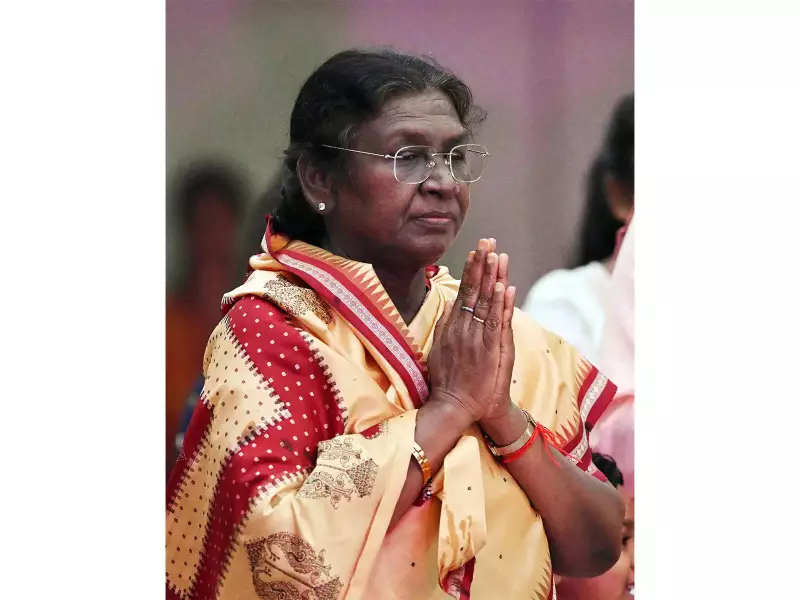
President Droupadi Murmu is set to add a significant national presence to a major interstate cultural gathering in Jharkhand later this month. She will attend the valedictory session of the two-day "Antar-Rajiye Jansanskritik Samagam Mahotsav - Kartik Jatra" in Manjhatoli, located in the Gumla district.
A Confluence of Tribal Art and Culture
The event, scheduled for December 30, is designed as a vibrant platform for artists from three neighboring states: Jharkhand, Chhattisgarh, and Odisha. The festival is being organized under the aegis of the Pankhraj Saheb Kartik Oraon Adivasi Shakti - Swayatshasi Vishwavidyalaya Nirmal Samiti (PSKO ASSVNS).
According to Shiv Shankar Oraon, the chief convenor of PSKO ASSVNS and a former Gumla MLA, the scale of participation is expected to be massive. Over 1,000 cultural groups representing local tribal and other communities from the three states are anticipated to take part in the celebrations.

High-Profile Guest List for the Grand Finale
While President Murmu will be the chief guest for the concluding session, the event will witness a convergence of other prominent political figures. The dignitaries confirmed to attend include:
- Jharkhand Governor Santosh Kumar Gangwar
- Chhattisgarh Governor Ramen Dekha
- Jharkhand Chief Minister Hemant Soren
- Chhattisgarh Chief Minister Vishnu Deo Sao
- Union Minister for Tribal Affairs, Jual Oram
This high-level attendance underscores the cultural and social importance of the festival, which aims to bridge communities through shared artistic expression.
Preserving and Enriching Cultural Heritage
Explaining the core objective of the grand samagam, Shiv Shankar Oraon emphasized its role in cultural preservation. The primary goal is to preserve, enrich, and strengthen the socio-cultural fabric of both tribal and non-tribal communities in the region.
By bringing together diverse artistic traditions on a single stage, the festival seeks to foster mutual understanding and appreciation. It provides a vital space for indigenous art forms to be celebrated and passed on to future generations, ensuring their continuity in a rapidly modernizing world.
The choice of Gumla district as the venue is particularly symbolic, given its significant tribal population and rich cultural history. The event promises to be a colorful and powerful display of the living heritage of eastern India, now receiving recognition at the highest levels of the nation's leadership.