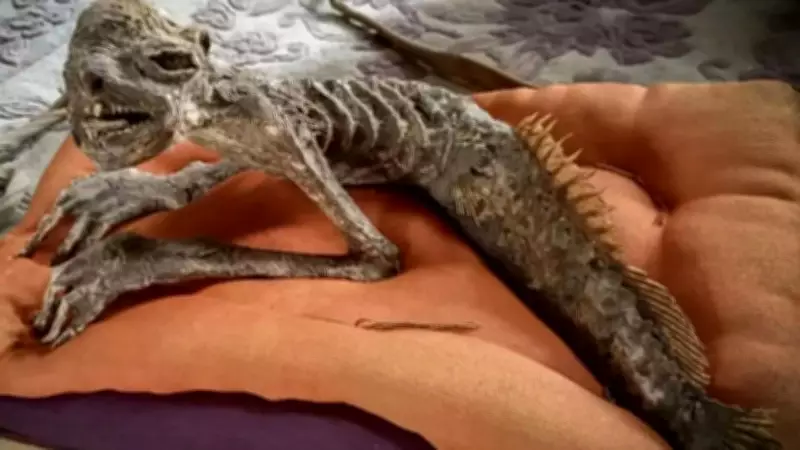
Mummified 'Kappa' Figure Uncovered in Fukushima Home, Experts Declare It a Crafted Artefact
A bizarre mummified figure, described as a "half-fish, half-human" entity, has been reportedly discovered in an old house located in Fukushima, Japan. This skeletal remains exhibit a humanoid upper torso with elongated arms and claw-like hands, while the lower body features a distinct fish-like tail adorned with scale-like textures. The mouth of the figure contains multiple rows of pointed teeth, adding to its eerie appearance.
Expert Analysis Confirms Artificial Origin
Specialists who have examined the figure assert that it is likely a crafted model rather than a preserved biological specimen. They note that the artefact is approximately the size of a child, which aligns with other similar models found in Japan. The construction is believed to involve animal bones and various other materials, assembled to create a visual representation. There is no scientific evidence suggesting that this figure represents an actual living creature; instead, it is viewed as an artefact rooted in folklore.
Connection to Japanese Kappa Folklore
The figure is closely linked to the kappa, a mythical water-dwelling creature from Japanese folklore. Kappa are traditionally depicted with scaly skin, webbed hands and feet, and a hollow on the top of their head that holds water. These beings are often portrayed as mischievous and sometimes harmful, known for stealing food, challenging humans to wrestling matches, or pulling animals and people into water bodies like rivers and ponds.

Kappa have been a part of Japanese culture for centuries, appearing in Edo-era art and literature, as well as in modern forms such as manga and anime. Experts believe that models like this one were created to visually depict these mythical creatures, serving as tangible representations of local myths and legends.
Historical Context and Similar Artefacts
Reports indicate that around ten similar "mermaid" or kappa figures exist across Japan. These models were typically crafted for various purposes, including religious rituals, educational displays, or to attract visitors to cultural sites such as temples and shrines. The practice of creating representations of mythical creatures was common in historical times, and these figures are considered valuable for studying historical approaches to folklore and regional culture.
Exhibition and Sale Details
According to sources, the figure is scheduled to be displayed at the Yonezawa City Citizens’ Gallery in Yonezawa as part of the Oshu Rare Treasures Market, which will take place on March 28 and 29, 2026. Following the exhibition, the artefact will reportedly be available for purchase, with organisers estimating its value at around £11,755. Previous sales of similar figures have demonstrated significant collector interest in rare folkloric artefacts, highlighting the cultural and historical appeal of such items.
Composition and Authenticity Insights
Experts reiterate that the figure was likely assembled from animal bones and other materials, a conclusion supported by previous scientific analyses of similar mummified models. These studies have consistently confirmed the artificial composition of such artefacts, reinforcing that they do not represent real organisms. The Fukushima figure is thus considered a crafted artefact, created to embody folklore rather than any biological reality.
This discovery underscores the enduring fascination with mythical creatures in Japanese culture and provides a unique glimpse into the ways folklore has been visually interpreted and preserved over time.