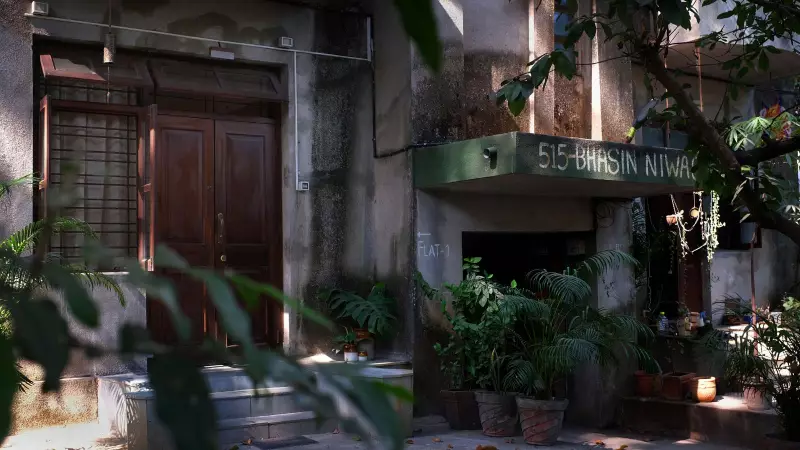
Nestled opposite the VJTI college and Mahajan Lane in central Mumbai, the serene, tree-lined RP Masani Road in Matunga holds within its quiet confines a glittering chapter of Indian cinema's history. For decades, this unassuming stretch was the cherished address for a constellation of film industry legends, earning it the affectionate nickname 'Hollywood Lane'.
The Golden Era: When Stars Called Matunga Home
The lane's tryst with fame began in the 1930s and continued until the early 1960s. It was in 1939 that Prithviraj Kapoor moved his entire family into a five-room apartment here. This migration coincided with the development of Matunga as a suburb under the Dadar-Matunga-Wadala scheme. Historian and long-time Matunga resident Sanjay Joshi explains that the newly developed area was perfect for artists and migrants who found space scarce in South Mumbai. Many families, having migrated during Partition, settled here because they already knew residents on this very lane.
Following the Kapoors, a wave of iconic names made RP Masani Road their home. The list is a veritable who's who of classic Bollywood: the legendary singer K L Saigal, the entire Kapoor family including Prithviraj and his actor sons Raj, Shammi, and Shashi. They were joined by actor-director Manmohan Krishna, villain Madan Puri, director-producer J K Nanda, playback legend Manna Dey, composer Anil Biswas, and actress Ashalata. Even Mithun Chakraborty lived in the back lanes for a brief period. With a predominant Punjabi community, the area also became known as 'Punjabi Gully'.

Unforgettable Anecdotes from a Star-Studded Neighbourhood
The lane was alive with music, camaraderie, and impromptu gatherings. One memorable evening in the 1930s, actor K N Singh hosted a musical night at his home where his neighbour, K L Saigal, performed. As the session ended and curtains were drawn, the hosts were surprised to find a group of students from the neighbouring VJTI college standing in pin-drop silence, having listened from outside. "When he saw the group of students outside, Saigal saab once again opened his peti (harmonium) and started to play for the students," recalled Pushkar Singh, K N Singh's son, who still lives in the same house.
Kamlesh Puri, son of Madan Puri, notes in his book 'My Father, the Villain' that it was common to see a young Bal Thackeray (then a cartoonist) and even the melody queen Lata Mangeshkar frequent the lane, often to visit K L Saigal. The residents lived in remarkable harmony, celebrating festivals like Lohri, Holi, and Diwali with great pomp, which inevitably drew crowds of fans.
The sense of community was strong. A resident of the iconic Art Deco building Sethi Niwas shared a heartwarming memory: "We had an old Austin car to drop us off at school. Being very old, it would stop frequently, and neighbours like Prithviraj Kapoor would come down to push the car and give it a start. Such incidents were common. All residents were like a tight-knit family. Bohot closeness aur apnapan tha hum sab mein."
The Changing Face of a Historic Lane
By the late 1950s, the exodus began. Lured by larger, spacious bungalows, most star families started relocating to the rising suburb of Bandra. Today, only a few original families remain, including those of Manmohan Krishna, J K Nanda, and Madan Puri. While these old residents maintain their bonds, they acknowledge the lane's transformed character.
"Even now, we are in touch and live like a family. But the character of the gully has changed a lot. Many older grand buildings have been replaced by upcoming high-rises. This has made it difficult to connect, so we barely know our new neighbours," laments the Sethi Niwas resident. Despite the tide of redevelopment, physical emblems of the past endure, like the original gate outside the refurbished Krishna Niwas, belonging to Manmohan Krishna's family, standing as a silent nod to the lane's glorious history.

Thus, RP Masani Road remains a physical archive of Bollywood's formative years, a quiet lane where the echoes of harmoniums, shared laughter, and the footsteps of legends still seem to linger in the leafy air.