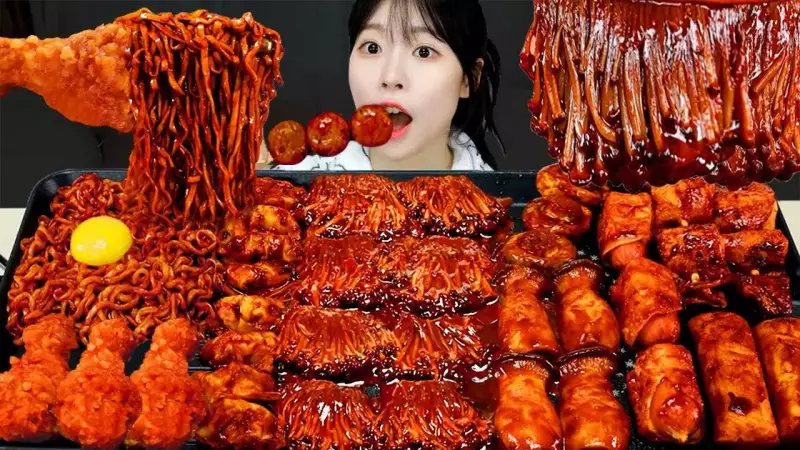
At first glance, the global craze of Mukbang videos appears puzzling. An individual sits before a camera, consumes copious amounts of food, speaks in hushed or excited tones, and attracts thousands, often millions, of viewers live or on replay. There is no storyline, no clear display of talent, and no visible metamorphosis. Despite this, Mukbang content consistently garners enormous audiences on platforms such as YouTube and various live-streaming applications. The secret to its appeal extends far beyond the culinary display. It is fundamentally about companionship.
The Korean Origins and Global Journey of Eating Broadcasts
Mukbang originated in South Korea in the late 2000s, a period marked by a sharp increase in single-person households. The act of eating alone, once considered unusual, became commonplace. The term itself is a portmanteau of the Korean words for "eating" (meokneun) and "broadcast" (bangsong). It offered a simple yet powerful solution: the sensation of sharing a meal. Viewers could participate through comments and live chats, feeling acknowledged and accompanied as the host ate with them.
What started as a local trend rapidly crossed borders. Today, Mukbang is a multicultural phenomenon, encompassing diverse cuisines and formats. These range from ASMR-style silent eating sessions to lively, comfort-driven conversations, demonstrating its adaptable nature.

The Psychology: Why We Find Comfort in Watching Others Eat
Human beings are inherently social creatures, and for millennia, sharing meals has been a cornerstone of community and connection. When we eat alone, our ingrained social expectations often leave a void. Mukbang expertly fills this gap. The act of watching someone eat can trigger a neurological sense of social presence; even passively, the brain may interpret it as shared time.
This aligns with studies on parasocial interaction, where individuals form one-sided emotional bonds with media personalities. Repeated exposure to a Mukbang creator can provide genuine comfort and reduce feelings of isolation for viewers. Furthermore, for some, these videos serve an appetite-regulating function. Individuals who are dieting, on restricted meal plans, or experiencing loss of appetite may use Mukbangs to feel vicariously satisfied or motivated to eat their own meals.
Modern Loneliness and the Quiet Role of Digital Companionship
Mukbangs are rarely consumed with undivided attention. They often play in the background while someone eats dinner alone, works late into the night, or scrolls through their phone. The creator becomes a background presence—a source of casual chatter, the sounds of chewing, and reactions—effectively mimicking the low-pressure intimacy of sharing a table.
This addresses a contemporary form of loneliness that is often quiet and invisible. It manifests in solitary meals, remote work, and passive content consumption without real interaction. Mukbangs fill the silence without demanding social effort. The frequently criticized large portions also play a psychological role, where abundance signals care, indulgence, and permission to enjoy, which can be relieving in cultures preoccupied with food guilt.
However, the format is evolving. Many creators now focus on normal portions, mindful eating, and homely meals, responding to health concerns about performative excess. This evolution highlights a critical tension: while Mukbangs offer valuable digital comfort, they also underscore a deeper societal issue—the lack of real-time companionship in daily rituals. When digital substitutes become a primary source of solace, they risk replacing human interaction rather than supplementing it.

The immense popularity of Mukbang does not indicate that people prefer screens to real company. Instead, it reveals how people are adapting to the companionship available to them. In an era where loneliness is as much about feeling unseen as it is about being alone, Mukbangs succeed by simulating shared presence without the pressures of conversation or vulnerability. They reflect a world craving softness, routine, and familiar coexistence. Ultimately, Mukbangs are not strange because people watch others eat; they are profoundly revealing because so many need the simple, comforting feeling of eating together. In essence, they are about filling empty chairs at the table, one video at a time.