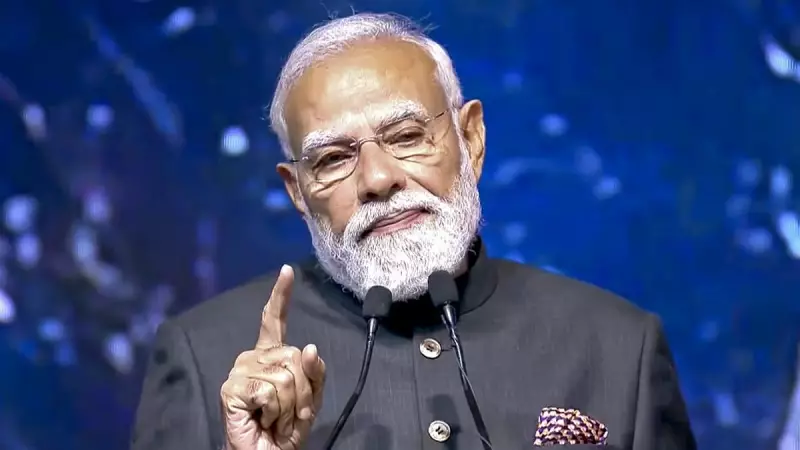
Prime Minister Narendra Modi inaugurated a grand international exposition of the sacred Piprahwa Relics, delivering a powerful message on their profound significance. The event, held on January 3, 2026, highlighted India's deep cultural and spiritual legacy.
Relics Are Living Heritage, Not Mere Artefacts
In his address, Prime Minister Modi made a crucial distinction about the nature of the relics. He emphasized that the sacred remains discovered at Piprahwa are not just archaeological artefacts to be studied. Instead, he described them as an integral and revered part of India's living heritage. This framing shifts the perspective from historical curiosity to ongoing spiritual relevance.
Modi articulated that Bhagwan Buddha belongs to everyone and serves as a unifying force for all people. His words underscored the universal appeal and message of peace associated with Lord Buddha, which transcends geographical and cultural boundaries. The exposition aims to share this unifying legacy with the world.

Historical Significance of the Piprahwa Discovery
The relics at the heart of this exposition have a remarkable history. They were originally discovered in 1898 at Piprahwa, a site in Uttar Pradesh believed by many scholars to be the ancient city of Kapilavastu. This connection makes the find exceptionally significant for Buddhist history and global archaeology.
The international exposition provides a rare opportunity for devotees and historians alike to witness these sacred objects. By hosting such an event, India positions itself as the custodian of a heritage that has global resonance, particularly across Asia.
A Message of Unity and Shared Legacy
The Prime Minister's inauguration speech carried a forward-looking message. By stating that Buddha unites all people, Modi highlighted the potential of India's ancient wisdom to foster global harmony. The exposition is more than a display; it is an act of cultural diplomacy and a celebration of shared human values.
The government's effort to organize this grand exposition signals a commitment to preserving and promoting India's spiritual heritage on the world stage. It reinforces the nation's role as the birthplace of Buddhism and a centre for philosophies that promote non-violence and compassion.
In conclusion, the inauguration of the Piprahwa Relics exposition marks a significant moment where cultural preservation meets soft power. Prime Minister Modi's words successfully re-contextualized ancient relics as a living, unifying heritage for India and the world, ensuring their story continues to inspire future generations.