From Croissant to Prashant: The Hilarious World of Mispronounced Food Names in India
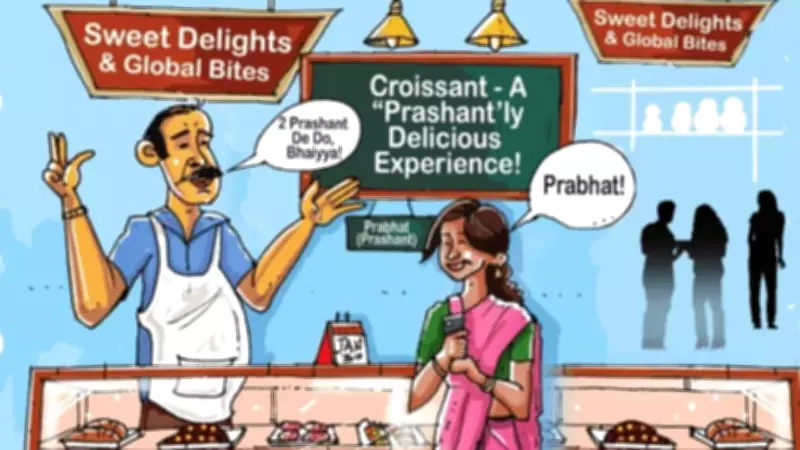
When a croissant became ‘prashant’ in a viral video, it sparked more than just laughter; it ignited a cultural phenomenon. Britannia quickly capitalized on the trend by renaming its croissants ‘prashant’, showcasing how such mispronunciations can transcend memes to influence branding. Across India, misnaming foreign foods is commonplace, reflecting a playful adaptation of global cuisines into the local linguistic fabric.
The Common Culprits: Foreign Foods with Indian Twists
In India, mispronunciations of international dishes are the norm rather than the exception. For instance, ‘crêpe’ (krehp) often turns into ‘crape’, ‘crème brûlée’ (krem broo-lay) becomes ‘cream broo-lee’, and ‘schnitzel’ (shnitsel) is frequently called ‘snitch-sale’. This trend highlights how Indians creatively make foreign terms their own, blending them with familiar sounds and contexts.
Navdeep Tupe, an IT professional from Pune, shared a personal anecdote about ordering a quesadilla. “I knew what it was from TV shows and movies, but I struggled to say ‘kwesadilla’ at a Mexican restaurant. The owner helped me with a linguistic jugaad, suggesting I pronounce it as ‘kaise diya’, like asking a vendor for a price,” he recalled. This example illustrates how local ingenuity bridges language gaps in everyday interactions.

Educational Insights: Teaching Foreign Languages and Food
Tanmay Tagare, a German teacher at the Goethe-Institut/Max Mueller Bhavan in Pune, noted that mispronunciations are both a challenge and a source of amusement in language classes. “Students often confidently mispronounce German food names, leading to hilarious moments. For example, Sachertorte (zakh-er-tor-teh) is linked to ‘sakhar’ (sugar in Marathi), Muskatnuss (moos-kaat-nooss) sounds like ‘muskatt’ (a slap), and Wange (vahn-geh) resembles ‘vaange’ (brinjal), causing laughter,” he explained. Such instances show how cultural references shape language learning.
Tagare added that words like Dickmilch (dikmilkh), a type of sour milk, can provoke awkward reactions when said in English, underscoring the humorous side of cross-cultural communication.
Regional Dishes: Mispronunciations Within India
Mispronunciations are not limited to foreign foods; Indian regional dishes also face similar fates. Dishes like ‘Nenjelumbu rasam’ are often called ‘ninja rasam’, and ‘Chemmeen Ularthiyadhu’ becomes a guessing game for many. This reflects the diversity of India’s culinary landscape and the challenges in navigating it.
Preetam Shah, a hospitality executive from Surat, observed that even non-Gujaratis struggle with local terms. “During my hotel management studies in 2018, a foreign student kept calling ‘kadhi’ ‘curry’. I explained the difference, noting that kadhi uses yogurt and gram flour. Similarly, ‘Akha Adad’ is often mispronounced as ‘Aka Dad’ by outsiders, showing their interest in trying new foods despite pronunciation hurdles,” he said.
International Perspectives: Learning from Mistakes
Adeline Lannes, a French intern in Kolkata, found the ‘croissant-prashant’ trend amusing and relatable. “My friends in France made reels asking for prashant instead of croissant, highlighting the global reach of this meme. It also shows Indians’ love for croissants, whether at home or abroad. We French make mistakes too; I once called sandesh a ‘sandwich’ until corrected,” she shared. This mutual learning process fosters cultural exchange and understanding.
Cultural Debates: Pronunciation as a Point of Contention
Shruti Mahajan, a home chef from Bengaluru, pointed out how regional pronunciations can lead to friendly debates. “At a food festival, there was a discussion on whether it’s ‘do-sa’ or ‘do-sha’. As a Tamilian, I explained that ‘dosai’ is the original term. Such conversations enrich our culinary heritage and spark curiosity,” she noted. These interactions emphasize how food names evolve and adapt across different communities.

In summary, mispronouncing food names in India is more than just a linguistic quirk; it is a testament to the country’s vibrant, multilingual culture. From viral trends like prashant to everyday mishaps with regional dishes, these moments highlight how Indians embrace and personalize global and local cuisines, turning potential errors into opportunities for humor and connection.