Medieval Silver Pendant with Ancient Roman Gem Discovered in Essex Farmland
Archaeologists have made a remarkable discovery in the English countryside, unearthing a medieval pendant that contains a gemstone dating back to the Roman Empire. This fascinating find provides a unique window into how historical artifacts were repurposed across different eras.
Discovery by Metal Detector Enthusiast
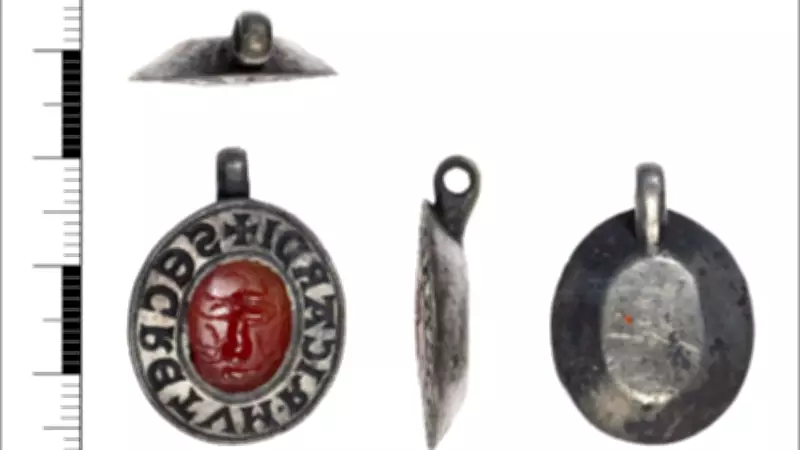
The discovery occurred in September 2024 on farmland in Essex, approximately 45 miles northeast of London. A local metal detectorist uncovered a small oval pendant crafted from silver, measuring roughly one inch in length. According to experts from the UK's Portable Antiquities Scheme, the jewelry dates back to between the 13th and 15th centuries based on its design, condition, and discovery location.
Medieval Seal with Latin Inscription
The silver frame of the pendant features engraved mirrored Latin text that would have been used to create wax impressions. The official record in the UK antiquities database indicates that when pressed into wax, the inscription reads "SECRETVM.RICARDI", which translates to "Richard's secret" or "Richard's secret seal". Accompanying the text is a small engraved cross, a typical symbol of Christianity in medieval Europe. Archaeologists believe this pendant served as a personal seal during the medieval period.

Unexpected Roman Connection
What makes this discovery particularly extraordinary is the pendant's central red gemstone. Researchers have determined that this carved gem predates the medieval setting by more than a thousand years. The gemstone is believed to have been created during the Augustan era of the Roman Empire, possibly in the late first century BCE.
The gem depicts a racing chariot, a scene commonly found in Roman intaglios, and could similarly be pressed into wax to create a raised image. This combination of Roman and medieval craftsmanship offers valuable insights into historical artifact reuse.
Historical Context and Significance
According to the Portable Antiquities Scheme, while combining Roman gems with medieval metalwork was rare, it was not entirely unheard of. "Gem-set seal matrices were used by both citizens and the nobility to indicate social status," the database notes. Wealthy elites often imported finely crafted gems, while people of lower status sometimes reused older Roman artifacts discovered during agricultural activities like ploughing fields or digging land.
Archaeologists emphasize that this pendant highlights the lasting influence of the Roman Empire in Britain. Roman forces arrived in the first century BCE and occupied the region until the early fifth century CE, leaving behind objects that continued to circulate long after their rule ended.
Legal Status and Future Display
Due to its age and historical significance, the pendant has been legally classified as a "treasure" under UK law. As a result, it is unlikely to remain with the finder. The Braintree Museum has confirmed it is in discussions to acquire the object, with plans to place it on public display. This will allow visitors to witness firsthand how a medieval accessory concealed a much older Roman secret, bridging two distinct historical periods through a single remarkable artifact.