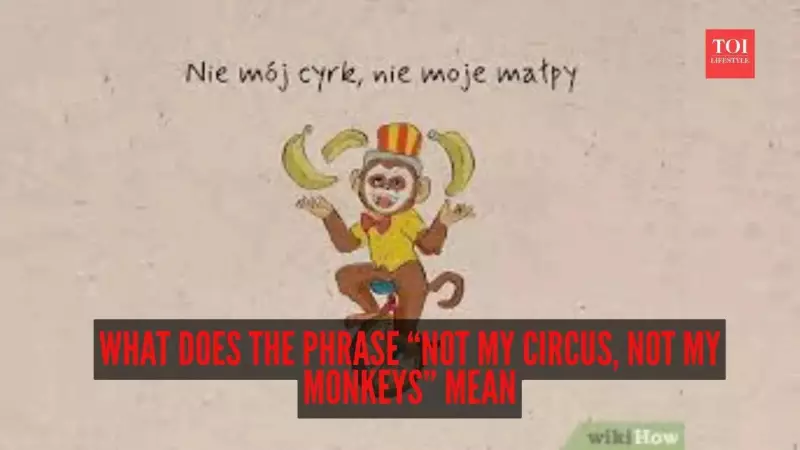
Have you ever heard someone shrug off drama with the quirky line, "Not my circus, not my monkeys"? This expression has become a staple in casual English, perfectly capturing the art of staying out of other people's messy affairs. While it sounds playful, it carries a powerful message of practical detachment and personal boundary-setting.
The Meaning Behind the Memorable Phrase
At its core, "Not my circus, not my monkeys" is a vivid way to say "it's not my problem" or "I won't get involved." The "circus" represents a chaotic, troublesome, or complicated situation. The "monkeys" symbolise the people or specific issues creating all the noise and disorder. By using this phrase, a person makes a clear declaration: they acknowledge the chaos but firmly choose not to take ownership or responsibility for it.
A Journey from Poland to Global Vernacular
Despite its seamless fit in English, this phrase is a linguistic import. It originates directly from the Polish proverb, "Nie mój cyrk, nie moje małpy." For many years, Polish speakers used this saying as a light-hearted method to express detachment from another person's dilemmas.

The expression began gaining traction in English-speaking cultures towards the late 20th century. Its journey from a regional saying to a global phenomenon was significantly accelerated by the internet and social media, where its relatable and imagery-rich nature made it highly shareable.
How and Why We Use This Catchy Saying
This phrase is primarily used in informal settings to achieve several key social goals. People use it to avoid unnecessary drama, establish clear personal boundaries, decline responsibility for chaotic scenarios, and maintain emotional distance from problems that do not directly concern them.
The genius of "Not my circus, not my monkeys" lies in its tone. It delivers a firm message of non-involvement but wraps it in humour, making it softer and often more socially acceptable than a blunt "That's not my problem."
Here are some common real-life examples of its usage:
- At the Workplace: "The managers are debating over the new policy details again. Not my circus, not my monkeys."
- Within Families: "Relatives are arguing about the wedding venue. I've decided it's not my circus, not my monkeys."
- Among Friend Circles: "He keeps venting about his roommate issues, but honestly, it's not my circus, not my monkeys."
The phrase's massive popularity stems from its deep relatability. In a world where individuals often feel pressured to solve everyone else's issues, it serves as a verbal shield. The catchy circus imagery makes it memorable, while its underlying principle promotes mental well-being.
Ultimately, "Not my circus, not my monkeys" is more than just a witty remark. It is a modern reminder of the critical importance of healthy boundaries. This simple Polish proverb has transcended its origins to become a universal piece of wisdom, encouraging people to focus their energy on what truly belongs to them and let go of the rest.