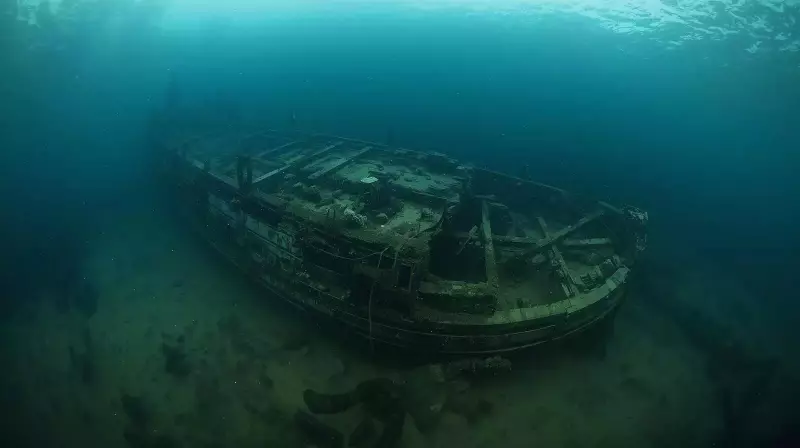
Centuries-Old Seabed Secret Revealed: Largest Medieval Cog Emerges from Danish Waters
For generations, the seabed separating Denmark and Sweden has endured the relentless disturbances of ocean currents, dropping anchors, and passing vessels. Little consideration was given to the historical treasures concealed beneath the waves until construction commenced for Copenhagen's innovative Lynetteholm district, necessitating thorough underwater inspections.
During these routine maritime surveys, archaeologists from the esteemed Viking Ship Museum encountered something extraordinary that defied conventional wreckage patterns. What initially appeared as scattered timber fragments gradually revealed itself to be part of a much more substantial structure. As researchers meticulously cleared away layers of sand and silt, the magnificent silhouette of an exceptionally large medieval vessel materialized before their eyes.
The Monumental Discovery: Svaelget 2
This remarkable find has since been authenticated as the most massive cog ever documented, providing rare tangible evidence of how commerce, naval architecture, and daily existence were orchestrated across Northern Europe during the early fifteenth century. The 600-year-old shipwreck, now designated as Svaelget 2, was located approximately 13 meters beneath the surface in a protected section of the Sound where sediment accumulation helped preserve the remains from natural erosion.

Archaeologists immediately recognized this vessel surpassed all previously recorded cogs in dimensions. According to official measurements released by the Viking Ship Museum, the ship stretches about 28 meters in length, spans 9 meters in width, and stands 6 meters tall. Its cargo capacity is estimated at nearly 300 metric tons. Dendrochronological analysis precisely dates its construction to around 1410, making this discovery approximately six centuries old.
Excavation leader Otto Uldum emphasizes that the sheer scale of Svaelget 2 distinguishes it from all known counterparts, indicating a degree of strategic planning, substantial investment, and commercial demand that transcends small-scale or opportunistic trading ventures.Understanding Medieval Maritime Commerce
Substantial cargo vessels like Svaelget 2 formed the backbone of medieval trade networks. Such a ship would have been economically unviable without a stable trading ecosystem featuring merchants engaged in high-volume transactions. Cogs were ingeniously designed for maximum efficiency, capable of carrying heavy loads while requiring minimal crew, making them perfect for lengthy and often perilous voyages, including navigation around Skagen and into Baltic territories.
The impressive magnitude of Svaelget 2 suggests it primarily transported household commodities rather than exclusive luxury items. Bulk goods including:
- Salt for preservation
- Timber for construction
- Bricks for building
- Essential food provisions
could be moved in such quantities that they fundamentally transformed regional economies through enhanced accessibility and distribution.
The Cog's Revolutionary Impact on European Shipping
The cog originated in the North Sea region and progressively became the dominant cargo vessel throughout the Middle Ages. Its distinctive flat bottom, elevated sides, and spacious hold made it exceptionally suitable for bulk transportation. By the fourteenth and fifteenth centuries, cogs were indispensable to commercial exchanges across Northern Europe, reducing transportation costs and minimizing risks while enabling everyday goods to travel extensive distances.
Archaeologists view Svaelget 2 as physical validation of how far this shipbuilding technology could be advanced. Until this discovery, the upper limits of cog construction remained largely theoretical rather than empirically documented.

Construction Origins and Material Analysis
Examination of the ship's timber has unveiled a sophisticated supply chain. The planking consists of oak sourced from Pomerania, contemporary Poland, while the frames derive from oak cultivated in the Netherlands. This evidence strongly suggests the vessel was constructed in the Netherlands, where specialized expertise in building exceptionally large cogs existed. Heavy timber was imported, while other components were fabricated locally, demonstrating a pragmatic approach that highlights how raw materials traversed borders long before modern logistical systems emerged.
Exceptional Preservation and Archaeological Significance
One of the most extraordinary aspects of Svaelget 2 is its remarkable state of preservation. The complete starboard side of the hull, extending from keel to gunwale, remains intact—a phenomenon rarely observed in cog discoveries. Archaeologists have also uncovered extensive rigging remnants, including ropes and fittings that illuminate sail control mechanisms and mast fastening techniques. Typically, such perishable components do not survive, making these findings crucial for understanding how these vessels operated at sea.
Glimpses of Medieval Maritime Life
The excavation has revealed intimate traces of daily existence often absent from medieval shipwrecks. Among the recovered artifacts are:
- Painted wooden bowls
- Leather shoes
- Personal combs
- Rosary beads
Additionally, archaeologists discovered a brick-built galley complete with cooking implements, ceramic bowls, and remnants of fish and meat. Approximately 200 bricks and 15 tiles formed this structure, indicating sailors enjoyed hot meals during voyages. These objects suggest a more organized and settled onboard life than typically associated with medieval seafaring.
The Missing Cargo's Silent Narrative
Interestingly, no traces of the ship's cargo have been identified. This absence is not considered unusual since the open hold design would have allowed barrels and bundles to float away as the vessel sank. The lack of ballast stones suggests the ship was fully loaded during its final journey. Archaeologists remain confident this was exclusively a merchant vessel, with no indications of military utilization.
Svaelget 2 now stands as a material testament to a trading world that relied on ships of unprecedented dimensions. While it does not rewrite historical narratives, it grounds them in tangible elements—timber, rope, and brick—resting peacefully where commerce once flourished above the waves.