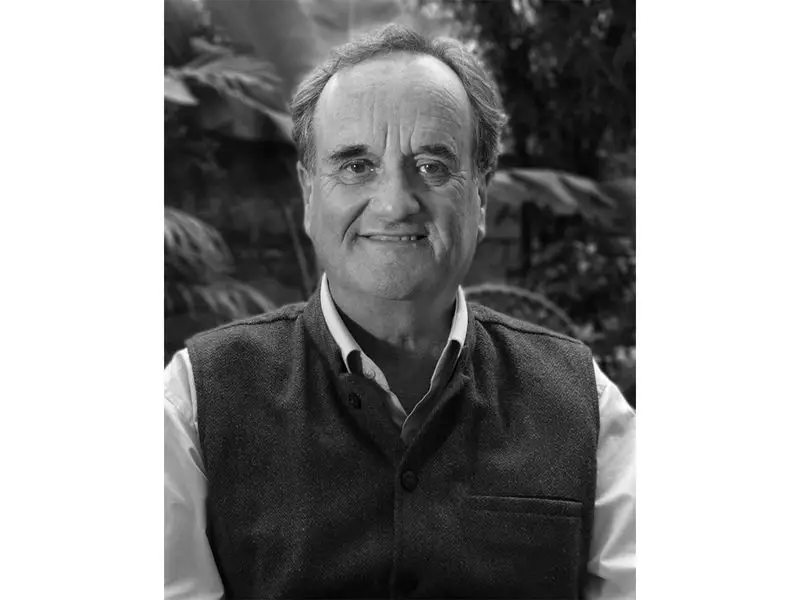
In the annals of Indian journalism, few foreign correspondents have left as indelible a mark as Sir William Mark Tully, the esteemed British journalist whose profound affinity for India has earned him the endearing moniker "Gora Saheb." This title, translating to "White Sir" in Hindi, is not merely a descriptor of his ethnicity but a testament to his deep-seated connection with the Indian subcontinent, a bond that many argue makes him "more Indian than the brown saheb." Tully's journey from a colonial-era upbringing to becoming a revered voice in Indian media is a fascinating narrative of cultural immersion and journalistic integrity.
Early Life and Entry into Indian Journalism
Born in Calcutta (now Kolkata) in 1935 during the British Raj, Mark Tully's early years were steeped in the complexities of colonial India. After education in England, he returned to India in 1965 to join the British Broadcasting Corporation (BBC) as its South Asia correspondent. Over the decades, Tully's reporting transcended mere news coverage; he delved into the heart of Indian society, politics, and culture, earning respect for his nuanced understanding and empathetic approach. His tenure with the BBC spanned until 1994, during which he covered pivotal events like the Emergency, the assassination of Indira Gandhi, and economic reforms, always with a focus on human stories.
The Essence of 'Gora Saheb'
The term "Gora Saheb" encapsulates Tully's unique position in India. Unlike many expatriates who maintain a distance, Tully embraced Indian life wholeheartedly. He learned Hindi, immersed himself in local traditions, and developed a keen insight into the country's diverse fabric. This cultural integration allowed him to report on India with an authenticity that resonated deeply with audiences. His ability to bridge Western perspectives with Indian sensibilities made his journalism both informative and relatable, challenging stereotypes and fostering cross-cultural dialogue.

Contributions to Indian Media and Society
Beyond his BBC work, Mark Tully has been a prolific author and commentator, penning books like "No Full Stops in India" and "India in Slow Motion," which explore the country's complexities with affection and critical analysis. He has also been involved in various initiatives promoting Indian arts, education, and social issues. Tully's advocacy for press freedom and ethical journalism has influenced generations of Indian reporters, cementing his legacy as a mentor and thought leader. His recognition with awards like the Padma Shri in 2005 underscores his contributions to Indian society.
Why He's 'More Indian Than the Brown Saheb'
The phrase "more Indian than the brown saheb" highlights a poignant contrast. It suggests that Tully's dedication to understanding and celebrating India's essence surpasses that of some native Indians who might take their heritage for granted or adopt Westernized outlooks uncritically. Tully's journalism often emphasizes India's resilience, diversity, and spiritual depth, themes that resonate with core Indian values. His lifelong commitment to the country, including choosing to reside in Delhi post-retirement, reflects a genuine love that transcends superficial affiliations.
Legacy and Continuing Influence
Today, Mark Tully remains an active voice in Indian public discourse, contributing to newspapers, television, and radio. His insights on current affairs, from political developments to social changes, are sought after for their depth and historical context. The "Gora Saheb" title endures as a symbol of how cultural boundaries can be blurred through empathy and engagement. Tully's story inspires not only journalists but anyone interested in the power of cross-cultural connections to foster mutual understanding and respect.
In summary, Mark Tully's journey as the "Gora Saheb" is a remarkable example of how a foreigner can become an integral part of India's narrative. His journalism, characterized by warmth and wisdom, continues to enrich the Indian media landscape, proving that true Indianness is not defined by birth but by heart and mind.