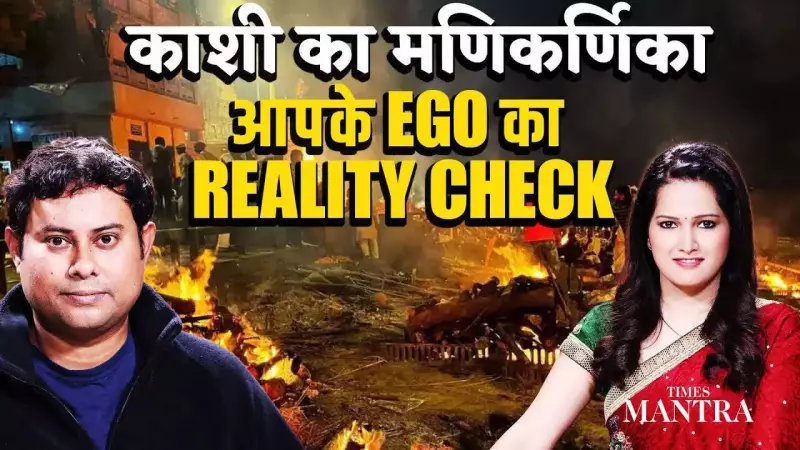
In the ancient city of Kashi, also known as Varanasi, lies a place where the veil between life and death is perpetually thin. Manikarnika Ghat, one of the oldest and most sacred cremation grounds in India, offers more than a final farewell to the departed. It presents a raw, unfiltered classroom on the impermanence of human existence. As author and commentator Hindol Sengupta elucidated on December 22, 2025, this is where life's grandest illusion—the ego—meets its most definitive and humbling reality check.
The Ultimate Equalizer: Where Kings and Commoners Become Ash
At Manikarnika, death is not hidden away in sterile rooms or whispered about in hushed tones. It is present in the open air, witnessed daily in the relentless flames of the funeral pyres. This public spectacle serves a profound purpose. It visually demonstrates that in the end, every marker of worldly success is rendered meaningless. Power, wealth, social status, and personal identity are all reduced to the same handful of ashes. The ghat does not discriminate; the flames consume the bodies of the mighty and the meek with equal fervor.
This relentless process delivers a powerful lesson in detachment. It confronts visitors with the undeniable truth that nothing we accumulate in this life—no property, title, or achievement—truly belongs to us in the eternal sense. We are merely temporary custodians. Witnessing this cycle repeatedly strips away the false sense of importance and control that the ego meticulously constructs, forcing a reevaluation of what is truly valuable.

Beyond Despair: A Gateway to Spiritual Liberation
To an outsider, Manikarnika Ghat might seem like a site of overwhelming sorrow and despair. However, within the spiritual framework of Sanatana Dharma, it represents something entirely different. Far from being an endpoint filled with gloom, it is viewed as a potent gateway for the soul to attain moksha, or spiritual liberation. The belief that being cremated here can break the cycle of rebirth and death infuses the space with a paradoxical energy—one of solemnity but also of profound hope and release.
The lessons taught here are not meant to induce nihilism but to cultivate humility and a shift in perspective. By facing the reality of mortality head-on, one is encouraged to shed superficial attachments and focus on the essence of being. This aligns with core Indian philosophical tenets that prioritize the eternal soul (Atman) over the temporary physical vessel. The ghat, under the watchful presence of the Kashi Vishwanath temple dedicated to Lord Shiva, the destroyer and transformer, becomes a living testament to this philosophy.
The Contemporary Relevance of an Ancient Truth
In a modern world increasingly driven by individual ambition, social media validation, and material accumulation, the message of Manikarnika Ghat is more relevant than ever. Hindol Sengupta's explanation brings this ancient wisdom to a contemporary audience, reminding us that the human ego, if left unchecked, can be a source of immense suffering and delusion. The ghat's timeless scene invites introspection: What are we clinging to that, in the final analysis, holds no real substance?
The continuous burning pyres are a silent, powerful sermon on non-attachment and the impermanent nature of worldly life. They teach that recognizing this impermanence is not a cause for fear, but rather the first step toward genuine spiritual freedom and inner peace. It is a call to live with purpose and compassion, knowing that the physical form is transient, but the lessons learned and the love shared are part of a larger, enduring journey.