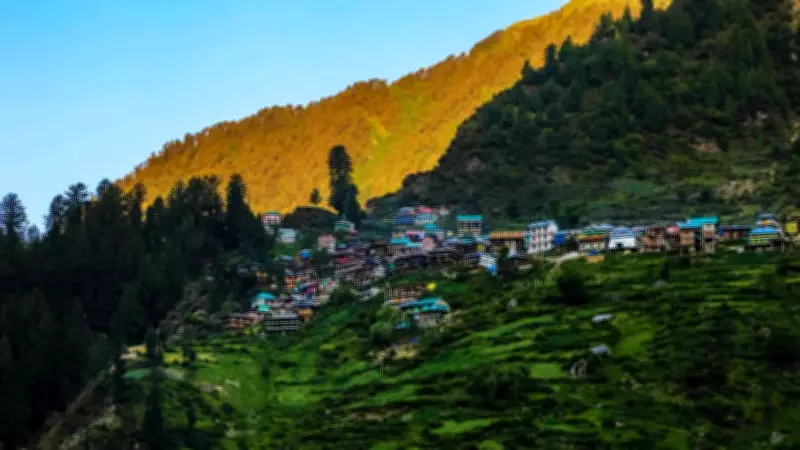
Among the many villages in India that preserve age-old traditions, Malana stands out as one of the most intriguing. Perched high in the Parvati Valley of Himachal Pradesh, this village does not boast fancy resorts or Instagram-worthy cafes. Instead, it captivates visitors with a unique social practice: no outsider is allowed to touch the villagers, their temples, or any items they consider sacred.
Understanding Malana's Unique Customs
Many tourists feel perplexed about how to behave in such an unusual environment and wonder how to navigate the village without inadvertently violating the rules. In reality, it is simpler than expected, as a considerable number of tourists visit annually. However, visitors should not anticipate many amenities, as the village has never been adapted to cater to tourism.
A Village Governed by Its Own Rules
Malana is situated at an elevation of approximately 2,650 meters in the Kullu district of Himachal Pradesh. Its location amidst high mountains and dense forests has historically isolated it from the outside world, allowing villagers to preserve traditions with zeal and dedication. At the core of Malana's social structure is Jamlu Devta, the village deity who influences not only spiritual life but also dispute resolution and social behavior. The no-touch culture is one such tradition deeply ingrained in daily life.

While these practices may seem peculiar to outsiders, for the villagers of Malana, they are a normal aspect of existence.
What Exactly Are Visitors Not Allowed to Touch?
The restrictions extend beyond physical contact with residents. Visitors are expected to refrain from touching:
- Local villagers without explicit permission
- Houses and residential structures
- Temple walls and religious buildings
- Sacred objects associated with village rituals
- Restricted areas that are clearly marked or identified by locals
Violations of these customs have reportedly led to monetary penalties imposed by local authorities. Despite a steady increase in tourism, the preservation of these traditions remains mandatory. Travelers must be mindful of where they stand, how they position their hands, and how they move around the community.
The Journey Itself Requires Commitment
Unlike other hill stations in Himachal that are easily accessible, reaching Malana demands effort. Tourists first drive to the Malana gate, located several kilometers from the village. From there, a trek of about four kilometers begins, winding through mountainous terrain with breathtaking views of the Parvati Valley, forests, and gorges that underscore the village's historical seclusion. The trek is not particularly difficult, but it gives visitors a sense of having earned their visit.
How Do Travelers Survive?
Contrary to popular belief, visiting Malana is not an exercise in hardship. There are guesthouses and homestays available, especially around the perimeter of the village. Cafes offer basic food, ranging from traditional local dishes to backpacker fare. Visitors can easily spend the night if they plan to do so.
The key lies in adjusting expectations. Travelers quickly learn to:
- Follow designated paths
- Observe signboards and local instructions
- Avoid unnecessary contact
- Seek permission before taking photographs
- Respect areas where entry is restricted
- Maintain a degree of distance in interactions
In many ways, Malana instills a sense of mindfulness in travelers. Rather than carelessly passing through, visitors become aware of themselves and the impact their actions can have on the community.
Malana is not a cultural destination built to entertain outsiders. Its residents live and raise their families there, and their traditions are vital to their lifestyle, culture, and history. The no-touch policy is a serious rule adopted as a way of life. To survive in Malana, one does not need superhuman abilities, but rather awareness and respect.