As the chill of winter begins to recede, India prepares to welcome one of its most ancient and joyous festivals, Makar Sankranti. Unlike many Hindu festivals governed by the lunar cycle, this celebration is firmly rooted in the solar calendar, marking a precise astronomical event: the Sun's transition into the zodiac sign of Capricorn, or Makara. This celestial shift symbolises the end of the winter solstice and the commencement of longer, warmer days, a period known as Uttarayan.
Makar Sankranti 2026: Key Dates and Timings
In the year 2026, Makar Sankranti will be observed on Wednesday, January 14. According to Drik Panchang, the pivotal moment of the Sun's entry into Makara, known as the Makara Sankranti Moment, is set for 03:13 PM. The auspicious window for rituals, the Punya Kala, spans from 03:13 PM to 05:45 PM, with the most sacred Maha Punya Kala occurring between 03:13 PM and 04:58 PM. While some regional calendars may extend observances to January 15 based on sunrise calculations, the astronomical transition definitively occurs on January 14 itself.
A Tapestry of History and Significance
The origins of Makar Sankranti are deeply embedded in India's Vedic past, where civilisations meticulously tracked the Sun's movements. The festival's name derives from 'Makara' for Capricorn and 'Sankranti' for the Sun's passage. Its significance is multifaceted, weaving together astronomy, agriculture, spirituality, and culture.

Astronomically, it celebrates the Sun's northward journey, bringing increased daylight and warmth. Agriculturally, it coincides with the harvest season in many regions, making it a thanksgiving celebration for a bountiful yield. Spiritually, Uttarayan is considered an extremely auspicious time filled with positive energies, ideal for prayers, meditation, and acts of charity that are believed to purify the soul and foster social harmony.
Mythology and Celebrations Across India
Mythological tales enrich the festival's spiritual fabric. A prominent legend from the Mahabharata recounts that the great warrior Bhishma Pitamah, lying on his bed of arrows, chose to wait for the dawn of Uttarayan to relinquish his life, believing it would grant him salvation (moksha). The festival also involves the worship of Surya, the Sun God, symbolising life, health, and knowledge.
The celebrations are as diverse as India itself, united by common themes of gratitude and joy:
- Holy Baths and Surya Puja: Devotees take ritual dips in sacred rivers like the Ganga and Yamuna, followed by offerings of water, sesame seeds, and flowers to the Sun.
- Charity (Daan): Giving sesame, jaggery, food grains, and warm clothing to the needy is considered highly meritorious.
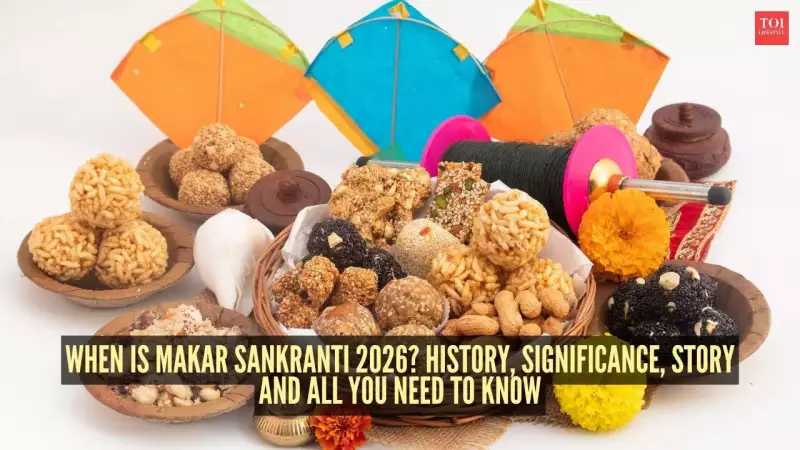
- Festive Foods: Sweets made of til (sesame) and jaggery, like tilgul laddoos, are shared as symbols of sweetness and warmth. Regional specialties include Karnataka's Ellu Bella.
- Kite Flying: In states like Gujarat and Rajasthan, the sky transforms into a vibrant canvas of colourful kites, representing freedom and festive spirit.
Makar Sankranti stands as a beautiful testament to India's deep connection with nature's cycles. It is a festival that seamlessly blends cosmic observation with earthly traditions, reminding everyone of the interconnectedness of the sun, the seasons, the harvest, and human life.