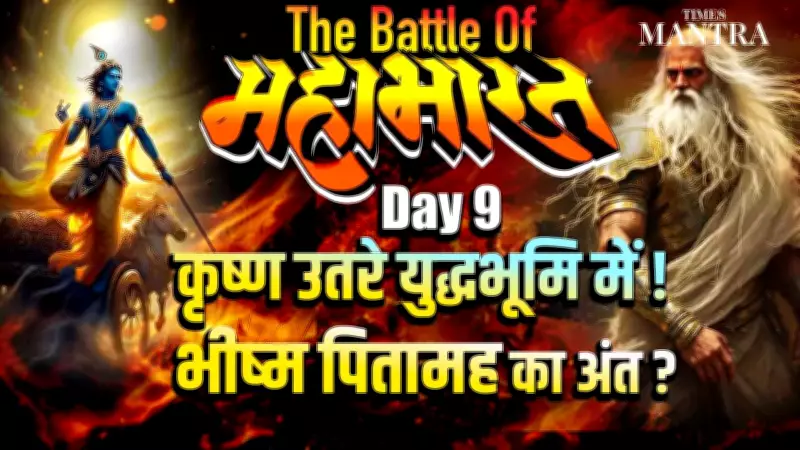
Mahabharat Day 9: The Moment Krishna Abandoned His Vow to Confront Bhishma
The ninth day of the epic Mahabharat war witnessed a seismic shift in the battlefield's dynamics, as Lord Krishna, the divine charioteer for Arjuna, made a dramatic and unprecedented move. In a surge of intense fury and moral conviction, Krishna stepped down from the chariot, breaking his solemn vow to not take up weapons during the conflict. This act was directed squarely at Bhishma Pitamah, the revered Kuru elder whose unstoppable prowess was decimating the Pandava forces.
The Unstoppable Force of Bhishma Pitamah
Bhishma, bound by his oath of loyalty to the throne of Hastinapur, had become an almost invincible warrior on the battlefield. His mastery of arms, combined with a boon of choosing the time of his own death, rendered him impervious to conventional attacks. Day after day, he unleashed devastation upon the Pandava army, creating a crisis that threatened to undermine the very cause of Dharma that the Pandavas represented. His relentless assault forced a critical juncture where divine intervention seemed not just necessary, but inevitable.
Krishna's Fury and the Clash of Dharma
Why did Krishna, who had pledged to remain a non-combatant, feel compelled to intervene directly? The answer lies in the profound conflict between personal vows and the overarching duty of Dharma. Krishna's anger was not born of mere battlefield frustration; it was a righteous indignation against the imbalance created by Bhishma's unwavering destruction. In that moment, the preservation of cosmic order and justice took precedence over any individual promise. This episode symbolizes a core spiritual lesson: that Dharma, or righteous duty, ultimately stands above every personal commitment when the greater good is at stake.

Decoding the Spiritual and Strategic Significance
As explained by scholar KL Upadhyay, this historic event carries deep layers of meaning. Spiritually, it illustrates the principle that divine law can supersede human vows in times of moral crisis. Strategically, Krishna's move was a psychological masterstroke, aimed at shaking Bhishma's resolve and altering the war's momentum. Morally, it poses enduring questions about the limits of loyalty and the flexibility of ethical codes in the face of adversity. The confrontation between Krishna and Bhishma is not merely a physical clash but a metaphysical debate enacted on the fields of Kurukshetra.
The Legacy of Day Nine in the Mahabharat Narrative
This powerful narration reveals how the Mahabharat war transcends mere military conflict to explore themes of duty, sacrifice, and divine will. Krishna's actions on Day 9 underscore the idea that true Dharma is dynamic, requiring discernment and courage to uphold in complex situations. It serves as a timeless reminder that in the battle between right and wrong, principles must sometimes adapt to confront overwhelming challenges, guided by wisdom and a higher purpose.