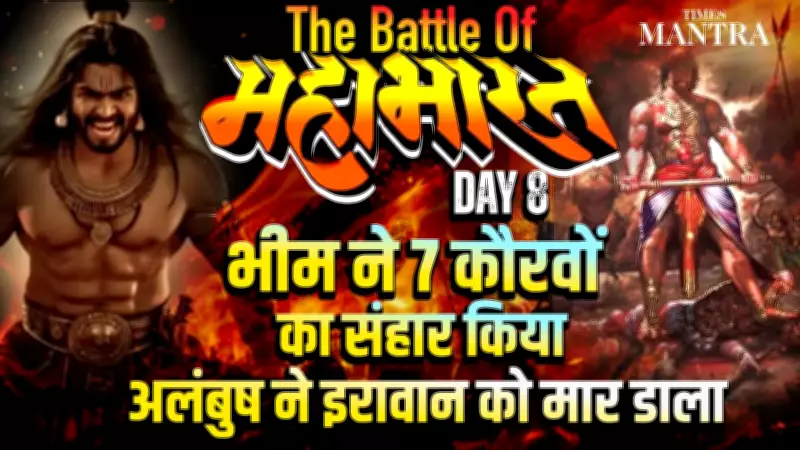
The Eighth Day of Kurukshetra: A Turning Point in the Mahabharat War
The battlefield of Kurukshetra witnessed one of its most intense and emotionally charged days on the eighth day of the great Mahabharat war. As described by scholar KL Upadhyay in a special Times Mantra episode, this day was marked by unprecedented violence, strategic brilliance, and profound personal sacrifice that would leave an indelible mark on the epic narrative.
Bhima's Unstoppable Onslaught Against the Kauravas
On this fateful day, Bhima, the second Pandava brother known for his immense strength and fiery temper, unleashed a devastating assault against the Kaurava forces. His rage was not merely emotional but strategically calculated to weaken Duryodhana's army at its core. In a display of martial prowess that shook the very foundations of the battlefield, Bhima successfully eliminated seven prominent Kaurava warriors in what historians and scholars describe as one of the most concentrated acts of vengeance in the entire war.
This systematic decimation of Kaurava leadership represented more than just military success. It served as a brutal turning point that demonstrated the Pandavas' growing momentum and the inevitable consequences of the Kauravas' adharmic actions. Each fallen Kaurava warrior symbolized the crumbling of Duryodhana's support structure and the moral bankruptcy of his cause.

The Heartbreaking Sacrifice of Iravan, Arjuna's Valiant Son
While Bhima's rampage dominated the battlefield, another tragic event unfolded that would add deep emotional weight to the conflict. Iravan, the courageous son of Arjuna and the Naga princess Ulupi, met his end at the hands of the Rakshasa warrior Alambush. Iravan's death was not merely another casualty of war but a profound moment of sacrifice that highlighted the personal costs of this dynastic conflict.
Iravan's martyrdom has been celebrated through centuries as a timeless symbol of courage, duty, and selflessness. His willingness to lay down his life for his father's cause, despite knowing the inevitable outcome, exemplifies the highest ideals of Kshatriya dharma. This sacrifice resonated deeply through both armies, reminding all warriors that the Mahabharat war was extracting a price far beyond territorial gains or political supremacy.
The Deeper Meanings Behind Day Eight's Carnage
KL Upadhyay's analysis reveals that the eighth day of the Mahabharat war transcended mere violence. It became a complex tapestry woven with threads of duty, sacrifice, and the harsh realities of upholding dharma in impossible circumstances. The simultaneous events of Bhima's destructive fury and Iravan's noble death created a powerful contrast that defined the moral complexity of the entire epic.
This day demonstrated several crucial themes:
- The inevitable consequences of adharma as witnessed through the fall of seven Kauravas
- The personal sacrifices demanded by righteous warfare
- The emotional toll on warriors fighting against their own kin
- The contrast between destructive rage (Bhima) and selfless sacrifice (Iravan)
The eighth day's events continue to be studied not just as historical or mythological occurrences, but as profound lessons about human nature, morality, and the costs of conflict. Through episodes like Times Mantra's detailed exploration, modern audiences can appreciate how these ancient narratives remain relevant to contemporary discussions about duty, sacrifice, and ethical conduct in challenging times.