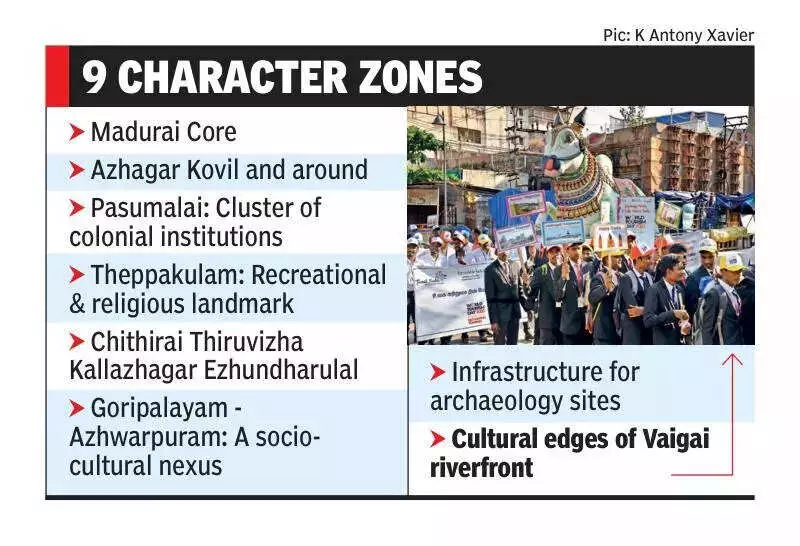
In a significant move to balance urban growth with cultural preservation, Madurai's new Master Plan proposes classifying the historic city into nine distinct 'character zones'. This framework aims to steer future development in a manner that protects and celebrates the city's unique heritage, drawing inspiration from models in cities like Ahmedabad and Delhi.
Defining the Character of Madurai
According to an official from the Directorate of Town and Country Planning (DTCP), the zoning strategy is designed to recognize and enhance the intrinsic identity of different parts of the city. Four of the proposed nine character zones have been identified: the Madurai Core, Alagar Kovil, Thiruparankundram, and Teppakulam.
The official explained that each zone will have a defining theme based on its existing features. The Madurai Core, rich in infrastructure from the Pandya and Nayakkar eras, will be centered around its historical character. Teppakulam is envisioned to have a recreational focus, Alagar Kovil an eco-sensitive one, and Thiruparankundram will highlight its multi-religious character.

Implementation and Challenges
The master plan outlines concrete steps to realize this vision, including a dedicated heritage city policy and the establishment of a heritage cell within the municipal corporation. It also recommends forming an Intangible Cultural Heritage (ICH) promotion committee to safeguard traditions and practices.
However, successful implementation faces hurdles. Writer A Muthukrishnan highlighted pressing issues in core areas like open defecation, chaotic parking, and overall cleanliness that must be addressed alongside conservation. He also advocated for the creation of a city museum to showcase Madurai's history.
Echoing the need for robust execution, S Shanthi, co-convener of INTACH Madurai, emphasized that character zones will require dedicated manpower and strong collaboration between authorities and citizens. She cited the British-era pumping station at Arapalayam as an example of a heritage structure needing focused, expert attention for preservation.
Public Participation and Future Vision
There is optimism about public support for the initiative. Shanthi noted that Madurai's residents possess a strong sense of pride in their city's culture. When educated about the importance of heritage sites, they are likely to understand and participate in conservation efforts.
Long-time resident Prabhu Ram offered a forward-looking perspective, stating that heritage conservation should not be viewed as an obstacle to development. Instead, thoughtful planning can simultaneously improve residents' quality of life and strengthen the city's unique identity for generations to come. The plan represents a crucial attempt to ensure that Madurai's growth is guided by its glorious past.