Archaeological Discovery in Maastricht May Solve 350-Year-Old Mystery of d'Artagnan's Grave
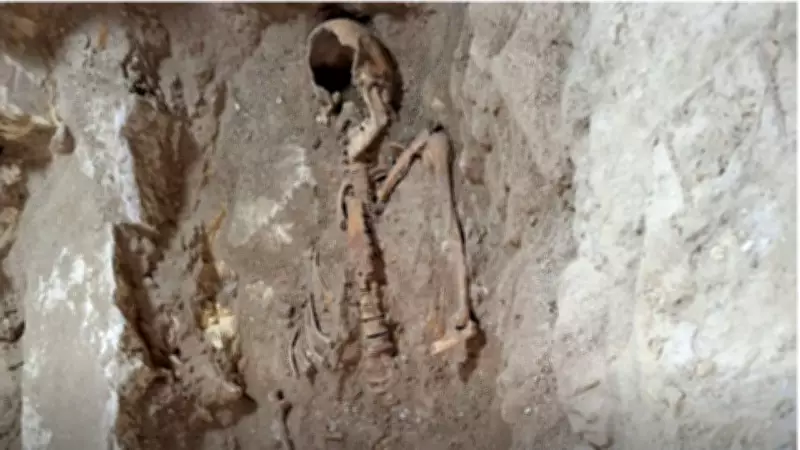
A stunning archaeological find in the historic Dutch city of Maastricht has potentially cracked one of history's most persistent puzzles. During meticulous restoration work at St. Peter and Paul Church, researchers unearthed a skeleton of significant status buried directly beneath the altar, an honor typically reserved for individuals of immense religious or social standing.
The Extraordinary Clues That Point to a Legend
What transforms this from a notable burial into a potentially historic revelation are two specific artifacts found with the remains. A fragment of a musket ball was discovered lodged in the thigh bone, indicating a severe battlefield injury. Alongside it, archaeologists recovered a French coin dating back to the 17th century. These findings align remarkably with historical accounts of Charles de Batz de Castelmore d'Artagnan, the Gascon nobleman and captain of the Musketeers under King Louis XIV, who reportedly died from a musket shot to the thigh during the Siege of Maastricht in 1673.
"This is an exceptional and rare discovery," stated Michel Groothedde, a lead researcher with RAAP Archaeological Consultancy, which is conducting the excavation in partnership with local heritage authorities. "Burials beneath church altars were uncommon and signified great importance. The combination of the prestigious location, the French coin suggesting nationality, and the specific thigh wound creates a compelling narrative."

The Historical Figure Behind the Myth
Charles de Batz de Castelmore d'Artagnan was a real military commander, not merely a literary creation. His bravery and leadership earned him a trusted position close to the French royal court. Historian Olivier Poncet, an expert on the Musketeers, emphasized, "D'Artagnan was a genuine historical figure of considerable stature. A burial of honor in such a location would be entirely plausible for someone of his rank and service." His legacy was later immortalized and romanticized by author Alexandre Dumas in the classic novel The Three Musketeers, transforming him into a global symbol of adventure, loyalty, and camaraderie.
Matching the Evidence to Historical Records
Historical documents confirm d'Artagnan perished on June 25, 1673, while leading an assault on the Tongersepoort gate during the Franco-Dutch War. The description of his fatal injury—a musket wound to the thigh—matches the trauma observed on the newly discovered skeleton. Military historian Julien Wilmart noted, "The specificity of the injury described in contemporary accounts and the physical evidence on the bone is strikingly consistent. While such wounds occurred, this precise alignment is significant." The exact site of his burial, however, was lost to history, fueling a mystery that has endured for over three centuries.
Archaeologist Liesbeth Claes highlighted the cumulative weight of the evidence: "Individually, each clue—the burial site, the coin, the wound—might be circumstantial. But together, they form a remarkably strong case that demands serious investigation and cannot be easily dismissed." The church's proximity to the siege battlefield further strengthens the connection.
The Path to Definitive Proof: DNA Analysis
To move from compelling theory to confirmed fact, scientists have initiated advanced DNA testing on the skeletal remains. The analysis is being conducted in collaboration with forensic specialists and geneticists from institutions including Maastricht University. "For a conclusive identification, genetic evidence is paramount," explained researcher Maarten Larmuseau. "If we can successfully match the DNA profile from these remains with genetic samples from documented living descendants of the d'Artagnan family line, we could achieve a definitive confirmation, potentially closing this 350-year-old chapter of history."

Bridging History and Legend
The story of d'Artagnan exists uniquely at the crossroads of documented history and cultural myth. Literary scholar Jean-Yves Tadié reflected on this duality: "Alexandre Dumas elevated a historical military figure into a timeless literary icon representing friendship and courage. The potential discovery of his actual physical resting place would create a powerful, tangible link between the legendary hero of fiction and the real soldier of history."
As the scientific community and history enthusiasts await the results of the DNA analysis, this discovery in Maastricht stands as a testament to how archaeology can illuminate the shadows of the past. A confirmed identification would not only locate the long-lost grave of a famed historical commander but also physically reconnect one of literature's most enduring heroes with his authentic historical roots.