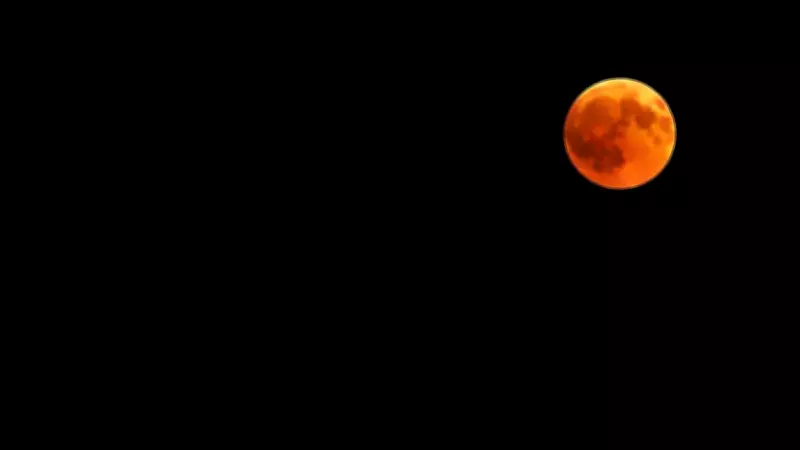
Lunar Eclipse 2026: A Celestial Event Visible Across India
A significant astronomical event, a penumbral lunar eclipse, is set to grace the skies over India on March 3, 2026. This celestial phenomenon, commonly referred to as Chandra Grahan in Hindi, will be observable from all parts of the country, offering a unique spectacle for skywatchers and spiritual enthusiasts alike.
Date and Time Details for the March 3 Eclipse
The lunar eclipse will commence in the early hours of Tuesday, March 3, 2026. According to astronomical calculations, the eclipse will begin at 03:54 AM Indian Standard Time (IST). The maximum phase of the eclipse, when the Moon is most deeply immersed in Earth's penumbral shadow, will occur at 06:04 AM IST. The event will conclude at 08:14 AM IST, making the total duration approximately 4 hours and 20 minutes.
This timing means that the eclipse will be visible during the pre-dawn and early morning hours across India. Observers in different regions may experience slight variations in visibility based on local sunrise times, but the event will be broadly accessible to all who are awake during this period.

Understanding the Penumbral Lunar Eclipse
Unlike a total or partial lunar eclipse, a penumbral eclipse occurs when the Moon passes through the Earth's penumbral shadow. This results in a subtle dimming of the lunar surface rather than a dramatic darkening or reddening. While less visually striking than other types of eclipses, penumbral eclipses are still significant from both scientific and cultural perspectives.
From a scientific viewpoint, this event provides an opportunity to study the Earth's atmosphere and shadow dynamics. Culturally and spiritually, lunar eclipses hold deep meaning in Indian traditions, often associated with rituals and observances.
Sutak Kaal Period and Spiritual Significance
In Hindu traditions, the period known as Sutak Kaal is observed before eclipses, during which certain activities are restricted. For the March 3, 2026 lunar eclipse, the Sutak Kaal will begin approximately 9 hours before the eclipse starts.
This means Sutak Kaal will commence around 6:54 PM on March 2, 2026, and continue until the eclipse ends at 8:14 AM on March 3. During this time, traditional practices recommend:
- Avoiding the consumption of food and water
- Refraining from starting new ventures or important work
- Maintaining purity through prayers and meditation
- Keeping pregnant women and children indoors as a precaution
It's important to note that these practices vary among different communities and regions across India. Many temples also remain closed during the eclipse period and perform special purification rituals afterward.
Visibility and Viewing Recommendations
The penumbral lunar eclipse will be visible throughout India, provided weather conditions are favorable. Since the eclipse occurs during early morning hours, finding a location with an unobstructed view of the western horizon will enhance the viewing experience.
Unlike solar eclipses, lunar eclipses are completely safe to observe with the naked eye. No special equipment is required, though binoculars or a small telescope can provide a more detailed view of the subtle shading on the Moon's surface.
Astronomy enthusiasts might particularly enjoy this event as it offers a chance to witness the gradual dimming of the Moon against the backdrop of the pre-dawn sky.
Scientific and Cultural Context
Lunar eclipses have been observed and recorded in India for millennia, with references found in ancient texts and astronomical treatises. Modern science explains these events through the precise orbital mechanics of the Earth-Moon-Sun system, while traditional beliefs often attribute spiritual significance to these celestial alignments.
The March 3, 2026 eclipse occurs during a period when the Moon is in the constellation of Leo, adding another layer of interest for both astronomers and those who follow astrological traditions.
This event serves as a reminder of the cosmic rhythms that govern our solar system and the rich cultural heritage that has developed around observing these phenomena in India.