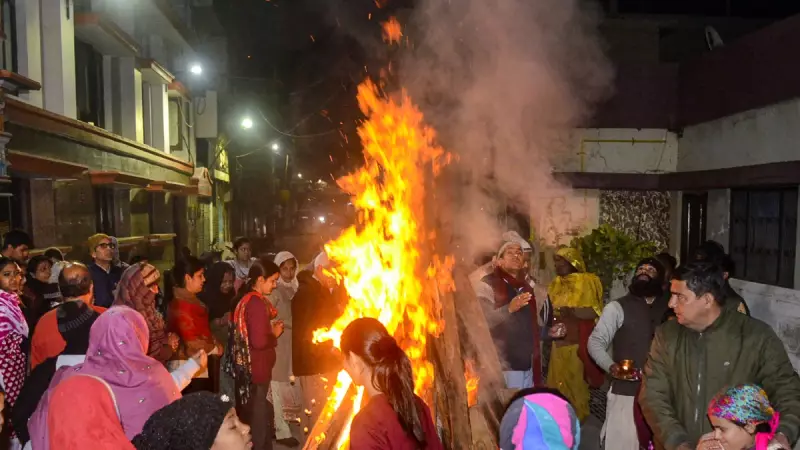
As the winter chill deepens, North India prepares to celebrate Lohri, a vibrant festival marking the end of the coldest days and the sun's journey towards the northern hemisphere. In 2026, the festival of Lohri will be celebrated with great fervor on Monday, January 12. This auspicious occasion, observed a day before Makar Sankranti, is centered around a sacred community bonfire, symbolizing the worship of Agni, the fire god. The offerings made into this fire, known as Lohri prasad, hold immense cultural and spiritual weight, believed to bring prosperity, health, and protection from evil.
The Sacred Lohri Prasad: What Goes Into the Fire?
The ritual of throwing specific items into the Lohri bonfire is a core tradition. These offerings are not random but are deeply symbolic, each carrying a wish or a prayer for the coming year. The primary components include popcorn (phulle), rewari, gajak, peanuts (moongphali), and sesame seeds (til). Alongside these, jaggery, puffed rice, and dry coconut are also commonly offered. It is considered inauspicious to offer salt into the Lohri fire. The act of circling the fire and tossing in these items is done with devotion, as families and communities sing traditional folk songs like "Sunder Mundriye" and pray for abundance.
Spiritual Significance of Each Offering
Every item offered to the Agni Devta has a distinct meaning rooted in tradition and belief. Sesame seeds (til) are considered purifying and are offered to ward off negative energies and sins. Jaggery (gur) symbolizes the sweetness and joy one wishes to invite into life. Popcorn and puffed rice represent expansion and prosperity, their popping seen as a metaphor for growth and the bursting forth of good fortune. Peanuts and rewari/gajak, made from sesame and jaggery, combine these elements, reinforcing prayers for a robust and sweet life. The fire itself is a transformative agent, believed to carry these prayers and offerings directly to the divine.

Rituals, Prayers, and Community Bonding
The Lohri celebration transcends mere ritual; it is a powerful social glue. The bonfire is lit at sunset, often in open community spaces. People gather around, tossing the prasad into the flames while performing parikrama (circumambulation). The number of circles, typically one, three, or seven, is also significant. This collective act fosters a sense of unity and shared hope. The festival holds special importance for families with new marriages or newborns, where the celebration is grander. The warmth of the fire is a metaphor for the warmth of relationships, and the distributed prasad from the offering—the popcorn, sweets, and nuts—is consumed as a blessed item, sharing the festival's bounty with all.
In essence, Lohri on January 12, 2026, is more than a seasonal marker. It is a profound cultural practice where the elemental fire becomes a conduit for gratitude, hope, and collective joy. The specific offerings are a language of symbolism, speaking prayers for a prosperous harvest, familial well-being, and the triumph of light over darkness. By understanding what to put in the Lohri fire and why, participants connect more deeply with an ancient tradition that continues to illuminate the heart of Indian winter festivities.