My Fashionable Mistake at the Jaipur Literature Festival
I arrived at the Jaipur Literature Festival inauguration party dressed to impress. I deliberately left my simple cap behind, thinking it would clash with the glamorous setting of Rambagh Palace. That decision proved foolish. The open-air party chilled me to the bone. I avoided all the fancy cold cocktails. A kind bartender saved the day with his electric kettle, serving me whisky mixed with hot water.
Later, in the writer's lounge, I met Bengali author Manoranjan Byapari. He was bundled up in multiple sweaters and, of course, wore a monkey cap. I congratulated him on a recent award. He nodded vaguely, looked up at me, and muttered, "It's so cold here."
The Bengali Winter Trope
Bengalis and winter form a well-known cultural stereotype, often treated as a gentle joke. Kolkata's winters remain temperate, with temperatures ranging from 12 to 25 degrees Celsius. Yet the typical Bengali takes no chances with the chill. They layer up in sweaters, cardigans, scarves, and the infamous monkey cap.

Snow never falls here, but every Bengali mother fears the peril of him or dew. They believe him falling on your head at night spells disaster for the delicate Bengali constitution. Despite this fear, winter also brings happiness. In my memory, it represents our winter of contentment, brightened by many simple pleasures.
The Sounds and Tastes of a Kolkata Winter
Winter here carries its own distinct soundtrack. The quilt fluffer man moves through neighborhoods, twanging his tool. He offers to fluff quilts that have been sun-dried, preparing them for nights when temperatures might drop to a brisk 17 degrees.
Kolkata never grows cold enough for treats like Old Delhi's airy daulat ki chaat. Instead, vendors appear with Joynagarer moa. Their melodic voices advertise this winter-only delicacy—a soft, crumbly ball made from parched rice and jaggery. It is densely sweet, studded with raisins and nuts.
The produce markets overflow with seasonal vegetables. They offer a welcome change from summer staples like parwal (pointed gourd) and lauki (bottle gourd). Mustard greens, radishes, young garlic greens, and mounds of peas appear. Broccoli becomes affordable, unlike during the rest of the year.
Government-run Haringhata meat shops start stocking not just chicken and mutton, but also curry-cut duck. In my childhood, we were only allowed bacon and sausages in winter. Adults claimed summer was too hot for such foods. Come winter, restaurants display placards announcing Duck Festivals.
At my local market, the gur-seller calls me over. He offers clay pots filled with nolen gur, the first sap of the date palm. It is golden and sweet. Each year he insists it is better than the previous year's batch. Each year I agree. Every season comes with its rituals. These are the cherished rituals of winter.
The Greatest Gift: The Temperature
Winter's greatest gift to us is the temperature itself. Our winters differ vastly from those in storybooks—Hans Christian Andersen's Snow Queen or the frozen eternal winter in C.S. Lewis's The Lion, the Witch and the Wardrobe. Our winters are far milder.
Summers blaze with heat and sweat. Monsoons bring wet, sticky humidity. Winter is the one season that encourages outdoor activity, of course before the dreaded him begins to fall.
Other parts of India endure harsh winters. Snowfall cuts off roads. Ponds freeze over. The cold penetrates bones. But here, the days simply grow shorter and the sun turns buttery. E.B. White once wrote, "At this season of the year, darkness is a more insistent thing than cold. The days are short as any dream."
Making the Most of the Season
We savor these short days, lingering in the cozy warmth of a dream. Makeshift badminton courts spring up on lanes, sometimes with lights strung along the sides. Boys play cricket at street crossings, using a wicket made from a precarious tower of bricks.

It is the season for office picnics and neighborhood sports meets. Parents deposit children in parks for sit-and-draw competitions with themes like A Rainy Day or A Visit to the Zoo. Even the LGBTQ+ Rainbow Pride Walk now happens in winter. It originally took place in June or July, aligning with pride marches in New York and San Francisco. Organizers quickly realized those months meant sweltering heat or pouring rain. Winter's mellow sunshine proves much more conducive to marching.
Migratory Visitors and Festival Season
This is the time when migratory birds arrive. Feathered kinds travel all the way from Siberia. Two-legged versions also make their annual pilgrimage home from London, San Jose, and Bengaluru. They gossip, drink, and enjoy devilled crab at old restaurants boasting 1950s decor.
Clubs fill with jolly ho-ho-ho Santas. Lines for plum cake grow long. Christmas lights adorn the streets.
Durga Puja might be the city's biggest festival, but winter is truly the festival season. Winter carnivals appear in every neighborhood. Stalls sell costume jewelry, "designer" saris, and T-shirts with pithy Bengali sayings. As one fair shuts down, another opens. The stalls migrate from neighborhood to neighborhood.
The city overflows with fairs—winter carnivals, handicraft fairs, saras melas for women entrepreneurs, pithe puli fairs dedicated to winter sweets stuffed with coconut and khoya. All this leads up to the huge Kolkata Book Fair and not one, but three literary festivals.
Shrinking Winters and a New Kind of Cold
Now, the winters are shrinking. They arrive later and depart earlier. Sometimes winter vanishes before we even pull the quilts from storage and set them in the sun. People reminisce nostalgically about winters past, when mothers would sit in the afternoon sun knitting sweaters. Now, they lament, it is too warm for that.
This year has been an exception. Kolkata has shivered for days in a cold spell. Temperatures dropped to 10 degrees in the city and even lower beyond. Even street dogs wear raggedy "sweaters".
As I walked down the street, a vendor at a stall selling nighties joked, "Mamata Didi has done this. Didn't she promise Kolkata would become London? Now it's as cold as London here."
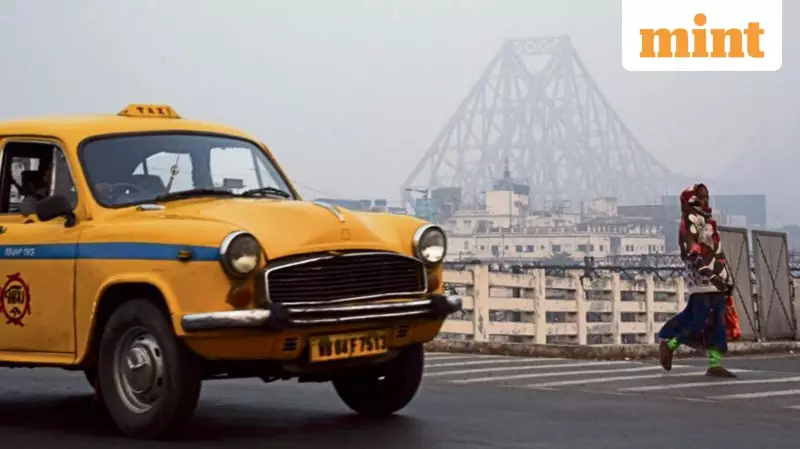
But this cold differs from the winters of our childhood. With the AQI shooting up to the 200s and 300s, the air remains consistently unhealthy. Vehicular emissions, construction dust, and biomass burning are the main culprits.
The Telegraph reported that for an entire week in December, Kolkata's AQI was worse than Delhi's. It even hit 558 on December 11. The days lack sun. The city is cloaked in grey. Kolkata's air turns toxic, yet few seem truly bothered, though people complain of hacking coughs, itchy throats, and teary eyes. There is always another fair to attend. If they cannot have clean air, let them have fun fairs.
A Dickensian Scene
Last month, when my plane landed, I looked out the window. The street lights glowed a hazy yellow under a cloud of grey. It truly felt like a scene from Dickensian London. I half-expected Jack the Ripper to emerge from behind a lamp post.
Once, winter's great gift in a city like Kolkata was that it allowed us to enjoy the outdoors. Now, as AQI levels cross 300, the very air outside feels far more dangerous than the him our mothers used to warn us about.