Destination India Exhibition to Open at Kolkata's Alipore Museum in 2026
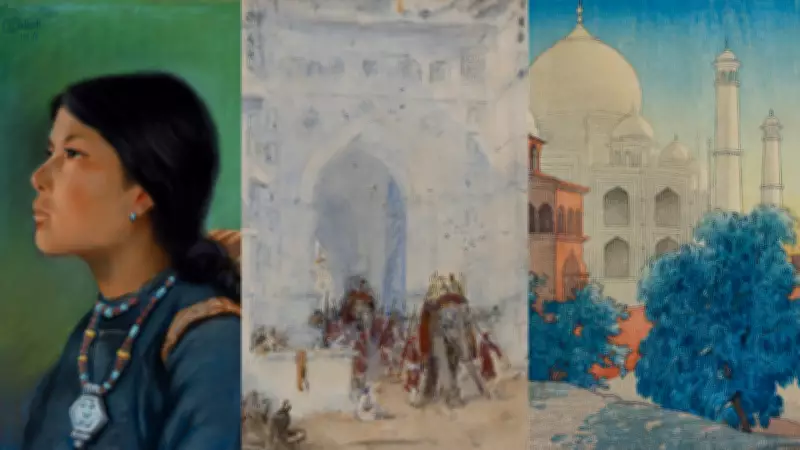
An extensive exhibition featuring works by foreign artists who traveled to India between the 1857 Uprising and Independence in 1947 will be inaugurated at the Alipore Museum in Kolkata on February 28, 2026. Titled Destination India, this significant cultural showcase presents a late phase of Orientalist art that provides more intimate, street-level glimpses of Indian life, contrasting with earlier artists who primarily focused on grand monuments and vast landscapes.
Exhibition Details and Duration
The exhibition, organized by DAG, will continue through May 2, 2026, offering visitors an extended opportunity to explore this unique collection. This presentation marks a deliberate shift from traditional artistic trajectories that often emphasize pioneering artists, instead highlighting the numerous interesting creators who visited India during the late 19th and early 20th centuries.
International Artists and Their Perspectives
Destination India will feature artists from multiple countries including Germany, Holland, Denmark, France, America, Japan, and Britain. These painters and printmakers worked during a period of rapid transformation in India, when images began circulating as picture postcards from the 1880s onward and photography emerged as the dominant medium for documentation.

The exhibition will include works by notable artists such as:
- Edward Lear, who toured India extensively between November 1873 and January 1875
- William Simpson, Olinto Ghilardi, and Marius Bauer
- Erich Kips and Hugo Pederson
- American artist Edwin Lord Weeks
- Japanese artist Hiroshi Yoshida
Changing Aesthetic Sensibilities
According to DAG chief executive officer and managing director Ashish Anand, these later artists arrived in India with different aesthetic sensibilities and interests compared to their predecessors. "In their works, we find an India—if we can put it this way—that we do not just see, but that we can hear and smell," Anand explained, emphasizing the multisensory quality of these artistic representations.
These conventional artists worked primarily in oil, watercolor, and various print media, similar to earlier pioneers. Some, like Mortimer Menpes and Walter Crane, produced illustrated books, continuing a tradition established nearly a century earlier by artists such as James Prinsep and Robert Grindlay.
Intimate Portrayals of Indian Life
The exhibition will present scenes depicting the daily routines of Indian bazaars and havelis, along with ordinary people in streets and public spaces. This represents a distinct shift toward a more intimate and animated version of the picturesque aesthetic. For instance, riverside ghats are depicted not merely for their architectural elements but also for the vibrantly dressed people who inhabited these spaces.
Historical Context and Significance
The selection brings together people and places of India as viewed through the eyes of nearly 40 artists from diverse nations. The exhibition investigates the European artist's perspective, which was influenced by romanticism and sometimes marred by prejudice, while acknowledging its importance in understanding how perceptions of India were shaped during this transformative period.
Alipore Museum director Jayanta Sengupta noted, "Destination India reveals a personal and intimate engagement with India—a tapestry of people and places seen through the eyes of those who found both beauty and meaning in the country's cultural and social fabric during a time of profound change."
Technological Influences and Artistic Production
The emergence of new technologies did not eliminate older forms of artistic production but rather encouraged artists to explore new directions. Many of the artworks featured in the exhibition are being displayed in the subcontinent for the first time in nearly a century, offering contemporary audiences fresh perspectives on India's visual history during the colonial era.
This exhibition frames a significant change in perception and engagement with a land that was becoming increasingly intertwined with the Western world, providing valuable insights into cross-cultural exchanges during a pivotal historical period.