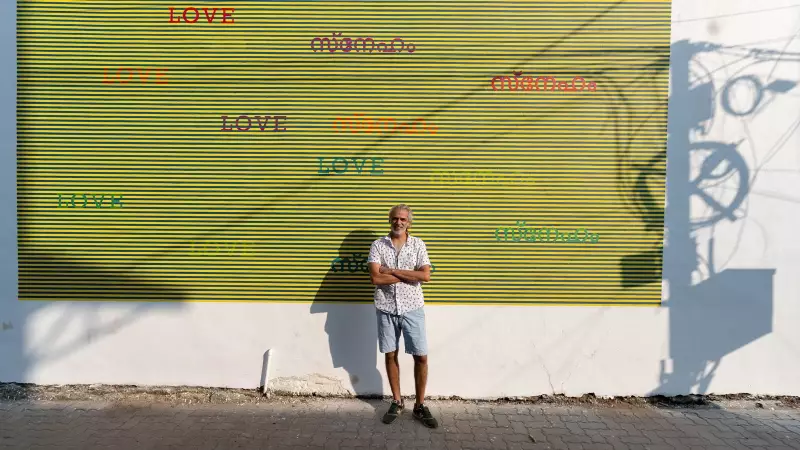
The vibrant port city of Kochi is witnessing a remarkable public art transformation, courtesy of the ongoing Kochi-Muziris Biennale (KMB). Dubbed the 'people's biennale,' the event has launched the Island Mural Project, an ambitious initiative that is turning the city's public walls into expansive canvases for artistic expression. Throughout the three-month duration of the art festival, various artists and collectives are painting and reimagining walls across Fort Kochi and Mattancherry, ensuring art spills out from the galleries and into the everyday life of the neighbourhoods.
Artists and Collectives Lead the Transformation
The first phase of the project has already seen powerful contributions from notable names. The Aravani Art Project, a collective of transgender and cis-individuals fresh from accolades at the 2024 Venice Biennale, has created a work at the Government Women and Children’s Hospital on Bazaar Road. Their piece speaks a language of resistance and belonging inspired by the city itself.
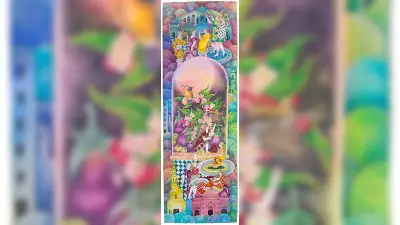
Meanwhile, the collective Trespassers, comprising eight artists including Vishnupriyan K and Ambadi Kannan, has painted a large-scale, imposing mural at Cube Art Spaces on Bazaar Road. The artwork weaves scenes from daily life with fantastical elements, featuring everything from a girl on a ropeway to flying cows and monkeys on balconies. Artist Munir Kabani has created a 'Wall of Love' on the Arthshila wall in Fort Kochi, embedding the word 'Love' in both English and Malayalam to spread warmth and positivity. Looking ahead, interdisciplinary artist Pradip Das is scheduled to begin work on the Simi Warehouse wall in Mattancherry in February.

Connecting Art with Community and History
The Kochi Biennale Foundation states that the Island Mural Project is deeply rooted in the Biennale's engagement with place. The initiative aims to make everyone see their neighbourhood in a new light. The artists involved are specifically creating works that respond to the local histories, textures, and living communities of Kochi.
Vishnupriyan K of Trespassers explained their collaborative process, which evolved from their art practice at the Sree Sankaracharya University of Sanskrit in Kalady. He described their art as an accumulation of visual memory from their surroundings, which they then use to enrich the visual memory of others. He poetically framed the act of viewing as a form of 'trespassing' into the artwork, where the imagery can become etched in the viewer's mind.
The Biennale's Public-Facing Philosophy
Since its first edition in 2012, the Kochi-Muziris Biennale has built its reputation on being an inclusive, public event. It actively involves students as volunteers and engages deeply with the residents of Fort Kochi and Mattancherry, where its primary venues are located. The Island Mural Project extends this philosophy perfectly. While posters guide visitors to indoor exhibitions, the project ensures that the streets themselves become a dynamic, open-air gallery. The murals and graffiti tell stories, making art an accessible and integral part of the urban landscape, truly embodying the spirit of a 'people's biennale.'
This initiative not only beautifies the city but also fosters a dialogue between contemporary art and the public, ensuring the Biennale's impact is felt far beyond the walls of its formal exhibition spaces.