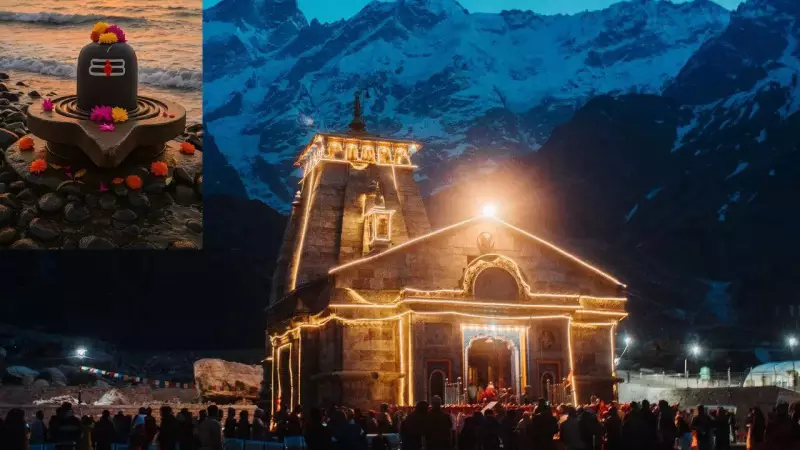
Nestled in the majestic Garhwal Himalayas of Uttarakhand, the sacred Kedarnath temple and the circuit of four other shrines known as the Panch Kedar stand as timeless monuments to faith, mythology, and ancient Indian craftsmanship. These sites draw thousands of pilgrims annually, offering a profound spiritual journey intertwined with breathtaking natural beauty.
The Legendary Origins: Shiva, the Pandavas, and the Panch Kedar
According to enduring Hindu legend, the origins of these temples are deeply connected to the epic Mahabharata. After the devastating Kurukshetra war, the victorious Pandava brothers were consumed by guilt for the sin of killing their kin. They sought liberation and the blessings of Lord Shiva, who, unwilling to grant them an audience, eluded them by taking the form of a bull and retreating to the remote Himalayas.
As the determined Pandavas followed him to Kedarnath, Lord Shiva submerged himself into the ground. However, distinct parts of his bull form manifested at five different locations. His hump appeared at Kedarnath, which became the primary and most revered site. The other parts of the deity emerged elsewhere, creating the sacred Panch Kedar circuit: the arms at Tungnath, the face at Rudranath, the belly at Madhmaheshwar, and the locks of hair along with the head at Kalpeshwar.

The Shri Badarinath Kedarnath Temple Committee notes that Chamoli district alone is home to over 200 shrines dedicated to Lord Shiva, with Kedarnath being the most significant among them. Pilgrims traditionally visit all five sites in a specific sequence to honour the complete form of the deity and immerse themselves in this rich mythological heritage.
Architectural Grandeur of the Kedarnath Temple
Perched on a wide plateau at an altitude of 3,583 meters and surrounded by snow-capped peaks, the Kedarnath temple is a marvel of ancient architecture and resilience. Historical accounts suggest the current structure was rebuilt by the 8th-century philosopher-saint Jagad Guru Adi Shankaracharya on the site of an even older temple believed to have been originally established by the Pandavas themselves.
The temple's construction showcases extraordinary engineering. It is built using massive, interlocking grey stone slabs, expertly cut and balanced without the use of modern mortar. This technique has allowed the structure to withstand the harsh Himalayan climate for centuries. Key architectural features include:
- The Garbha Griha (sanctum sanctorum): This inner sanctum houses a conical rock worshiped as Lord Shiva in his Sadashiva form.
- The Mandap (assembly hall): A spacious area for pilgrims, with inner walls adorned with intricate carvings of deities and mythological scenes.
- The Vigilant Nandi: A large, beautifully carved statue of Shiva's sacred bull mount, Nandi, stands guard outside the temple entrance.
The temple's design is not just an architectural feat but also a profound expression of religious symbolism and devotion.
Enduring Spiritual Significance and Pilgrimage
Kedarnath remains one of the most important pilgrimage destinations (Char Dham) in India. The journey to these high-altitude shrines is considered an act of penance, devotion, and a direct engagement with the legendary pursuit of the Pandavas for atonement. The spiritual experience is amplified by the serene yet powerful landscape of the Himalayas, which many devotees believe brings them closer to the divine.
The pilgrimage to the Panch Kedar is more than a religious duty; it is a holistic experience combining faith, history, and nature. It connects devotees to a living tradition that has been sustained for over a millennium. The temples stand as enduring symbols of a legacy where mythology, natural grandeur, and human devotion converge, offering a unique path to spiritual fulfilment.