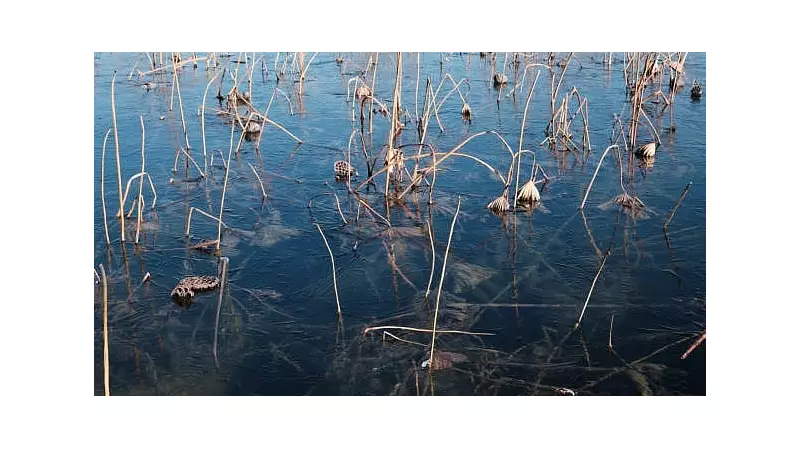
As the fierce cold of 'Chilai Kalan' grips the Kashmir Valley, turning parts of the iconic Dal Lake into a sheet of ice, a resilient group of workers begins a daily battle against the elements. Each morning, before dawn breaks, they step into the lake's near-freezing waters to harvest 'nadru' or lotus stems, a traditional practice that is both their sole winter livelihood and a fading tradition.
The Icy Plunge for Survival
With air temperatures plunging as low as minus 8 degrees Celsius, these harvesters wade chest-deep into the lake. They rely not on modern equipment but on their bare hands and simple, traditional wooden tools to feel through layers of silt and lakebed. For hours on end, they repeatedly submerge themselves in the frigid water, locating and pulling out the prized lotus stems that grow naturally in Dal Lake.
A Disappearing and Dangerous Craft
This method of extraction is incredibly hazardous. Working in sub-zero conditions, the men emerge from the water shivering and exhausted, their bodies pushed to the limit. The practice, passed down through generations, is now at risk of disappearing. For many in the community, this remains the only source of income during the harsh 40-day winter period known as 'Chilai Kalan', when most other outdoor work grinds to a halt.

More Than Just a Harvest
The harvested nadru is a culinary delicacy in Kashmiri cuisine, used in dishes like nadru yakhni and fried nadru. However, the human cost of bringing it to the market is immense. The harvesters' struggle highlights the extreme lengths individuals go to for sustenance, preserving a unique cultural link to the wetland ecosystem even as environmental and economic pressures mount.
Their daily ordeal underscores a narrative of resilience, where the fight for survival plays out silently in the icy waters of one of India's most famous lakes, against the backdrop of Kashmir's breathtaking yet brutal winter.