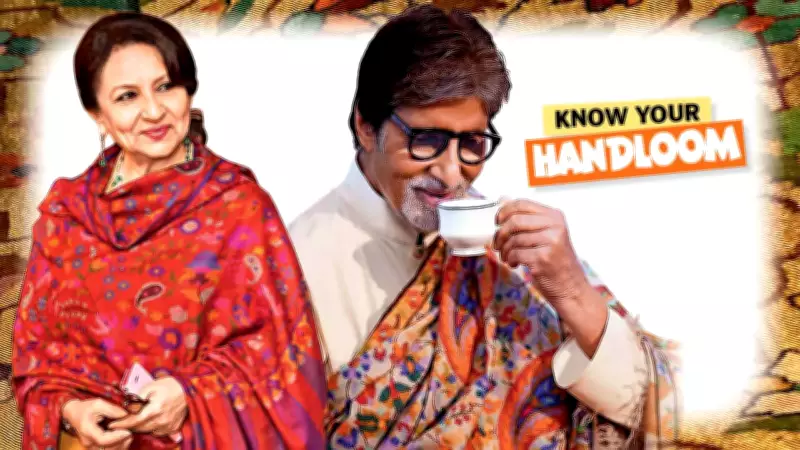
The Art of Kani Weaving: Kashmir's Timeless Textile Heritage
Kani weaving represents one of Kashmir's most revered and ancient handicrafts, employing a distinctive technique that transforms fine pashmina into exquisite shawls of unparalleled beauty. This intricate method utilizes small wooden spools, known as kanis, to weave elaborate patterns directly into the fabric. Colored pashmina threads are meticulously wound onto these spools and then interlocked with a base pashmina yarn, guided by a coded script called taleem, which dictates the complex motifs.
A Rich Historical Legacy
The origins of Kani weaving are deeply rooted in history, with several fascinating aspects:
- Historians trace its inspiration to Persia's tapestry art, termeh, which was adapted in the Kashmir valley to suit pashmina yarn.
- It is widely believed that Sultan Zaynul-'Abidin, a 15th-century ruler of Kashmir, institutionalized the Kani weaving industry, fostering its growth and preservation.
- After a period of absence from the 1920s until the late 1980s, carpet weavers in Kashmir revived this traditional craft, ensuring its continuity.
- Major centers for Kani weaving today include Eidgah, Zadibal, and Kanihama, where artisans keep the tradition alive.
- In 2010, the Kani shawl was awarded Geographical Indication (GI) status, recognizing its unique cultural and regional significance.
- A hallmark of authentic handwoven Kani shawls is their reversible nature—they look identical on both the front and back, showcasing the weaver's skill.
Artistry Meets Functionality
The appeal of Kani shawls extends far beyond their visual intricacy. Gaurang Batra, creative director of heritage fashion brand Frontier Raas, emphasizes their dual nature: "Woven largely in fine pashmina, a Kani shawl is feather-light yet insulating, combining artistry with functionality in a way few textiles can. Each piece carries centuries of skill, culture, and timeless elegance." This blend of heritage, warmth, and premium quality makes them highly coveted in luxury fashion.

Master weaver Naseer Ahmed Mir, with 32 years of experience, highlights the craft's scale and dedication: "There are over 6,000 Kani weavers in Srinagar alone. In the early '90s, many pashmina carpet weavers transitioned to Kani weaving, as both crafts rely on coding techniques. It can take three to twelve months to complete a single shawl." This labor-intensive process is reflected in the pricing, with stoles starting at ₹60,000, women's shawls around ₹1 lakh, and men's shawls beginning at ₹4 lakh.
Innovation and Tradition in Modern Weaving
To address economic and production challenges, some artisans have introduced changes. Many karigars now use samrudi fabric as the base warp instead of pure pashmina, making shawls more affordable and faster to produce. However, purists like textile revivalist Deepak Badhwar continue to practice Kani weaving entirely in pashmina, upholding traditional methods.
Badhwar has also pioneered innovations, such as blending Kani with Banarasi zari. He explains, "Kani weaving is a slow process, which is why it sits in the ultra-luxury category. A one to two-meter shawl can take a year to complete. Most are woven at 16 or 18 stitches per inch, but for finer patterns, we use 22 or 24 stitches per inch with Ladakhi pashmina. In 2016, we introduced zari into Kani, using real gold or silver zari from Varanasi that is thinner to avoid damaging the pashmina threads."
Evolution of Motifs and Techniques
Over the years, Kani weaving has evolved while retaining its core traditions. The coding process has transitioned from graph paper to digital prints, allowing for more contemporary and diverse motifs. Varun Kumar, founder of Pashmina.com, notes, "New-age designers are incorporating motifs from various cultures, such as elephants symbolizing Rajasthan or the lotus reflecting Buddhist serenity." He recently commissioned a Kani shawl featuring the Tree of Life, showcasing this blend of old and new.

Despite these innovations, traditional elements remain dominant. Kumar adds, "Toosh, white, black, and maroon are the most preferred base colors, accounting for over 50% of Kani shawls produced today." Common motifs include chinar leaves, gul-e-wilayaat (flowers from foreign lands), cypress trees, and paisleys, each carrying cultural significance.
The Value of Slow Craftsmanship
The meticulous nature of Kani weaving contributes to its exclusivity. Deepak Badhwar, with three decades of experience, details the dyeing process: "Pashmina threads are dyed with natural substances like pomegranate peels, saffron, walnut, and akra, fixed with alum. This slow, traditional method enhances the shawl's value as a luxury article." The combination of natural dyes, hand-weaving, and intricate coding ensures each Kani shawl is a unique masterpiece, embodying Kashmir's rich textile heritage.
In summary, Kani weaving is not merely a craft but a living tradition that bridges history and modernity. From its Persian-inspired roots to its current status as a GI-protected luxury item, it continues to captivate with its artistry, functionality, and cultural depth, making each shawl a testament to Kashmir's enduring creative spirit.