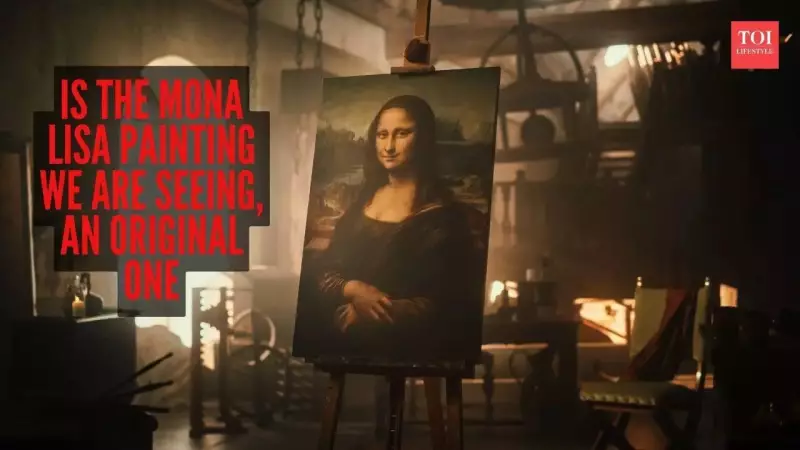
For centuries, Leonardo da Vinci's Mona Lisa has captivated the world, not just with her enigmatic smile but with a cloud of mystery surrounding its very authenticity. Visitors flocking to the Louvre Museum in Paris often ponder a single, persistent question: Is this iconic portrait truly the one painted by the Renaissance master over 500 years ago, or is it a clever copy? Delving into this query unravels a compelling saga of art history, royal collections, scientific scrutiny, and a legendary theft that only amplified its fame.
The Overwhelming Evidence for the Louvre's Masterpiece
Art historians and scientists present a robust case for the painting hanging in the Louvre. Historical records meticulously trace its journey from Leonardo's studio into the French royal collection after his death in 1519. Inventories from the 16th century onwards consistently describe it as a possession of the French crown, eventually leading to its home at the Louvre Museum since the late 18th century.
The subject is widely accepted to be Lisa Gherardini, the wife of a Florentine merchant, often referred to as "La Gioconda." The painting's physical composition also aligns with Leonardo's era, as it is created on a poplar wood panel, a common practice of the time, not on canvas.

Modern technology has further cemented its provenance. X-ray and infrared imaging have revealed the complex, layered technique beneath the surface—showing thin glazes of oil paint, subtle corrections, and an evolving creative process. This "build-up" of paint is a hallmark of Leonardo's meticulous and slow working method.
The 1911 Theft That Cemented Its Legend
A pivotal chapter in the painting's history was its audacious theft in 1911 by Italian handyman Vincenzo Peruggia, who believed it belonged in Italy. The painting's disappearance caused a global sensation and its recovery in 1913—when Peruggia was caught trying to sell it in Florence—is thoroughly documented. This incident conclusively proves that the artwork displayed today is the same one stolen and recovered, with no evidence of a swap during that period.
Why Alternative Claims and "Other Mona Lisas" Fall Short
Despite the strong evidence, alternative theories persist. The most prominent is the claim surrounding the "Isleworth Mona Lisa," promoted by a private foundation as an earlier version painted by Leonardo. However, this claim is rejected by the majority of scholars.
Early biographies of Leonardo describe only one such portrait of Lisa Gherardini. Furthermore, while high-quality copies exist—like the one in Madrid's Museo del Prado, now attributed to a pupil working in Leonardo's studio—none possess the technical and material evidence to challenge the Louvre version's authenticity.
Recent scientific studies, including the Layer Amplification Method (LAM), have revealed intriguing underdrawings and a second face beneath the surface. Experts interpret these not as signs of forgery but as proof of Leonardo's known habit of reworking and refining his paintings over many years, adding depth to the artwork's creation story.
The Enduring Allure of the Mystery
The narrative that "the real Mona Lisa is hidden elsewhere" persists partly due to the painting's immense cultural value, which has inspired countless replicas and forgeries seeking profit or fame. Some have even surfaced with fabricated documents. Yet, these claims consistently fail to gain traction within the academic and institutional art world.
In conclusion, while mystery and speculation will always swirl around the Mona Lisa, the convergence of documentary history, scientific analysis, and the documented tale of its 1911 theft provides a definitive answer. The serene smile that draws millions to the Louvre belongs to the one and only original masterpiece from the hand of Leonardo da Vinci.