Indus Valley Civilisation May Be 8,000 Years Old, Rewriting Ancient History
Groundbreaking archaeological research is challenging long-held beliefs about the timeline of ancient civilisations, with new evidence suggesting the Indus Valley Civilisation could be thousands of years older than previously estimated. Experts studying pottery fragments and animal remains at the Bhirrana site in northern India now propose that this sophisticated society's roots may extend back approximately 8,000 years.
Redefining Ancient Civilisation Chronology
For generations, educational materials have presented a standard sequence of ancient world civilisations, typically beginning with Mesopotamia, followed by Egypt with its iconic pyramids and pharaohs, and then the Indus Valley Civilisation. This established timeline is now facing significant revision based on fresh scientific findings.
The Indus Valley Civilisation, also known as the Harappan civilisation, has traditionally been dated to roughly 2600 to 1900 BC. At its zenith, this remarkable culture spanned extensive territories across what is now Pakistan and northwestern India, earning recognition as one of humanity's earliest urban societies.

Revolutionary Carbon Dating Evidence
Recent carbon dating conducted at Bhirrana is dramatically extending this historical timeline. Researchers from the Archaeological Survey of India, working with collaborating institutions, meticulously analysed pottery fragments and animal bones recovered from deep settlement layers. Their radiocarbon results indicate human occupation dating back nearly 9,000 years before present.
These significant findings, published in the prestigious journal Scientific Reports, strongly suggest that organised communities in the Indus region formed substantially earlier than previously assumed. If confirmed through further research, this would place the civilisation's earliest beginnings well before the era of Egypt's first pharaohs.
Advanced Urban Planning and Infrastructure
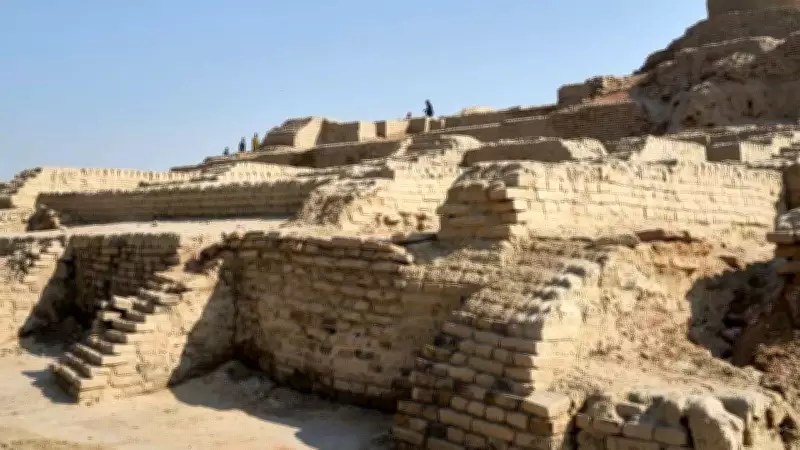
The Indus Valley Civilisation demonstrated remarkable sophistication in urban planning and infrastructure development. Archaeological sites such as Mohenjo-daro and Harappa reveal meticulously planned streets arranged in precise grid patterns, showcasing advanced civic organisation.
Residential structures often featured multiple storeys, with many homes providing access to private wells, courtyards, and bathing areas. Perhaps most impressively, covered drainage systems ran beneath the streets, representing what experts frequently describe as one of the earliest known examples of comprehensive urban sanitation anywhere in the ancient world.
Large granaries, marketplaces, and dockyards discovered at various sites indicate complex economic organisation and trade networks. Interestingly, archaeologists have not uncovered grand temples or obvious royal palaces comparable to those found in Egyptian civilisation, suggesting potentially different forms of governance that may have been less centralised.
Scale and Cultural Achievements
At its peak, the Indus civilisation likely supported more than five million inhabitants, representing a substantial portion of the world's population during that era. Its territory stretched from the Arabian Sea toward the Ganges basin, forming one of the largest cultural zones of the ancient world.
Archaeological discoveries have revealed numerous cultural achievements, including finely drilled gemstone beads, standardised stone weights, metal tools crafted from copper and bronze, and intricately carved seals bearing an undeciphered script. Despite decades of scholarly investigation, the Indus Valley writing system continues to puzzle researchers, remaining one of archaeology's most intriguing mysteries.
Reconsidering the Civilisation's Decline
For many years, scholars predominantly attributed the civilisation's decline to climate change, specifically the weakening of monsoon patterns and drying of river systems that disrupted agriculture and trade networks. However, the recent findings from Bhirrana suggest a more gradual transition rather than a sudden, catastrophic collapse.

Evidence indicates that communities adapted to shifting environmental conditions by modifying agricultural practices, transitioning from water-intensive crops like wheat and barley to more drought-resistant varieties including millets and rice. This agricultural adaptation may have reduced the necessity for large centralised storage facilities and dense urban centres.
Rather than experiencing a dramatic downfall, the civilisation may have slowly dispersed into smaller settlements over an extended period. Other theories regarding the decline, including migration patterns, flooding events, disease outbreaks, or social transformations, continue to be actively debated within academic circles.
The ongoing research at Bhirrana and other Indus Valley sites promises to further illuminate our understanding of this remarkable ancient civilisation and its place in human history.