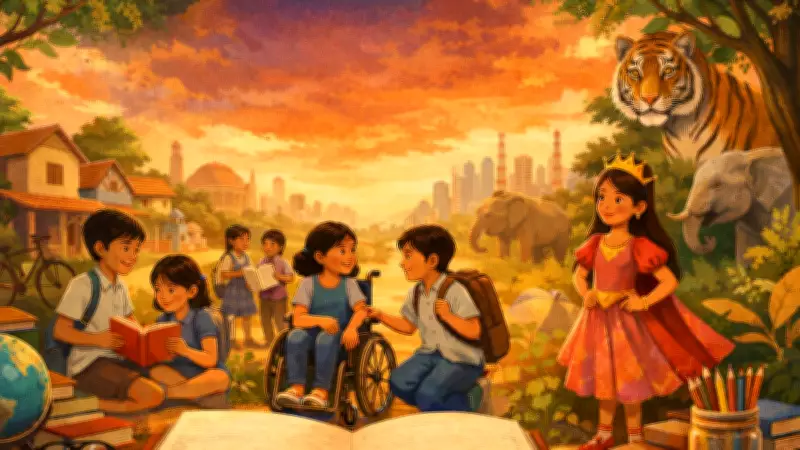
The Evolution of Indian Children's Literature
Indian children's literature is undergoing a profound transformation, moving away from traditional moral lessons and imported Western tales toward authentic narratives that reflect real lives, emotions, and familiar worlds. This shift is fundamentally changing how young readers in India see themselves and understand their surroundings.
From Imported Tales to Local Lives
For decades, children's publishing in India relied heavily on Western imports and mythological retellings. However, over the past 10 to 15 years, the landscape has expanded dramatically in both scope and intent. Writer Devika Cariapa of Tulika Publications, who creates non-fiction for children rooted in history and archaeology, has observed this evolution closely. "Indian children's literature has evolved tremendously in the last ten to fifteen years," she notes, highlighting the emergence of new publishers, authors, and illustrators who have broadened the range of stories available to young readers.
Today's children can explore diverse genres including:

- Mystery and fantasy
- Environmental writing
- Historical narratives
- Illustrated non-fiction
- Graphic novels and chapter books
This expansion has not only increased choice but has fundamentally altered the types of narratives being told. Editors at Woodpecker Books explain: "Earlier, social realities were often softened or hidden within moral stories. Now, books address real experiences in a direct but age-appropriate way."
Representation, Emotion, and Everyday Change
One of the most significant changes in contemporary Indian children's literature is how stereotypes are being questioned through ordinary storytelling. At Woodpecker Books, this approach is exemplified in their Modern Day Prince and Princess series. "We show princesses who solve problems and lead with confidence, while princes are caring, empathetic, and emotionally aware," the editorial team explains. Rather than instructing children what to think, the focus has shifted to demonstrating actions and consequences. "Good stories do not instruct children. They let them notice choices for themselves," the editors emphasize.
Representation has become central to this literary evolution. When children cannot recognize their lives in books, they may feel their experiences matter less. Stories that reflect different homes, cultures, and family structures help present diversity as an integral part of everyday life. This approach has proven particularly important for differently abled and special children, offering them recognition and belonging while shaping how other children understand difference.
The Mirror, Window, and Door Approach
Cariapa connects this transformation to education scholar Rudine Sims Bishop's influential concept of books as "mirrors, windows, and doors." Stories now serve as mirrors that reflect a child's own life, windows that offer views into unfamiliar worlds, and doors that invite readers into new experiences. "Only when children read such books do they grow into empathetic and aware adults," Cariapa asserts.
Contemporary authors continue to balance imagination with responsibility. Woodpecker editor Natasha Shah Bhammi states: "We are storytellers first. Our role is not to simplify the world but to present it with care." Emotions such as fear, loneliness, and loss are now addressed openly, supported by humor and creativity that keep stories accessible and engaging.
The Enduring Purpose of Connection
Despite these significant changes in genre and theme, the fundamental purpose of children's literature remains connection. Reading for pleasure continues to be central to childhood development. Beyond language acquisition, books offer enjoyment and emotional growth. To view children's books as something one outgrows is to overlook how profoundly they shape early concepts of kindness, confidence, and belonging.

As India's children's publishing landscape continues to evolve, it is producing stories that authentically reflect real lives, genuine emotions, and true diversity. This evolution is raising a generation of readers who are more attentive, empathetic, and aware of the world around them, fundamentally transforming how young Indians see themselves and their place in society.