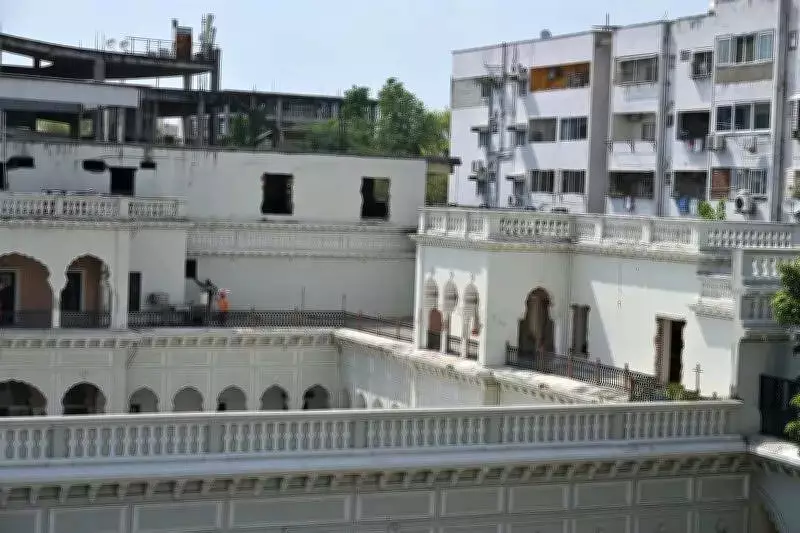
Family Protests Alleged Illegal Demolition of 135-Year-Old Hyderabad Fort
Members of Nawab Fareed Nawaz Jung Bahadur's family staged a significant protest on Monday, alleging the illegal demolition of the 135-year-old Chiran Fort, also known as Devdi Nawab Nazeer Jung. This protected heritage structure, part of the historic Paigah palace complex, has reportedly suffered substantial damage without proper authorization.
Historical Significance and Protection Status
The fort was constructed around 1890 and named after Fareed Nawaz Jung, son of Nawab Sultan-ul-Mulk Bahadur and grandson of Sir Viqar-ul-Umra, who served as former Prime Minister under Mir Mahbub Ali Khan. Recognized for its architectural value by INTACH (Indian National Trust for Art and Cultural Heritage), the structure holds Grade II classification under a 1998 government order, granting it protected heritage status.
Allegations of Unauthorized Demolition
Family members have reported that key portions of the fort have been demolished, including the main gate, a burj (tower), and several private sections. Paigah scion Obaid-ur-Rehman stated, "We noticed internal damage and removal of doors, raising serious suspicion. The demolition appears aimed at setting up a construction company's office."

Lease Agreement and Legal Dispute
The property was leased in the mid-1990s for 99 years to Mancherial MLA K Prem Sagar Rao, who now finds himself at the center of this escalating dispute. Qamerunisa Begum, great-granddaughter of Nawab Nazeer Jung, emphasized that the lease agreement did not permit any structural changes. "Any demolition without consultation is completely unacceptable. Being a heritage structure, it cannot be altered without due permissions," she declared, confirming that legal action is being planned.
Heritage Concerns and Official Response
Heritage activists have raised alarms about the situation, pointing to the recent closure of a club on the premises as an indicator of larger development plans. Officials have confirmed that no permission was granted for any demolition work. Under the Telangana Heritage Act of 2017, such violations can result in severe penalties, including up to three years' imprisonment and a fine of 50,000 rupees.
Broader Implications for Heritage Conservation
This incident highlights ongoing challenges in preserving India's architectural heritage amid urban development pressures. The alleged demolition of a Grade II protected structure without proper consultation or authorization raises significant questions about enforcement mechanisms and community involvement in heritage protection efforts.