History is not a static record but a flowing river, carrying within it stories of conflict and compassion that find new meaning across generations. A powerful illustration of this emerges from the depths of India's freedom struggle in Tamil Nadu, where a violent act from 1911 met with an extraordinary gesture of reconciliation over a century later. This profound narrative finds resonance in the timeless wisdom of the classic Tamil text, the Thirukkural, which offers deep insights into the nature of time, power, and human endurance.
The Piercing Irony of Sacrifice and a System's Betrayal
The story begins with a poignant anecdote shared by motivational speaker and author Bharathi Bhaskar. She recalls an interview with the late Waleswaran, son of the legendary freedom fighter V.O. Chidambaram Pillai. Waleswaran narrated an incident where he was asked for a bribe at a government office. Though he wished to legally challenge this corruption, he could not afford even the court fees.
The irony was profound and painful. Here was the son of a man who had sacrificed everything for the nation's freedom, being exploited by the very system that freedom had created. This incident underscores a harsh truth: martyrs are tested not just by their enemies in their lifetime, but by the passage of time itself, which can see their sacrifices forgotten or their ideals compromised.

A Revolutionary Act and a Century-Long Echo
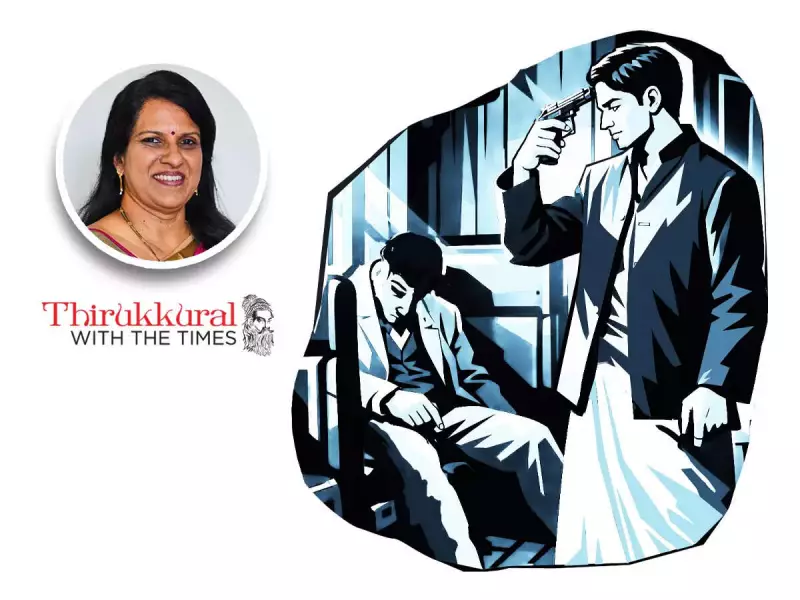
To understand the full weight of time's narrative, we must turn to the events of June 17, 1911. At the Maniyachi railway station, a young Tamil revolutionary named Vanchinathan shot and killed Robert Ashe, the British Collector of Tirunelveli. Immediately after, Vanchinathan took his own life. One man fell as a symbol of imperial authority; the other died embodying fierce resistance.
Ashe's widow, Mary, returned to Britain with their four children. Empires faded, flags changed, and the raw fury of that morning gradually settled into the footnotes of history books. For more than a hundred years, the story remained a historical datum—a tragic clash between a ruler and a rebel.
The Unlikely Curve of History: A Toast and a Letter
Then, history performed a quiet but remarkable turn. While researching the life of V.O. Chidambaram Pillai and the turmoil in Tirunelveli following his arrest, historian A.R. Venkatachalapathy delved into records of the Ashe murder trial. His scholarly pursuit led him beyond documents to people—the living descendants of Robert Ashe.
In a meeting that bridged continents and centuries, these descendants, including a grandson named after Robert Ashe, raised a toast. They honored the memory of both Robert Ashe and his assassin, Vanchinathan. Later, they entrusted Venkatachalapathy with a letter to deliver to Vanchinathan's family.
This was no letter of accusation or historical revisionism. It was, unmistakably, a letter of reconciliation and peace. They wrote, "On this day of sad but proud remembrance... we extend a message of reconciliation and friendship to the Vanchi family." Acknowledging Vanchinathan as an "idealist political campaigner" whose zeal led to tragedy, they reflected on the mortal risks of political fervor, whether by ruler or oppressed. Their closing sentiment was powerful: "We who are fortunate enough to live on must forgive and live in peace together." Across a hundred years, the descendants chose understanding over justification.
Thirukkural's Wisdom: The Chief Who is Time Itself
It is here that the ancient voice of the Thirukkural enters the conversation. Composed by the poet-philosopher Thiruvalluvar, this seminal work of 1,330 couplets is divided into three books exploring virtue, wealth, and love. In one couplet (Kural 771), Valluvar writes: "Foes! Do not oppose my chief. Those who did so before, now are entombed."
At first glance, it reads like a warrior's boast. But as writer Jeyamohan has contemplated, what 'chief' could possibly remain undefeated forever? No human ruler, empire, or ideology ultimately escapes erosion. The interpretation that emerges is profound: The 'chief' Valluvar speaks of is Time itself.

Time is the ultimate force that defeats all—the tyrant and the martyr, the colonizer and the revolutionary. It has the power to bury rage, expose arrogance, humble absolute power, and, as the Ashe family's letter shows, sometimes ripen the fruit of forgiveness. Yet, within its relentless flow, certain human acts endure: the courage of Vanchinathan, the sacrifice of Chidambaram Pillai, and a graceful letter written by descendants seeking peace.
The lesson from both history and the Kural is clear. While political battles are won and lost, and personal sacrifices are sometimes forgotten by the systems they helped create, time operates on a grander, more humbling scale. It reminds us that from the fierce currents of history, the most enduring legacy may not be victory or defeat, but the capacity for reconciliation that can surface generations later, offering a quieter, more enduring form of peace.