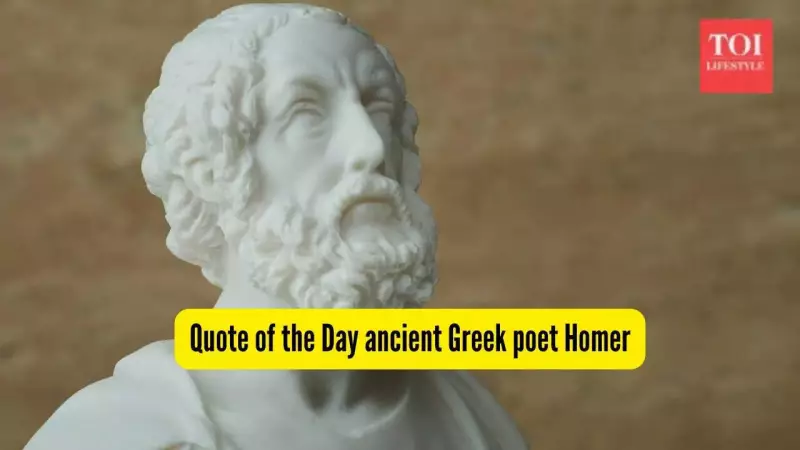
Approximately 2,800 years ago, a mysterious blind poet named Homer composed timeless tales of gods, heroic figures, and vast oceanic adventures. Scholars continue to debate whether Homer was a single individual or a collective of storytellers, yet his reputation as the "granddaddy" of poetry remains undisputed. He stands as the earliest true precursor to the epic literary form, which has endured for thousands of years across civilizations.
Transforming Storytelling from Folklore to Art
Before Homer's contributions, stories existed as fragmented myths, exchanged like casual gossip around ancient campfires. Homer revolutionized this tradition by giving these narratives a concrete and structured form. His masterpieces, the Iliad and the Odyssey, were not merely poems; they represented the first examples of narrative poetry. These works skillfully combined vivid imagery, complex characters, and profound moral themes, creating a sense of realism that captivated audiences.
The Innovation of Dactylic Hexameter
What truly establishes Homer as the first poet is his development of the dactylic hexameter. This six-beat poetic meter served as the rhythmic heartbeat of ancient Greek verse, blending a bouncy cadence with serious undertones. It proved ideal for recounting tales of warfare in the Iliad and wandering journeys in the Odyssey. This structured meter was not arbitrary; it was designed to aid bards in memorizing thousands of lines in an era before written records, transforming oral storytelling into a refined art form.

Creating Enduring Archetypes
Homer introduced archetypal characters that remain influential in modern literature and media. These include the wrathful warrior Achilles, the cunning everyman Odysseus, and the flawed deities who meddle in human affairs. By embedding these figures into his epics, Homer demonstrated that poetry could explore grand philosophical questions—such as fate versus free will, glory versus homecoming, and hubris versus humility—while maintaining engaging narratives akin to contemporary blockbusters.
The Odyssey: A Tale of Human Resilience
Homer's Odyssey, the sequel to the Trojan War saga, follows Odysseus, king of Ithaca, on his arduous ten-year voyage home. This epic journey, spanning 12,000 lines, subjects Odysseus to storms, Cyclopes, seductive sirens, and the wrath of Poseidon. What renders the Odyssey profoundly relatable is Odysseus's humanity; he is not invincible but homesick, flawed, and yearning for his wife Penelope and son Telemachus, even as suitors plunder his estate. Homer crafted a narrative where mortals outsmart immortals through intellect rather than brute strength, redefining heroism.
Impact on English Literature
The Odyssey's influence on English literature is monumental, akin to a stone skipping across centuries. Initially disseminated through Latin translations in medieval monasteries, it gained prominence with Renaissance humanists. George Chapman's 1616 English verse translation captivated readers, with poet John Keats praising it as "a consummation devoutly to be wished." This epic inspired works like Shakespeare's Troilus and Cressida, which echoes Trojan themes, and Milton's Paradise Lost, with its grand scope and divine interventions.
In the 18th century, Alexander Pope and other Augustan poets adapted Homer for polite society, with Pope's translation of the Odyssey achieving widespread acclaim. The Romantic era further embraced Homer, as seen in Alfred Tennyson's "Ulysses" and Matthew Arnold's reflections on Homer's "touchstones," casting Odysseus as the quintessential wanderer and fueling ideals of individualism.
A Timeless Quote on Marriage
One of Homer's most celebrated passages, from The Odyssey, Book VI, states: "There is nothing more admirable than when two people who see eye to eye keep house as man and wife, confounding their enemies and delighting their friends." This poignant depiction of marriage highlights the power of a harmonious union in a world rife with deception and treachery. The reunion of Odysseus and Penelope exemplifies how their unbreakable bond, forged through separation and trials, restores order and repels adversaries. Homer elevates partnership to a heroic level, emphasizing that collective strength, rather than solo achievement, can overcome obstacles and earn admiration.

Homer's Lasting Legacy
Homer did not merely write poems; he infused literature with its soul, proving that stories could outlast empires. His echoes in English literature remind us that the most compelling narratives are personal, perilous, and deeply human. By setting the stage for Western literature's fascination with the hero's journey, Homer's influence persists in contemporary novels and screenplays, ensuring his legacy as the foundational poet of the Western canon.