Hindustani Memne: A Literary Challenge to Historical Narratives
In a time when historical discourse often succumbs to simplification and selective memory, Dr. Ajay Sharma's latest novel, Hindustani Memne, emerges as a powerful work of literary resistance. This thought-provoking book compels readers to confront the silences, omissions, and moral complexities that have shaped India's political and social landscape, moving beyond comfortable narratives to explore uncomfortable truths.
Reclaiming Forgotten Histories
At its heart, Hindustani Memne transcends the boundaries of a conventional historical novel. It serves as a profound inquiry into the true cost of freedom, questioning who paid the price and why certain sacrifices have been erased from collective memory. Drawing inspiration from the life of Ajit Saini, a lesser-known freedom fighter from Jalandhar who was associated with Netaji Subhas Chandra Bose and the Azad Hind Fauj (INA), the novel restores agency to figures marginalized by mainstream historiography.
Beyond Monolithic Freedom Narratives
One of the novel's most significant contributions is its challenge to the long-held belief that India's Independence was achieved solely through non-violent movements. While acknowledging Mahatma Gandhi's pivotal role, Hindustani Memne rejects a singular version of history that sidelines revolutionaries, soldiers, and overseas Indians who fought under extraordinary circumstances. The novel argues that reducing Independence to one ideology dishonors the countless unnamed individuals who endured imprisonment, exile, war, and death.

The Metaphor of 'Memne' and Colonial Exploitation
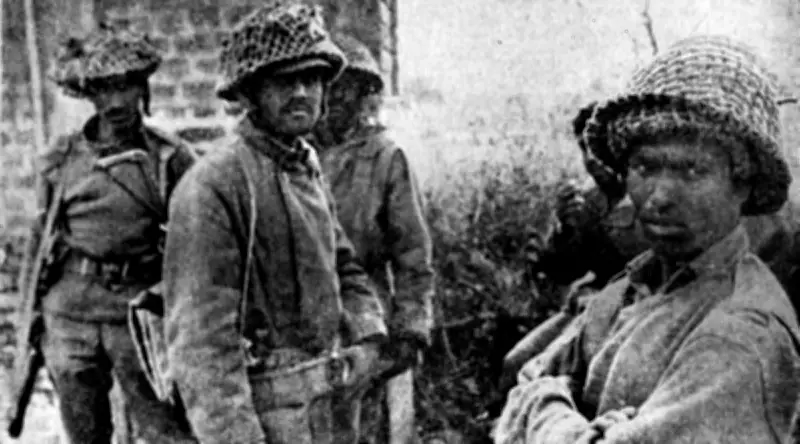
Set against the backdrop of the Second World War (1939-45), the novel meticulously details how the British Empire mobilized Indian soldiers as expendable manpower. Sharma's deliberate use of the metaphor 'memne' (lambs) is both biting and poignant, illustrating how Indians were not merely ruled but consumed by an empire that demanded loyalty without dignity. The narrative raises the discomforting question of whether this expendability truly ended in 1947, drawing a continuum between colonial control and post-colonial centralization of power through events like Partition, the wars of 1965 and 1971, and the Emergency.
Personal Tragedies and Political Fractures
Structurally, the novel follows the intertwined journeys of three young men—Ajit, Rahim, and Sarveshwar—who belong to different faiths yet are bound by friendship, shared ideals, and a common dream of freedom. Their lives unfold against the tumultuous backdrop of World War II, the rise of the INA, and the political churn leading to Partition. Partition is portrayed not just as a historical event but as a deeply personal tragedy, with Rahim's forced migration to Pakistan fracturing relationships that politics could not reconcile. Sharma mourns the deliberate political choices that turned neighbors into strangers, implicitly questioning why alternative visions, particularly Subhas Bose's insistence on a united India, were sidelined.
The Silence Around the INA
Perhaps the most politically charged aspect of Hindustani Memne is its insistence on asking why the INA never received its due place in India's official memory. The novel points to an inconvenient reality: post-Independence power structures had little incentive to legitimize an armed movement that did not align with their ideological inheritance. The localized commemoration of figures like Ajit Saini is presented not as accidental but as a political choice, highlighting the selective nature of historical remembrance.
Post-Independence Continuities
What gives Hindustani Memne particular depth is its refusal to confine history to 1947. The narrative extends into post-Independence India, referencing the 1965 and 1971 wars, the Emergency, and the consolidation of political power. Sharma suggests that freedom did not automatically translate into justice or dignity for ordinary citizens, underlining a disturbing continuity: systems may change hands, but power often continues to marginalize the same people. The 'lamb' remains vulnerable—first under colonial rulers and later under domestic political compulsions.

Relevance in Contemporary Discourse
In today's India, where debates around nationalism, history textbooks, and ideological loyalty dominate public discourse, Hindustani Memne feels uncannily relevant. It urges readers to move beyond binaries—violent versus non-violent, patriot versus traitor—and to engage with history in all its complexity. The novel also speaks directly to a younger generation increasingly distanced from the lived experience of freedom struggles, humanizing history through personal stories to bridge the gap between academic history and emotional truth.
A Call to Remember and Question
Dr. Ajay Sharma, an author of 16 novels and six dramas, emphasizes that Hindustani Memne carries a clear message: a nation that forgets its uncomfortable past risks repeating its mistakes. He argues that a nation unwilling to confront the full complexity of its history risks reducing its citizens to silent spectators—lambs once again—before the machinery of power. This makes the novel not just a historical work but a political one, reminding us that freedom is not a finished project and history is not a closed book. Both demand constant vigilance, honest reflection, and the courage to confront truths we may prefer to ignore.
Dr. Sharma's literary credentials add weight to his narrative, with three of his novels, including Basra Ki Galian (on the Iraq war), Chehra Aur Parchhai, and Nau Dishayen, being part of the MA syllabus in universities. He has also written two serials on farming issues telecast on DD Kisan and has received several awards, including the Punjab Government's 'Shiromani Hindi Sahitkar' Award. Through Hindustani Memne, he invites readers to embark on a journey of critical remembrance, challenging them to question and reclaim the multifaceted story of India's past.