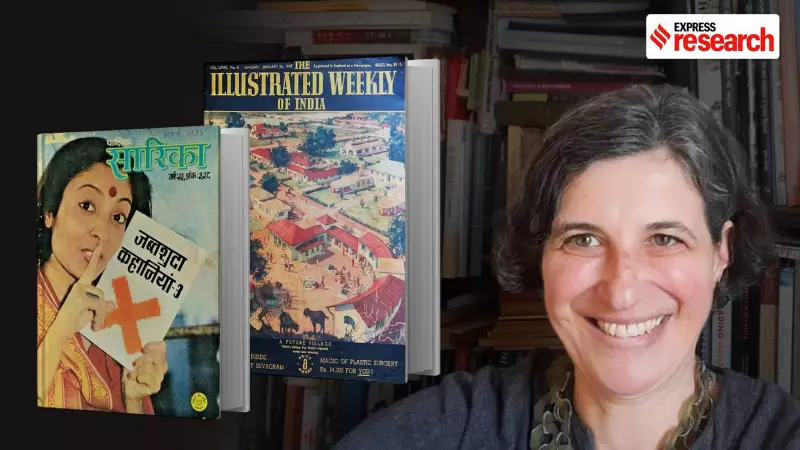
When Professor Francesca Orsini, a renowned scholar of South Asian literature from the University of Cambridge, found herself denied entry into India, she turned to digital archives to continue her important work. What she discovered would reshape our understanding of Hindi's literary history.
The Hidden World of Pre-Independence Hindi Magazines
Orsini's research reveals that Hindi magazines from the 1920s to 1940s were far from the monolingual, insular publications many assume them to be. Instead, they represented a vibrant, cosmopolitan world where multiple languages and cultures intersected.
These publications served as cultural bridges, featuring content in Urdu, Sanskrit, and English alongside Hindi. They weren't just literary journals but cultural melting pots that reflected the complex linguistic landscape of pre-partition India.

A Multicultural Literary Ecosystem
The magazines Orsini studied demonstrated remarkable diversity in both content and contributors:
- Translations between multiple Indian languages
- Discussions of international literature and ideas
- Contributions from writers across religious and regional backgrounds
- Engagement with global intellectual movements
This research challenges the notion that Hindi literature developed in isolation, showing instead how it was shaped by continuous dialogue with other linguistic traditions.
Digital Archives as Research Lifeline
Unable to access physical archives in India, Orsini turned to digitized collections that have become increasingly available in recent years. This digital access allowed her to continue her work remotely, examining rare publications that might otherwise have remained inaccessible.
The availability of these digital resources has opened new possibilities for international scholars studying Indian literary history, making rare materials available to researchers worldwide.
Reevaluating Hindi's Literary Heritage
Orsini's findings force us to reconsider common assumptions about Hindi literature's development. The cosmopolitan nature of these early magazines suggests that modern Hindi literature emerged from a much more diverse and interconnected environment than previously recognized.
This research has significant implications for how we understand the formation of modern Indian cultural identity and the role of print culture in shaping literary traditions.
The work demonstrates that the boundaries between languages and literary traditions were far more porous in the pre-independence era, offering valuable insights for contemporary discussions about linguistic diversity and cultural heritage in India.